Navicular syndrome

StaffofZig

Active Member
Joined
30 August 2018
Messages
30
Visit site
Hi,
After last diagnostic of steroids into coffin joint yesterday, Friday, Zig is still lame but nothing like as bad. Much improved.
X-rays showed “lollipops” on both navicular and some arthritic changes but I didn’t get the strong impression vet thought they were significant. At least., he didn’t jump up and down and say “there’s your problem!”
I haven’t had MRI because it’s £1300 and Zig isn’t insured, he’s 21 and I just can’t afford a diagnostic of that value. If it was a cure that would be different. It isn’t and my vet is pretty sure it’s arthritis.
My vet seemed guarded about riding Zig. He is 1/10th lame today on the steroids and Bute will be given once the vet has seen whatever it is he’s looking for from the steroids. If on the Bute zig goes sound would you ride (gentle hacking) or retire?
 
I would have no problem riding a 21 year old on a Bute a day as long as they were comfortable. I wouldn’t go doing 20 mile rides every weekend or expect them to jump regularly etc BUT I feel some light work is beneficial to many horses both health wise and psychologically. I find in the arthritic horse it helps keep them supple, and it also helps keep their weight in check. Keeping the joints mobile has also been proven to keep the synovial fluid healthy.

I find horses let you know when they are ready to stop. So if he was mine and my vet was happy I would kick on, enjoy him and have a lovely time hacking!
 
One of mine has slight changes to the navicular bone he was treated with steroid and osphos he didn't instantly become sound, I took his shoes of and he had 3 months field rest before he looked sound so I slowly started riding and managed to keep him barefoot, that was a few years ago now and his been fine no further treatment his 14 now.

If he were mine I would take shoes off and give him a good few months in the field and see where you are after that, if his sound I would try to keep him barefoot if possible it's saved a lot of horses written off by vets with a navicular diagnosis I wouldn't go down a remedial shoe route.
 
I wouldn't be MRIing in your position either, I didn't MRI mine (nothing on navicular) at 19 as it wasn't going to change what I was going to do.
I figured if he was retiring he wasn't doing so with shoes on so thought it worth it to spend 6 months doing that properly as a barefoot rehab. Was worth every minute as he had another 6 years ridden, 5 of them hunting and it's not the front end that forced his retirement.

Frankly if he is 1/10 lame the day after steroids the likelihood is that will improve further over the next few days. I would absolutely ride if he is happy in himself.
 
I would have no problem riding a 21 year old on a Bute a day as long as they were comfortable. I wouldn’t go doing 20 mile rides every weekend or expect them to jump regularly etc BUT I feel some light work is beneficial to many horses both health wise and psychologically. I find in the arthritic horse it helps keep them supple, and it also helps keep their weight in check. Keeping the joints mobile has also been proven to keep the synovial fluid healthy.

I find horses let you know when they are ready to stop. So if he was mine and my vet was happy I would kick on, enjoy him and have a lovely time hacking!

My concern is that Bute is masking an issue but that issue isn’t going away anyway so we might as well have some fun.

He’s just trotted off across his field hopeful for some strip grazing he’s not allowed because of the steroids and he looked sound but best of all happy.
Arthritis is degenerative, I have him on turmeric, glucosamine 14,000, apple cider. I’ve tried Youmove, aviform, move free, people are rating Boswellia, any thoughts?
 
One of mine has slight changes to the navicular bone he was treated with steroid and osphos he didn't instantly become sound, I took his shoes of and he had 3 months field rest before he looked sound so I slowly started riding and managed to keep him barefoot, that was a few years ago now and his been fine no further treatment his 14 now.

If he were mine I would take shoes off and give him a good few months in the field and see where you are after that, if his sound I would try to keep him barefoot if possible it's saved a lot of horses written off by vets with a navicular diagnosis I wouldn't go down a remedial shoe route.

I’d love to tAke his shoes off and let his feet relax but his feet are truly flat and he’d be foot sore bruised and miserable in no time flat. I’ll ask my farrier but I’m pretty sure he’ll think I’ve lost my mind 🤪
 
Mine has flat soles, no shoes was the making of him, he was transitioned carefully and slowly with judicious booting, he was never miserable. His soles remained flatter than ideal, likely due to his pedal bone positioning but he developed such a thickness of sole that it slowly became less of an issue. I'd give it some genuine consideration.

I have used boswellia successfully when dealing with lower level stiffness/inflammation, it definitely doesn't provide the same sort of relief that bute does.

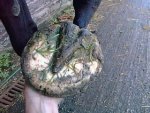
(eta we did two cycles of bar shoes, that was as long as I was happy to give it but when we increased the work to trotting on hacks he wasn't quite right) I don't have any decent pics to show quite how flat it was but the bar shoes definitely trashed his frogs despite my best efforts to avoid that.
547181_10151493895070438_1808329660_n.jpg
 
I’d love to tAke his shoes off and let his feet relax but his feet are truly flat and he’d be foot sore bruised and miserable in no time flat. I’ll ask my farrier but I’m pretty sure he’ll think I’ve lost my mind 🤪

Seriously it can be done have a look at the Rockley site they do barefoot rehab, I am not a barefoot god either my other horse has front shoes.
 
I wouldn't be MRIing in your position either, I didn't MRI mine (nothing on navicular) at 19 as it wasn't going to change what I was going to do.
I figured if he was retiring he wasn't doing so with shoes on so thought it worth it to spend 6 months doing that properly as a barefoot rehab. Was worth every minute as he had another 6 years ridden, 5 of them hunting and it's not the front end that forced his retirement.

Frankly if he is 1/10 lame the day after steroids the likelihood is that will improve further over the next few days. I would absolutely ride if he is happy in himself.

My feelings exactly, if it means I’ll never absolutely know what’s going on, that isn’t going to change where we are right now. In the end he’s been my loyal friend for 19 years and arthritis is what it is.

I’m lucky that my vet is a lameness expert so zig is safe with him.

Thanks for saying that about the MRI., I was feeling a bit guilty but it just doesn’t add up
 
Mine has flat soles, no shoes was the making of him, he was transitioned carefully and slowly with judicious booting, he was never miserable. His soles remained flatter than ideal, likely due to his pedal bone positioning but he developed such a thickness of sole that it slowly became less of an issue. I'd give it some genuine consideration.

I have used boswellia successfully when dealing with lower level stiffness/inflammation, it definitely doesn't provide the same sort of relief that bute does.

(eta we did two cycles of bar shoes, that was as long as I was happy to give it but when we increased the work to trotting on hacks he wasn't quite right) I don't have any decent pics to show quite how flat it was but the bar shoes definitely trashed his frogs despite my best efforts to avoid that.
547181_10151493895070438_1808329660_n.jpg

If he comes sound before the egg bars come off I’ve decided I’m not riding him in the egg bars, bless him, he’s clomping around like an elephant in them!

I’ll look into barefoot, I do prefer the idea
 
I'm pretty pragmatic re. barefoot/shoes. But I do think it's a good idea for owners in circumstances like yours to have a read around the subject, look at the rockley farm blog etc to see if it might be manageable. We have rather a lot on here who have done it successfully, even those said never able to cope without shoes. It does mean we have quite a nice stock of threads :)

When we first had a work up my vet made it sound pretty simple, heartbars, sort out the under run heel bit of steroid, job done, but mentally I always had a timeline on that. The hooves themselves other than the frogs looked much better in the bar shoes, better heel etc. But obviously the hoof wasn't actually anymore functional. Without an MRI it was tricky to say for sure what was going on but due to his movement pattern I strongly suspect some collateral ligament involvement too - not much on xray but reacted to coffin joint nerve blocks.

I'll give you a little more info just so you know initial work up, steroid and bar shoes november - by march I asked the vet if there were any more he would do medically at this point (no) and he agreed hooves looked much better so end of March shoes came off, not trimmed and we started walking 5 mins in hand a day, increasing by about 5 mins a week.
At week 6 he became footy (not unusual, hooves seem to wake up at that point) so he was booted for any road work on his walk outs- I got quite adept at taking them off for the grass stretches as they got longer. This continued and in September we had our first canter - all straight lines until this point, october we did a bit of schooling and november we went to dressage and that was it really. After that the more he did and the more challenging the surfaces he was being ridden on the better he got and he was rarely booted over the years, only if we went on hol and there were lots of stoney tracks etc.
I was fully expecting to retire him.
 
Hi OP, my sister's horse has navicular and has been unshod for the last 7 years. He actually went to Rockley farm for a bit as he had pretty complicated feet and my sister was only about 18 at the time, and didn't feel up to rehabbing him herself. He is retired now as he had assorted other issues, but he is very sound and happy in the field. Here are some of his blog posts if you're interested in seeing how his hooves changed:

http://rockleyfarm.blogspot.com/2012/05/legendary-hoof-changes.html
http://rockleyfarm.blogspot.com/2012/07/feet-flippers-and-fallacies.html
http://rockleyfarm.blogspot.com/2013/01/the-legend-continues.html

As you will see from reading the blog posts, he went from very lame and footsore, to really doing amazingly over different surfaces within about 12 months.
 
Definitely don't feel guilty about the MRI. The only point in diagnostics is if it would drastically change the treatment and outcome. Quite often they won't! My old girl had arthritis and probably navicular type changes from about 19 or 20 years... She still enjoyed light walk hacking for a while then had a happy pain free/low paim retirement on bute. She told me she didn't want to work anymore, it was very subtle and I can't really describe it but I knew. I never had any diagnostics as my vet was very anti unnecessary spending!! She really wasn't suited to going barefoot (tried and failed previously) but my farrier used a rocker shoe which she was much more comfortable in.
 
Ok I’ll check it out. I hadn’t considered it for him at all

I didn't mri my horse I didn't think it was worth it they saw enough from x rays and he had treatment, I just thought I would give him time had he not come sound after a while I may have considered it, but I don't think I would bother with a 21 year old horse don't feel bad about it, I just read a lot on the net and spoke to people about navicular and I found that barefoot seemed to be the best thing to do, I am glad I did it and would do it again.
 
Many farriers don't support barefoot but then they have a vested interest in not doing so. Lameness expert vets mean nothing either. They typically go down the MRI/ boxrest/Bute/shoeing route, which is the worse thing for navicular. As others have said, have a look through the Rockley blog and please consider taking your horse barefoot. Flat feet can only ever be improved by going barefoot. Hoof boots help in the transition.
 
My concern is that Bute is masking an issue but that issue isn’t going away anyway so we might as well have some fun.

He’s just trotted off across his field hopeful for some strip grazing he’s not allowed because of the steroids and he looked sound but best of all happy.
Arthritis is degenerative, I have him on turmeric, glucosamine 14,000, apple cider. I’ve tried Youmove, aviform, move free, people are rating Boswellia, any thoughts?

Some may not agree with me but with a 21 yr old I would not be worried about masking it with a Bute a day. When I am older if I have a bit of arthritis I won’t deprive myself of an ibuprofen or two.

I am neither anti or pro barefoot. I have rehabbed horses using both barefoot rehab and remedial shoeing BUT I would not put a 21yr old through barefoot rehab if I thought they would severely struggle. At that age a long period of sensitivity could cause them to compensate elsewhere and lose muscle tone/fitness which is very hard to get back! This might be a rather contentious point and without being too blunt time is not on an older horses side. Rockley is excellent but unless you live relatively close it is a long journey for an older horse. I apologise if this sounds harsh.

It may be worth discussing cartrophen with your vet and you can do it yourself. Some horses really respond to it.
 
I think it is where owners knowing their horses is really helpful. F was absolutely buzzing at 19, as he was at 23- he managed to feel stronger then than he had ever done really and although he did need some more regular physio while transitioning he felt better for the time off and didn't really seem to loose much tone as a result. I was genuinely surprised as it was something I was worried about given his age, and having been brought up to believe that once they stopped at that sort of age they usually stopped permanently not that you ended up with a more supple beast.

He did need booting for about 6 months for roadwork (partly as they resurfaced so we had a lot of grit too), ok on grass (we have no arena and we weren't doing circles anyway).

Another thing to mention though is that I did cushings test him at the time, as I wanted to know if we were dealing with any additional issues.

We are pretty close to rockley but there was no need to send him and he hates change.

I agree re. time not on an older horse's side but if you don't plan to shoe them for their retirement (obviously some are) it may well be worth a go slowly rehabbing to see what happens.
 
I'm pretty pragmatic re. barefoot/shoes. But I do think it's a good idea for owners in circumstances like yours to have a read around the subject, look at the rockley farm blog etc to see if it might be manageable. We have rather a lot on here who have done it successfully, even those said never able to cope without shoes. It does mean we have quite a nice stock of threads :)

When we first had a work up my vet made it sound pretty simple, heartbars, sort out the under run heel bit of steroid, job done, but mentally I always had a timeline on that. The hooves themselves other than the frogs looked much better in the bar shoes, better heel etc. But obviously the hoof wasn't actually anymore functional. Without an MRI it was tricky to say for sure what was going on but due to his movement pattern I strongly suspect some collateral ligament involvement too - not much on xray but reacted to coffin joint nerve blocks.

I'll give you a little more info just so you know initial work up, steroid and bar shoes november - by march I asked the vet if there were any more he would do medically at this point (no) and he agreed hooves looked much better so end of March shoes came off, not trimmed and we started walking 5 mins in hand a day, increasing by about 5 mins a week.
At week 6 he became footy (not unusual, hooves seem to wake up at that point) so he was booted for any road work on his walk outs- I got quite adept at taking them off for the grass stretches as they got longer. This continued and in September we had our first canter - all straight lines until this point, october we did a bit of schooling and november we went to dressage and that was it really. After that the more he did and the more challenging the surfaces he was being ridden on the better he got and he was rarely booted over the years, only if we went on hol and there were lots of stoney tracks etc.
I was fully expecting to retire him.

The thing is, reading around, navicular will be a constant situation for Zig now, at the present level of management he is improving but still a long way from sound.
He is much happier, even started spooking at nothing again down the track from his field last night 🙄, good sign.
It’s dawning on me that this is going to be a balancing act.
I’ve always known retirement would loom large and I thought that keeping shoes on his flat feet was the only option. If going barefoot is possible then I shall look into it.
His egg bars have helped a bit but they’re not long term. Natural balance might, but he was in them before and nothing has changed in his foot other than pain relief., this has been on my mind actually.
Thanks
 
I think it is where owners knowing their horses is really helpful. F was absolutely buzzing at 19, as he was at 23- he managed to feel stronger then than he had ever done really and although he did need some more regular physio while transitioning he felt better for the time off and didn't really seem to loose much tone as a result. I was genuinely surprised as it was something I was worried about given his age, and having been brought up to believe that once they stopped at that sort of age they usually stopped permanently not that you ended up with a more supple beast.

He did need booting for about 6 months for roadwork (partly as they resurfaced so we had a lot of grit too), ok on grass (we have no arena and we weren't doing circles anyway).

Another thing to mention though is that I did cushings test him at the time, as I wanted to know if we were dealing with any additional issues.

We are pretty close to rockley but there was no need to send him and he hates change.

I agree re. time not on an older horse's side but if you don't plan to shoe them for their retirement (obviously some are) it may well be worth a go slowly rehabbing to see what happens.

It’s worth looking into I agree. Worth a try.
Zig won’t manage the 3 hour trip or changed environment at all so I’ll have to look for a barefoot person close by., we’re in the New Forest., does any one know anyone?
 
I'm easygoing about shoes or barefoot but a friend of mine has a horse that developed navicular. It progressed quite quickly and he was in serious pain. He had got injections that only helped for a short period of time. He was retired but it looked like he would have to be pts.
As a last resort she took the shoes off and he's sound now.

I don't know the full details but it's worth a try. She used a farrier to trim, not a barefoot person.
You could give it a go with boots to protect his feet as yours has soft soles.
 
I think it is where owners knowing their horses is really helpful. F was absolutely buzzing at 19, as he was at 23- he managed to feel stronger then than he had ever done really and although he did need some more regular physio while transitioning he felt better for the time off and didn't really seem to loose much tone as a result. I was genuinely surprised as it was something I was worried about given his age, and having been brought up to believe that once they stopped at that sort of age they usually stopped permanently not that you ended up with a more supple beast.

He did need booting for about 6 months for roadwork (partly as they resurfaced so we had a lot of grit too), ok on grass (we have no arena and we weren't doing circles anyway).

Another thing to mention though is that I did cushings test him at the time, as I wanted to know if we were dealing with any additional issues.

We are pretty close to rockley but there was no need to send him and he hates change.

I agree re. time not on an older horse's side but if you don't plan to shoe them for their retirement (obviously some are) it may well be worth a go slowly rehabbing to see what happens.

I’ll look for someone nearby, it wouldn’t hurt to try, very gently.
Thank you, to everyone actually for all of your advice and encouragement
 
There are incidences of boney improvement on xrays though a lot of 'navicular' diagnoses are primarily soft tissue pathologies anyway (and am working on the theory that your vet wasn't aghast at the boney changes).

I used to be near salisbury but I don't think mine would come down any further (I'd already brought her from somerset), I am going to send you a pm about one to avoid though. They aren't a necessity depending on your farrier (feed, movement, trim come in that order of importance) but they can be useful for a bit of hand holding in the early days and are useful for boot knowledge :) Are you on FB?
 
Many farriers don't support barefoot but then they have a vested interest in not doing so. Lameness expert vets mean nothing either. They typically go down the MRI/ boxrest/Bute/shoeing route, which is the worse thing for navicular. As others have said, have a look through the Rockley blog and please consider taking your horse barefoot. Flat feet can only ever be improved by going barefoot. Hoof boots help in the transition.

Interestingly, my farrier was trimming mine for me (both barefoot) and we got onto the subject of shoes and barefoot and he told me that it’s actually more worth his while to do the trims than shoe a horse. By the time he factors in cost of materials, gas, time etc to shoe, he said he actually makes more money out of the trims. I thought that was quite interesting.
 
There are incidences of boney improvement on xrays though a lot of 'navicular' diagnoses are primarily soft tissue pathologies anyway (and am working on the theory that your vet wasn't aghast at the boney changes).

I used to be near salisbury but I don't think mine would come down any further (I'd already brought her from somerset), I am going to send you a pm about one to avoid though. They aren't a necessity depending on your farrier (feed, movement, trim come in that order of importance) but they can be useful for a bit of hand holding in the early days and are useful for boot knowledge :) Are you on FB?

Not aghast no, nor did he seem to have an answer to why zig has 13 lollipops in each navicular but only lame in off fore. Since they don’t weaken the bone I wasn’t certain what significance lollypops have?., particularly since a friends horse is dog lame with navicular but has no lollypops. Zig has some extra bony bits but nothing to excite a vet apparently. Tbh I’m not completely clear on what’s causing zigs pain at the mo, but the steroids are helping for now.
I am on Facebook but I can only access it from my old (knackered) phone., and... it’s not straight forward. If you maybe give me your Facebook I can contact you 😊
 
Interestingly, my farrier was trimming mine for me (both barefoot) and we got onto the subject of shoes and barefoot and he told me that it’s actually more worth his while to do the trims than shoe a horse. By the time he factors in cost of materials, gas, time etc to shoe, he said he actually makes more money out of the trims. I thought that was quite interesting.

I’m going to ask my farrier if he would or if he’s up for the challenge at least. I’ll get some boots, where do you go for those?
 
The thing is, reading around, navicular will be a constant situation for Zig now, at the present level of management he is improving but still a long way from sound.
He is much happier, even started spooking at nothing again down the track from his field last night 🙄, good sign.
It’s dawning on me that this is going to be a balancing act.
I’ve always known retirement would loom large and I thought that keeping shoes on his flat feet was the only option. If going barefoot is possible then I shall look into it.
His egg bars have helped a bit but they’re not long term. Natural balance might, but he was in them before and nothing has changed in his foot other than pain relief., this has been on my mind actually.
Thanks

You aren't reading around in the right places. Navicular is not degenerative because it's not normally a bone condition, in spite of changes on x-ray, they are common in many sound horses. It's normally a soft tissue injury that can be fixed with the right rehab. Unfortunately, shoes of any kind are often not the right rehab.

If you think your horse is too flat footed to go barefoot, take a look at this one. He evented BE novice (1.15m) nine months after this photo. He had to be shod one foot at a time. He couldn't stand on the other foot without a shoe on to have the other put on.

17SEP006.1.jpg
 
lol. I was going to say there are some rather crazy groups but barefoot hoofcare for whole horse health would be a good one to ask re. trimmers in the area.
Pete Ramey's 'hoof rehab' page is also very useful for info gathering.

Boots - unshod horse, take photos with tape measure for width and length, send photos to any of the following:
hoof bootique
urban horse
the saddlery shop
equine podiatry supplies
see what their recommendations are as fit is imperative.
 
Top