
Paddock advise/ maintenance/ weeds/ seeds help

Horsekaren

Well-Known Member
Joined
8 March 2017
Messages
1,300
Visit site
I am about 3 weekends into fencing and tree cutting, as it is coming together i am starting to think more of how we should tackle the grazing.
The land has been rested all winter, the top two paddock are ok, but a bit patchy so i think they could do with over seeding?
The bottom two paddocks especially the one to the right is quiet weedy, id say up to about 1ft high. Mainly cow parsley, a few patches of nettles, clover and some scary looking plant that i think might be ground Ivy ( looks a lot like small lillypads but im still trying to work out what that is before they move) I guess the best way to describe the bottom paddock would be like a weedy verge on the edge of a country lane. there is grass mixed in with it.

Assuming everything poison is dug out how on earth do i begin with this land. My thinking is to put them in the top paddock for a few weeks and then close that off and over seed. The same with the lower top paddock. My worry is the bottom two paddocks. If it is weedy would it be harmful if i strip grazed in back slowly so they eat it down but cant gorge? I would then pop them back in the top and rotate between the two while i worked on the bottom.

Any advise would be great as this is very new to me.

If i do put weed killer down, how long before they can go on the ground, if i overseed, again how long before they would be allowed on it? also if anyone has any recommendations for equine safe herbicides and seeds that would be great!
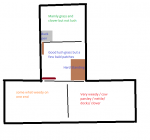
paddocks.PNG
 
I am no expert but have managed our own land since 1982.
I would graze the fields right down then top what is left uneaten then harrow with as heavy a harrow as you can find .
We have found spot spraying works. better when the weeds aren't woody .Strip graze if there is a lot of grass.
I would probably graze top and harrow for the rest of this year then look at what comes up in the way of weeds next spring.
 
On patchy ground I'd be incline to look at why it is patchy before seeding, otherwise you might just waste seed and money. It could be as simple as scarifying to aerate the ground, compaction can be a cause of poor growth.
As far as the weeds go, unless you have poor-doers/ fussy horses I'd just make sure nothing there is poisonous and let them eat the weeds down, nettles and cow parsley won't do them any harm. You might find that after the weeds have been knocked back the grass will be able to compete better. If they won't eat the nettles fresh they might eat them when they have dried, you can cut back nettle patches a few at a time and let them dry in the field. If the weeds are still a problem then you may have to reseed, although overcasting seed onto a weed-filled pasture, even after weedkillering, may not work, as the seed will be competing against the weed seed bank that will have built up in the soil. If the problem is really bad and you can do without the pasture for a year you could always plough and start afresh.
When choosing seeds to reseed with, go with grass varieties that suit your soil type and drainage, include a little clover and get a meadow-mix type seed mixture that contains plenty of broad-leafed herbs, this will help to build a sward that is more resilient to weed infestation and also a better mix of nutrients. Grass varieties that provide a dense sward are best for permanent pasture as they offer better ground cover and are less inclined to to 'tufty' the way that PRG does.
A lot of commercial seed mixtures are just PRG and clover, these aren't a great choice for horses anyway TBH, as they are very calorific and a mixture of many varieties and other broad-leafed herbs is better from a nutritional point of view.
As for how long to keep horses off reseeded pasture, it really depend on the conditions and how well the seed takes. Leave it until the new plants have got a good, dense root system as otherwise they will be ripped up by hooves.
Sorry, bit of an essay there! I don't have an obsession with grass, honest... ?
 
some great advise thank you! this is my lack of knowledge showing now. When you say top the paddock what does that mean. In terms of broad leaf herbs can you recommended any brands that would be good. They are a good weight but obviously i dont want to put them at risk of anything. I will add the picture looks big but this in total is about 2.5 acres so i need to keep it as best i can as they will live out.
Would digging up where patches of nettles are and seeding with wild herb mixes give a good covering or would that likely turn into a mud patch until they start to flower and grow.
 
You are best to employ the services of a local contractor. If this is quite rough land it will probably need spraying (possibly multiple times) and then topped as needed (ie weeds cut down). They should also be able to Harrow for you. All that is probably priority over seeding it (which could just end up being a waste of money).
 
I think it might be worth asking in a local facebook ground for paddock maintence advice, and getting some experienced in managing horse grazing fields ideally in this area / this soil type to walk the fields and help formulate a plan. And recommend which sprays / which mechanical processes, which seed and when and a plan. I think there will be local people wiht local experience and worth paying for. You dont want a farmer who is fixed on maximum grass yield though.
 
If you know anyone who stores hay ask them if you can have the seed. I get 4 big buckets of seed a year from sweeping out my shed where I store about 200 bales. I use this on any areas where the grass is poor.
 
I agree that it would be simplest to get an experienced contractor in, though with small paddocks and a small acreage in total you may find you have to pay a bit of a premium to make it worth someone's while to bring the kit over and negotiate a bit of a fiddly job.

is it 2 or 3 horses that will be living there? i know what B_B means about not maximising grass yield esp for cobby types but for 24/7 TO on a small space it is fairly important to get as much out of the grazing as you can do IMO. I have 3 on about 6 acres at the moment with grass that is reasonably well tended as it's used for a hay crop and it's really taken a battering this winter. If we didn't start with pretty productive grazing it would have been unbearable. You can always track or strip graze if you end up with too much, what you can't do is produce more grass come February! ;)

Good luck with your investigations, sounds like you made the right move.
 
https://www.cotswoldseeds.com/

The above company are great giving advice depending on soil type and climate.
Their equine mixes are excellent and you cn get low sugar moxed without ryegrass.
They also do a herbal mix safe for equine paddocks, that theyll mix in with your choice of seed.

Id do a section at a time, depending on how much grazing you need. So this year id focus on the worst weedy patch.
Id cut it right down in spring with a flail mower, let it rot for 3 weeks then spread well rotted manure, very well rotted manure that looks like soil....then id shallow plough the whole lot. Then harrow a seed bed, seed it and roll the seeds in.
Id only do that to really crap leys that have more weeds than grass.

I’d cut very low, harrow and overseed the rest of the paddocks.
 
Who owns/uses the neighbouring fields? Whilst we are able to harrow and roll our fields anything else is done by our neighbours when they are doing their fields, I find this works better than trying to get a contractor to come to a small acreage. They will also know the land.

Afaik you now need a licence to spray, from experience chopping nettles knocks them back a bit but I've got rid of large areas of nettles by pulling them out by hand, they come out quite easily, ditto with docks but they're harder to pull out. Most weedkillers you heed to keep the horses off for 1 - 2 weeks but if spraying for ragwort until plants have disappeared.

In between harrowing and rolling I usually throw some grass seed on the bareish patches, it doesn't work brilliantly but does help.

I reckon it takes a year at least to work out the best way to graze land.

Good luck and enjoy your land.
 
I wouldn't bother trying to dig out nettles, they'll slowly reduce in number if you keep cutting them back as other species out-compete them. They tend to grow in high nitrogen environments, so at least the ground is fertile!
Another vote for Cotswold seeds, here is an example of one of their standard horse and pony mixtures
https://www.cotswoldseeds.com/products/258/natural-pony-paddock-with-herbs-and-no-ryegrass
Any local seed merchant should be able to help though and most companies will have an agronomist type advisor who can help. You can request additions/alterations to mixtures, although they may be less keen on formulating a unique mix if you are only buying a small quantity.
There doesn't seem to be a horse/pony mix containing plantain from Cotswold seeds, but there are now commercial varieties of plantain being used in seed mixtures for cattle as it is quite nutritious. It may already be present in your pasture though, we have loads and the horses love it! There are plenty of 'weed' species that have nutritional/health benefits, dandelions spring to mind as an example. There are lots of small legumes as well as the clover species (trefoils, vetches) which will help to fertilise the ground as well as being suitable for forage.
A pasture with high species diversity helps to resist invasive weeds as all ecological niches are filled and high diversity also reduces the impact of disease/weather on the pasture as species tolerant of these challenges will fill in for those knocked back.
What you grow will really depend on your soil type though, just remember that you want a mixture of plants that have different rooting and growth habits (deep-rooting & mat-forming, prostrate & upright) to get the most resilient and productive sward.
If you do decide to weedkiller, I would suggest either spot spraying or weed-wiping (set at a certain height and brushes weedkiller onto everything over that height, great for treating thistles/docks/nettles) rather than a broadleaf weedkiller over the lot which might loose you some valuable species and open the ground up to incursion by invasive weeds anyway.

ETA What is the soil and drainage like?
 
Make friends with your nearest farmer neighbour. They will advise you on how best to process be it spary, top, graze etc. and if you are lucky they may be able to do the work for you. I am so lucky with super farmer neighbours and their advice has been invaluable over a 40 year period.
 
Top