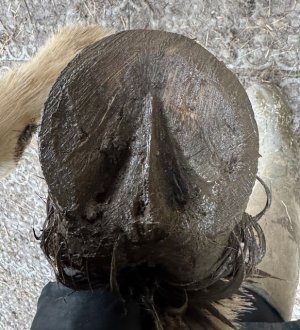
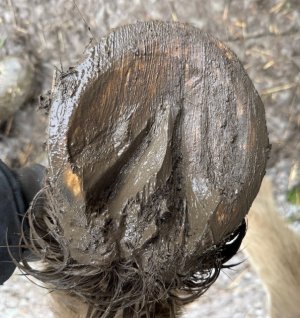
Pics. Very upright, high heel feet

Hormonal Filly

Well-Known Member
Joined
24 April 2013
Messages
3,750
Visit site
Following on from my post the other day.. I had a farrier out to trim her feet this weekend.

She was shod previously, but lost 1, then another and hasn't had her feet touched since loosing the shoes :rolleyes: (Loaner had her then, not me) So feet have not been seen/trimmed for over 10 weeks.

The farrier (not used before, was recommended) looked and said oh, not much foot there.. but I said I think she has a lot of heel. Her feet have always been upright and high heeled (not sure why that is)

He didn't take a lot off.. thoughts? Rubbish photos as she walked back through the mud and had to wipe them off.IMG_0742.jpegIMG_0740.jpegIMG_0743.jpeg
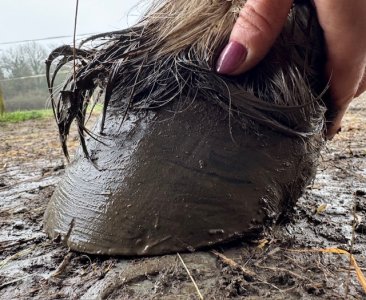
 
Last edited:
They do look quite high to me though I’m no expert. I have been binge watching David Landerville on Facebook and YouTube.
I don’t want to miss quote him, and recommend you watch his videos but he seems to be saying too high heels tips the weight onto the toe, causing erosion of the tip of the bone. his general approach is to lower the heels (if they are too high) and lower and contour the frog and heel so that the heel area is comfortable and has room for the structures without pinching then the horse rests its weight onto the heel instead of the toe. This promotes development of the soft tissues. ETA he exfoliates dead sole too so that it is flexible.

That is no doubt a garbled summary. He has a lot of free short videos but he has a substantial amount of info eg full case histories if you subscribe and you could just pay a few quid for a month’s subscription (then cancel if you wanted) and form a better opinion.
 
Last edited:
If you feel the heels are too high, lower them gradually, over six to twelve months if necessary. If she has been regularly shod the foot will need time to start moving and working properly. Any chance you can get a video of her walking, so that you can assess whether she is landing toe first, or heel/flat foot?
 
I got x rays of my one with high heels (tin can feet) & when I posted on FB trying to find boots that would fit there was a raft of "lower the heels". When you have the x rays you know that would cripple the horse!

Mine has quite a choppy action (she's a native x cob) and gets very tight through her pectorals. She doesn't use her back properly due to old kissing spine so her fronts have adapted to her body. I'm very cautious about online advice to reduce heels if that is what the horse is growing - perhaps look at what is going on in the body that is driving that wear pattern
 
They do look quite high to me though I’m no expert. I have been binge watching David Landerville on Facebook and YouTube.
I don’t want to miss quote him, and recommend you watch his videos but he seems to be saying too high heels tips the weight onto the toe, causing erosion of the tip of the bone. his general approach is to lower the heels (if they are too high) and lower and contour the frog and heel so that the heel area is comfortable and has room for the structures without pinching then the horse rests its weight onto the heel instead of the toe. This promotes development of the soft tissues. ETA he exfoliates dead sole too so that it is flexible.

That is no doubt a garbled summary. He has a lot of free short videos but he has a substantial amount of info eg full case histories if you subscribe and you could just pay a few quid for a month’s subscription (then cancel if you wanted) and form a better opinion.
I forgot to say something which is that David Landerville lets the horse guide him doing the trimming. He trims them loose so that if they don’t like what he is doing they can walk away. He will do a little then let the horse put it’s leg down and see if it feels more comfortable - is it licking/ chewing. If it snatched a foot away / indicates it doesn’t like what he is doing he tries to work out why. (Obviously this is tricky for anyone to achieve especially an amateur!). He says the horse knows its foot better than he does!

He does not make sudden changes to the balance, he trims a minuscule amount every 2 or 3 weeks for example .

If @Hormonal Filly pays for a month’s subscription she can search the library of case histories and hopefully find a hoof of similar conformation and follow the photo history which (the photos have dates so you can see how long a rehab took). (*)

I realise I’m not answering the OP’s question . I think my point of view is I would watch the DL videos and try and understand what he does and , importantly, why he does it, even if I still carried on with the farrier / vet etc. For example if you use a farrier, he has advice for subtle things you can do in between farrier visits to keep the horse comfortable.

(*) As an aside I have paid for the monthly subscription and think I’m going to pay an upgrade which allows me to upload photos for their advice (my horse is a bit tricky as has turned out toes)
 
Last edited:
Top