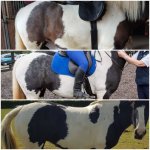
Piebald changing colour anyone?

red roan is an old english terminology, given that there is much confusion using such terms it is better to include base colour + roan as a modifier (ie bay roan)

Where greying starts often varies the same as speed of greying but tails are usually considered very indicative.
 
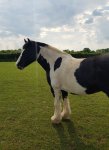
Most people find it hard to believe they are all photos of him. Especially as he looks almost completely "white" in his winter coat.

Do you know your boys parentage?

The photo is last year aged 10 in his summer coat.

he is gorgeous! I have no idea of parents xx
 
Just out of interest
Years ago I knew a blue roan with black points, mane ,tail and legs, a very smart horse . Also a strawberry roan same black points, also very smart. Would the blue have started black and the strawberry bay?
Another odd one was a mare who looked grey but was appaloosa when clipped, she was very hairy ( possibly something hormonal going on there) and needed clipping even in summer. The spots were raised too .
Fascinating stuff colour genetics.
 
Just out of interest
Years ago I knew a blue roan with black points, mane ,tail and legs, a very smart horse . Also a strawberry roan same black points, also very smart. Would the blue have started black and the strawberry bay?
Another odd one was a mare who looked grey but was appaloosa when clipped, she was very hairy ( possibly something hormonal going on there) and needed clipping even in summer. The spots were raised too .
Fascinating stuff colour genetics.

I have no idea about the colours, hopefully someone will be able to tell you in here, it’s really interesting though.
What I understand about raised dark spots In fur is that If it’s raised its usually scar tissue due to previous rain scald or fly bites or reactions that’s left a mark. Xx
 
So historically UK wise
strawberry = chestnut + roan
red= bay of the (brighter variety) + roan
blue = black or dark bay/seal brown +roan.

Usually you cannot visually tell if a horse is roan for definite at birth, it can cause hyperpigmentation (as can grey), it is visible in first foal shed. Usually it leaves noticeable inverted Vs on the legs and no roaning on the face but the range of phenotypes can be huge from a bit of roaning along the topline or so much that the head is covered too.
 
Could be diet-related. This is my mare, all taken on pretty much the same day of the year in 2017, 2018 and 2020 (month of May).

20200602_064910_copy_800x800.jpg

The first pic with the "brown" was just after I bought her so that colour was affected by her diet prior to my ownership.

The second pic - the "roan" was her being fed just grass.

The third pic is her on Forage Plus Winter balancer with copper and zinc (she has this all year round). A lack of copper in grazing is well-known for causing fading in coats, often out down to "sun-bleaching".

For the record, my mare IS a piebald.

20200604_155000_copy_600x832.jpg
 
Top