PSSM, any experts?

Yes, I'm convinced of it. And it also, from my experience, starts to show when they really start to work. And when is that? Five or six. And what do we call it? The feisty fives and the stupid sixes. And then they just give in and live with it, maybe?

I am not suggesting that all feisty five year olds have a vitamin E deficiency by any means, but if my current four year old becomes a feisty five he will definitely be going on the stuff.


.

yes if they were to stand in the field all day forever I doubt you would notice. Mine was broken lightly by 4 when he came. At 6 he was just, well, uninspiring. By 7 he was in horse hospital and a couple of years later totally tied up and brought himself and the rider onto the ground. As well as being lazy he was totally unreliable spookwise.

My 4yo has been on vit e since 7 months old.. I lost my best ever horse to what I now know is this years before the info was available. It is a mistake I won't be repeating. He followed the typical pattern, great as a 4yo then things went downhill.

One thing that comes to mind as to why things may be getting worse is grass. In the olden days horses just lived in fields especially in summer and for many grass was not restricted. Now lami and EMS are everywhere as are tracks (little grass) tiny paddocks, and significant grass restriction. Yet I wonder if horses in this position are getting vit E supplemented.
 
I recently put my mare onto a PSSM type diet as I was also having many problems, she was always stiff looking, sluggish in the field, spooky out riding, reoccurring ulcers, muscles felt solid all over. I had nearly exhausted everything and didn't know what to do next. I had done the PSSM type 1 test a long time a go which was negative. Then @Leo Walker suggested PSSM again which I had forgotten about by this point but having looked at the symptoms, it all seemed to make sense. I haven't seen any of the really awful symptoms like shaking and sweating but many other things were shown whether it was mild in some way or another.

Anyway, I bought a bottle of the Equimins Vitamin E Oil. Hated using it at first, wouldn't pour, sticky, went everywhere but I put it into a small ketchup bottle, got a fat syringe, stuck it in the nozzle, tipped upside down and drew out the amount I needed. It has made life so much easier, I wouldn't go to powder now purely as my mare is a pretty messy eater, likes to take mouthfuls too big and drop it everywhere. I'm putting it on a piece of bread instead like another forum member!

I've digressed - so anyway, since being on this, changing her onto a high protein diet and making sure she is always warm, the change has been enormous. She is so much more elastic in the way she moves, her muscles all over are so squishy, she is no longer spooky and there are just lots of things I am still noticing about how she is different. She is really just happy now, happier than I have ever seen her actually.

Her diet is: 1 Stubbs scoop (or 1/2 scoop depending on grass amount) of Alfa A Molasses Free, a cup of Copra which I vary depending on if I still want a good protein amount without a huge amount of feed, 10000iu Vitamin E Oil, natural pure sea salt (no anti-caking) and Coopers Gut Support.

There are loads of ways to manage this whether it is PSSM or another muscle disorder, I was just lucky that I found what works straight away. The Vitamin E is the main thing responsible for the improvement though I think and would definitely be my first go-to if I had to do it again.

Good luck! X
 
I haven't read the costings however if your horse is actually on the ground it is so bad you go for the best quality and for me that was equimins. Cost didn't come into it. Quality did. (FP natural would have done just as well) There is little savings in buying oil in bulk. I do as it is less deliveries.

Oil is not notoriously difficult to use. I don't get any wastage whatsover with oil. If I put powder in the feed an they dropped a mouthful on the ground I may do. I use oil on 5 horses once daily. It takes me less than 60 seconds to weigh out the oil for all of them. It then takes me about another minute to walk round and hand out the oil. With oil you need to get organised. Simples!

A sensible starting place, in the VERY humble opinion of someone who had a horse on the ground it was so bad is not cheap synthetic vit E. It is the very best quality you can buy. It is doesn't produce results then you have less chance of blaming the oil. If you use synthetic and there is little change you will always be wondering.

Except its not the very best quality you can buy. The very best quality is Nano E, otherwise there is no difference in quality between natural and synthetic. Its explained in the quote from the FP article in my post above.

Something being natural doesnt make it better. If you have a serious problem then you need to be looking at Nano E as that is the only type that has any benefit over the others.

And clearly the oil is difficult to use as there are posts on here complaining about how difficult it is to use.

So instead of spending £100 on oil, spending £17 on powder thats easy to use and does the same thing is a much better option. That is of course just my opinion, but it is based on facts, not just a feeling that something is better because its more expensive.
 
  • Like
Reactions: DD
Never said shivers and EPSM are the same thing! Said my horse was sold to me with a description of being a shiverer.

Vets and I thought he was not necessarily that typical so after reading a number of scientific papers when he was 4 (so published in 2010 a fair while ago) the recommendation was testing by muscle biopsy or to just go ahead with a diet change as if he’d tested positive. Decreased sugar, increased oil and Vit E and selenium supplementation and looking for any improvement. The regime worked well for him (and a few others I have known since with similar ill defined issues often put down to Shivers/EPSM/unknown neurological) hence us bothering to take the time to post our experience. Especially given it rung a few familiar bells with the flank and sweating which was the main feature we also saw. It seemed the OP had not reached a final diagnosis (I was told the blood test is not diagnostic which is why our vets did not do it but whilst taking account of that I did not raise that in my post as vet opinions differ). Fairly common place in diagnostic medicine to treat a suspected diagnosis without specific testing if the treatment itself would cause no harm. Often further testing a suspected diagnosis by withdrawing treatment and seeing if symptoms return. I would not do a muscle biopsy now and expose him to a procedure of no benefit just to give him a label. I say he has a metabolic disorder, the vets refer to it as EPSM and the insurance company still say he had shivers. Either way the symptoms described by the OP sound very similar. Hopefully the regime works as well for the OP. Sorry for posting without an official label for my horse and wanting to share a positive story with the OP for a horse with similar symptoms!

OP: Would not recommend the Saracen Re-leve if your horse is overweight and will eat something lower calorie. We just have very little choice of bucket feed as we have an extremely fussy horse and he is in quite a fair bit of work mainly jumping so it suits him.
 
Except its not the very best quality you can buy. The very best quality is Nano E, otherwise there is no difference in quality between natural and synthetic. Its explained in the quote from the FP article in my post above.

Something being natural doesnt make it better. If you have a serious problem then you need to be looking at Nano E as that is the only type that has any benefit over the others.

And clearly the oil is difficult to use as there are posts on here complaining about how difficult it is to use.

So instead of spending £100 on oil, spending £17 on powder thats easy to use and does the same thing is a much better option. That is of course just my opinion, but it is based on facts, not just a feeling that something is better because its more expensive.


I am glad the synthetic product is working for you, I would however caution anyone with a horse with serious problems that you get what you pay for and quality counts with vit E.
 
So instead of spending £100 on oil, spending £17 on powder thats easy to use and does the same thing is a much better option. That is of course just my opinion, but it is based on facts, not just a feeling that something is better because its more expensive.


This is a totally ridiculous and very misleading comparison. You can't spend £17 on any powder available and obtain the same bio available number of international units (iu, the dose measure used) of vitamin E as in £100 of oil. You have a normal mare who is being supplemented a tiny dose in winter only. Paddy is trying to give advice to people who may require up to 15,000 iu a day for one PSSM horse.


For other people who have been confused, I will summarise. The facts are really very simple.


Synthetic vitamin E works the same as natural vitamin E. This has been proved scientifically.

It costs about half as much.

Vitamin E is actually a mix of chemicals that are very similar but not the same in their action. The bio availability of the chemical that you need is about half in synthetic vitamin E compared to natural vitamin E.

So you need to feed twice as much to get the same result, making feeding natural and synthetic vitamin E powder about the same cost. (unless you add shipping and buy in small volume, when the cost will increase because you need to buy it twice as often).

Depending on what offers are available at any particular time, the cheapest way per dose to feed vitamin E is usually to buy Equimins oil. Some people, me included, find the powder form easier and worth the few pounds extra.


..
 
Last edited:
I think I need to beat myself about the head with a wet fish :oops:. I often contribute to the PSSM threads to say how my IDx mare was transformed for the better within 48 hours of adding significant amounts of vit E to her diet.
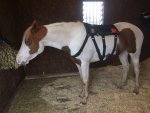
I have just had a similar dramatic improvement with vit E with my youngest mare, an 8yo homebred. Not related to the first, and a very different type. She's been nowty and grumpy to handle recently, but I put that down to the after effects of recovery from long term lameness due to foot balance issues - she blocked lame to the caudal area of all 4 feet after some disastrous farriery (when not in my care). She's now, after changing from a farrier to a podiatrist, nearly sound again, but I put her grumpiness down to maybe ulcers or sore muscles following from when she was holding herself off her sore feet. Booked her in with the chiropractor vet (who's not seen her yet) with a view to getting her scoped for ulcers afterwards.

Three days ago, she'd have tried to eat me if I'd put her massage pad on. Today, it was most welcome, that you very much.

image.jpeg

I use Forageplus Natural vit E powder. They are now both on 10,000 iu vit E per day. She was already on 2000 iu per day as included in her Forageplus balancer.

ETA They live out on unimproved pasture.
 
yes if they were to stand in the field all day forever I doubt you would notice. Mine was broken lightly by 4 when he came. At 6 he was just, well, uninspiring. By 7 he was in horse hospital and a couple of years later totally tied up and brought himself and the rider onto the ground. As well as being lazy he was totally unreliable spookwise.

This is my frustration on the US FB page when someone wants to breed from a positive stallion saying it's non symptomatic - but it's not in work and just stands in a field looking pretty. My mare can do pretty! Anything else sadly is proving harder the older she gets.

I do wonder if we're seeing more of it because of grass restrictions or whether horses with 'issues' 20/30 years ago were just farmed off to the local riding school or sent for dog food. Whatever the reason, suggesting vitamin E supplements has helped a huge number of people in my wider horsey circle with sticky under performing horses - most being of the coloured cob variety.

I do also wonder with diseases such as Lyme being massively under-diagnosed in humans whether there are underlying illnesses in some of these horses. Vitamin E is a powerful antioxidant so maybe it's just giving immune systems a much needed boost.
 
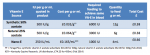
I remembered I had worked out the costs of a few popular Vitamin E supplements I could find on one of my other threads but have added Progressive Earth on there too. All based on 10,000iu to be administered per day and the daily cost:

Progressive Earth Natural Vitamin E Powder - 500g £32.49

500g bag fed at 10,000iu per day would last 17 days and costs £1.91 a day - £1.88 a day if you purchase a 1kg bag for £63.99 and would last 34 days.

Forage Plus Vitamin E Oil Powder (natural) - 500g £37.98

500g bag fed at 10,000iu per day would last 25 days fed at 10000iu and costs £1.51 a day - They don't advertise 1kg bags due to shelf life. This is what they have said to me when I contacted them.

Equimins Vitamin E Oil - 500ml £52.25

500ml bottle fed at 10,000iu per day would last 50 days fed at 10000iu and costs £1.04 a day (1L bottle £99.50 would last 100 days and be 99p a day)

The Healthy Horse Company Vitamin E Oil Powder (Synthetic) - 600g £26.99

600g bag fed at 10,000iu per day would last 30 days at 89p a day

So in conclusion, synthetic Vitamin E fed at the same dose is actually the cheapest.

I still feed the oil but may look at this now I've looked through it all again.
 
This is a totally ridiculous and very misleading comparison. You can't spend £17 on any powder available and obtain the same bio available number of international units (iu, the dose measure used) of vitamin E as in £100 of oil. You have a normal mare who is being supplemented a tiny dose in winter only. Paddy is trying to give advice to people who may require up to 15,000 iu a day for one PSSM horse.


For other people who have been confused, I will summarise. The facts are really very simple.


Synthetic vitamin E works the same as natural vitamin E. This has been proved scientifically.

It costs about half as much.

Vitamin E is actually a mix of chemicals that are very similar but not the same in their action. The bio availability of the chemical that you need is about half in synthetic vitamin E compared to natural vitamin E.

So you need to feed twice as much to get the same result, making feeding natural and synthetic vitamin E powder about the same cost. (unless you add shipping and buy in small volume, when the cost will increase because you need to buy it twice as often).

Depending on what offers are available at any particular time, the cheapest way per dose to feed vitamin E is usually to buy Equimins oil. Some people, me included, find the powder form easier and worth the few pounds extra.


..


Actually it's perfectly clear and shows exactly what you pay per 1000ui

You can repeat yourself all you want. Doesn't make you right 😉
 
I remembered I had worked out the costs of a few popular Vitamin E supplements I could find on one of my other threads but have added Progressive Earth on there too. All based on 10,000iu to be administered per day and the daily cost:


So in conclusion, synthetic Vitamin E fed at the same dose is actually the cheapest.


Wrong.

I have no idea how many times I will need to repeat this, but for the sake of other posters I will repeat it until I am blue in the face.

If you are feeding synthetic vitamin E you have to feed TWICE AS MUCH to get the same effect.


..
 
Wrong.

I have no idea how many times I will need to repeat this, but for the sake of other posters I will repeat it until I am blue in the face.

If you are feeding synthetic vitamin E you have to feed TWICE AS MUCH to get the same effect.


..

It is not wrong, I am not sure how you aren't understanding.

Equimins Vitamin E Oil is £1.04 a day for 10,000iu (10ml) and The Healthy Horse Company Synthetic Vitamin E powder is 89p a day for 10,000iu (20g). It is not about the quantity being fed but the iu amount. Synthetic is still cheaper to feed at 10,000iu than natural at 10,000iu. You still get the same dose for a fraction of the cost, who cares if you have to feed slightly more of it to do so.

If you had to take 2g of a medication and you could take one 2g tablet a day or two 1g tablets a day which would be cheaper, yes you are taking twice the amount but you are still getting the dosage needed. It's really quite simple.
 
Last edited:
Wrong.

I have no idea how many times I will need to repeat this, but for the sake of other posters I will repeat it until I am blue in the face.

If you are feeding synthetic vitamin E you have to feed TWICE AS MUCH to get the same effect.


..

I can see you are struggling!!!!

this is taken from FP (hope that's OK FP) and the final sentence refers.

the question of whether to feed natural or synthetic vitamin E is a matter of personal choice. There is no doubt the natural form is only supplying exactly what your horse needs however there is no evidence at all to suggest feeding the other stereoisomer compounds that are present in the synthetic form causes any problem. We also know the two most common commercial forms of synthetic and natural vitamin E, the acetate adsorbates, differ in their bioavailability by a factor of two. This means you would have to feed double the quantity of synthetic vitamin E to have the same bioavailable uptake as natural vitamin E.


so the figures in the earlier post would be .89 x 2 = £1.78.
 
It is my understanding that to get the same effect you have to feed twice as much synthetic as natural... so 20000iu synthetic = 10000iu natural?
 
It is my understanding that to get the same effect you have to feed twice as much synthetic as natural... so 20000iu synthetic = 10000iu natural?


Correct. I don't know why two of our number are struggling with this. It's very clear. I've even pointed to the Forage Plus article which gives the molecular structure of the chemicals involved.


It is not wrong, I am not sure how you aren't understanding.

Equimins Vitamin E Oil is £1.04 a day for 10,000iu (10ml) and The Healthy Horse Company Synthetic Vitamin E powder is 89p a day for 10,000iu (20g). It is not about the quantity being fed but the iu amount. Synthetic is still cheaper to feed at 10,000iu than natural at 10,000iu. You still get the same dose for a fraction of the cost, who cares if you have to feed slightly more of it to do so.
.

But you have to feed 20,000iu of synthetic to get the same effect as 10,000 iu of natural.

The iu is measured on vitamin E in total, where in synthetic vitamin E there is more than one vitamin E chemical being counted, only one of which is helpful in PSSM.


..
 
so the figures in the earlier post would be .89 x 2 = £1.78.

No it wouldn't.

600g bag of synthetic powder costs £26.99.

4g of powder contains 2000iu.

10,000iu would be 20g of powder.

600g divided by 20g = 30 days

£26.99 divided by 30 days = 89p

It is 89p per 10,000iu dose.
 
Correct. I don't know why two of our number are struggling with this. It's very clear. I've even pointed to the Forage Plus article which gives the molecular structure of the chemicals involved.


But you have to feed 20,000iu of synthetic to get the same effect as 10,000 iu of natural.

The iu is measured on vitamin E in total, where in synthetic vitamin E there is more than one vitamin E chemical being counted, only one of which is helpful in PSSM.


..

Right, I understand now. Apologies, when you were saying twice the amount, I thought you were referring to the quantity being fed, not the iu.

But why does it make any difference? Surely 10,000iu is 10,000iu whether it is synthetic or natural?

So from what you have said, if you feed 10,000iu of synthetic vitamin e, the horse would only get 5000iu from it? Even though on the synthetic supplements, it says how much iu you get for the amount of supplement used, not half that amount. On one for example, the synthetic supplement says 4g of powder gives 2000iu of vitamin e, if it was the case that it only gives half the amount, would they not put that 4g of powder actually only supplies 1000iu?
 
Last edited:
Read the Forage Plus article.

I have but what I am saying is on the synthetic vitamin e dosage instructions, are they not already factoring in that it needs to be double the amount?

Progressive Earth says 2000iu per 4g. Have they already factored in that only half gets absorbed? So I mean, are they displaying the amount of iu in the dose or the amount that would be absorbed?

I hope I am making sense!
 
I have but what I am saying is on the synthetic vitamin e dosage instructions, are they not already factoring in that it needs to be double the amount?

Progressive Earth says 2000iu per 4g. Have they already factored in that only half gets absorbed? So I mean, are they displaying the amount of iu in the dose or the amount that would be absorbed?

I hope I am making sense!

Your question makes sense to me and I'm struggling with the same.

If synthetic directions of use say 2000iu per 4g surely that means there is 2000iu per 4g. If the doubling factor is correct then surely the products would be labelled 2000iu per 8g?

How can the uptake be distinguished between natural and synthetic? If I eat 2000 calories of chocolate it's a lower volume than 2000 calories of celery but I've still eaten 2000 calories regardless? o_O

ETA cross posted with Ester
 
Last edited:
No, it isn't factored in for ease this is the last table on that page, note column D.
View attachment 32027

Yes, just saw this. I wasn't sure if other companies had already factored it in so in summary, it's actually quite deceiving on some of the products as they say to get 2000iu, you have to feed 4g unless you know that in order to get the amount you want into the horse, you have to feed 4000iu/8g to achieve 2000iu.
 
There is more than one chemical in what is called vitamin E. Synthetic vitamin E contains less of the chemical that PSSM horses need. So there is 1000iu of 'vitamin E' in synthetic vitamin E by molecular weight, but only half that is actually available to the horse, compared with the whole of it in natural vitamin E.

They don't declare it because if they did, sales of synthetic vitamin E would fall through the floor. Few people would buy synthetic if they realised that natural was the same price, or cheaper, by the time you've doubled the amount you feed. It's a nasty marketing trick, as far as I can make out.


....
 
Your question makes sense to me and I'm struggling with the same.

If synthetic directions of use say 2000iu per 4g surely that means there is 2000iu per 4g. If the doubling factor is correct then surely the products would be labelled 2000iu per 8g?

How can the uptake be distinguished between natural and synthetic? If I eat 2000 calories of chocolate it's a lower volume than 2000 calories of celery but I've still eating 2000 calories regardless? o_O

Natural compounds are "handed", but synthetic ones will be, metaphorically, both right and left handed - mirror images of each other, because the manufacturing process is less sophisticated. A right and left hand are the same shape, but they can't be super-imposed onto each other.

Only the correct "handed" version will be biologically effective. The other-handed / mirror image version is wasted in synthetic drugs.
 
Natural compounds are "handed", but synthetic ones will be, metaphorically, both right and left handed - mirror images of each other, because the manufacturing process is less sophisticated. A right and left hand are the same shape, but they can't be super-imposed onto each other.

Only the correct "handed" version will be biologically effective. The other-handed / mirror image version is wasted in synthetic drugs.

Thank you, that makes perfect sense.
 
Thank you, that makes perfect sense.

That has cleared it up now! It's just annoying that they put on their feeding instructions 4g for 2000iu with no mention that the horse will only get 1000iu from this but then like YCBM just said, money maker for the companies!
 
The sums I did included feeding the PE vitamin e at double the amount, so it is still cheaper. I even showed the break down so everyone can see. There was also a quote from the article explaining the difference between the 3 different types of vitamin e as well, so not sure why people are still going on about it.

It doesnt seem cheaper, it is. It cost me £17.99 for a whole winter as opposed to £100 for oil. Its ridculous to suggest that people need to spend £100 on oil when they have no idea if its an actual problem or not.

Doing the sums just to double check PEs synthetic powder is roughly 5p per 1000iu Oil is 11p per 1000iu dropping to 10p per 1000iu if you spend £100 for a litre. So its slightly cheaper to use the synthetic powder unless you buy oil in bulk. I couldnt be bothered looking at powder in bulk as it would take me decades to use it.
 
Didn't even realize this thread had so many comments! Interesting about the spookiness being a symptom, my welsh went through a terrible lazy stage at 5 and never really came out of it. Hes always 'hard' to touch all over so could be worth me trying vitamin E specially considering hes on limited grazing.

I had the results back today.. my cob is negative for PSSM type 1. I am awaiting a call back from my vet about where to go next but keeping the costs down.
He is still on limited grazing, yet still has some fat pads. I am moving the electric fence a small amount a day, my welsh who is a great doer is starting to look on the 'thinner' side so having to be fed yet my cob still looks not much different to before.

He is footy, he'll walk on the grass verge with the risk of being electrocuted by the fence instead of up the track (fully shod) but hes been like this for a long time now and I've noticed when ridden at first he feels really forward and happy, within 15 minutes he feels lazy and fed up.
He also has quite a thick coat even though its his summer coat, but then again hes a cob (who would have lots of feather) so have always assumed its in his blood to be that cobby thicker skinned, coat type of horse.

My vet has said his muscle enzymes they tested when he was out of work in November 2018 were abnormally high, not sure what that adequates to?
 
Top