Session 29 hot hot hot

I must see things funny as I think she rides him rather well. I haven't watched any other videos and only dipped in and out of this one (have watched about twenty minutes of it I guess but in bits) but I certainly think she is working hard to stop him dropping BTV. She certainly does a much better job than I could. I don't know that I'd even much fancy a sit on Armas, never mind trying to convince him to see things from my POV!

I agree with you Jesstickle! I've seen posters claim that she is unbalanced, leaning on her hands, bracing against him, harsh with her hands, not using her seat & legs & that she doesn't know how to ride on the correct diagonal.
It leaves me scratching my head thinking 'well if she's so bad I am NEVER posting pictures or videos of my riding' :D :D
 
I have repeatedly said this rider is no good for Armas for all the above reasons and a few more and my opinion remains unchanged.

A lot of posters seem to have missed the fact that having horses BTV is a training method that this rider uses, she actively encourages it. It is a form of control, it makes the horses submissive because they have no choice.

I have also stated "a horse knows how to be a horse". Some people seem to have interpreted that as meaning that the horse already knows what you want and if the rider just sits doing nothing it will perform the most wonderful dressage movements all on its own. What I mean is that the buttons are there and with correct training these buttons require very little pressure to gain a response. A horse knows what you want not because you have had a discussion in the stable beforehand but because of the aids you are giving him while you are on the end of the reins. So if a horse goes BTV as an evasion and the rider reinforces that by using precisely that training method to control his way of going what is he learning?

James, I asked on the previous thread as to whether you would do an exercise for me, it will give you a feel of how Armas is feeling being ridden with this method. Have you? I feel there could be only one reason as to why you would not and that would be that you may find something out that you may not like? Also have you had a chance to look at the links I posted on the previous thread. It is so important to see both sides of a story so please don't just poo poo different ideas without really knowing why :)

Happy Holidays.
 
I do not know whether you read French, hope you do as this is good to read :)


POUR LE CAVALIER Regardez au-dessus de votre cheval, ne regardez pas en bas, vous devez sentir ce qui se passe en-dessous de vous. Ne montez jamais avec les mains trop basses. La partie supérieure de votre bras doit descendre verticalement. A partir du coude, vous devez réaliser une ligne droite, en passant par l’avant-bras et la rêne vers la bouche du cheval. Un cheval qui n’est pas droit ne peut jamais tenir la tête basse. Seul un cheval redressé peut se mettre en main et pourra descendre la tête. Votre main intérieure ne peut jamais être plus basse que la main extérieure. Dans un virage ou sur la volte, votre main intérieure sera toujour plus élevée que la main extérieure. Ne compensez jamais l’asymétrie de votre cheval par votre poids. Si le cheval se couche vers l’intérieur, faites une contre-incurvation en bougeant les rênes en ne mettez jamais votre poids à l’extérieur: cela pourrait causer une énorme tension dans le dos du cheval. Gardez donc toujours votre poids à l’intérieur de l’incurvation. Le cheval doît toujours être en impulsion, il doît avoir envie d’avancer. Gardez le cheval réceptif aux aides. Recompensez votre cheval chaque fois qu’il travaille bien. Les récompenses rendent le cheval grand et fier. ‘Tous vos actes envers le cheval doivent être déterminés par l’amour et le sens des responsabilités’. Nuno OLIVEIRA.

My French reading is far from perfect but I get the gist :)
 
Last edited:
I have repeatedly said this rider is no good for Armas for all the above reasons and a few more and my opinion remains unchanged.

A lot of posters seem to have missed the fact that having horses BTV is a training method that this rider uses, she actively encourages it. It is a form of control, it makes the horses submissive because they have no choice.

I have also stated "a horse knows how to be a horse". Some people seem to have interpreted that as meaning that the horse already knows what you want and if the rider just sits doing nothing it will perform the most wonderful dressage movements all on its own. What I mean is that the buttons are there and with correct training these buttons require very little pressure to gain a response. A horse knows what you want not because you have had a discussion in the stable beforehand but because of the aids you are giving him while you are on the end of the reins. So if a horse goes BTV as an evasion and the rider reinforces that by using precisely that training method to control his way of going what is he learning?

James, I asked on the previous thread as to whether you would do an exercise for me, it will give you a feel of how Armas is feeling being ridden with this method. Have you? I feel there could be only one reason as to why you would not and that would be that you may find something out that you may not like? Also have you had a chance to look at the links I posted on the previous thread. It is so important to see both sides of a story so please don't just poo poo different ideas without really knowing why :)

Happy Holidays.

In your opinion the rider is no good for Armas and you are entitled to that opinion. However on that point we will have to agree to disagree. She is not using BTV as a training method, I am not sure how many times I have to point this out the horse puts HIM self BTV as an evade to escape the bit. If you release the contact when he goes BTV the horse has won the battle and knows that if he does not want to work pressure will be released by going BTV.

I often have long chats with my horse and for the most part he takes no heed :confused:

I will not be walking about as you suggested as a test.
 
I have also stated "a horse knows how to be a horse". Some people seem to have interpreted that as meaning that the horse already knows what you want and if the rider just sits doing nothing it will perform the most wonderful dressage movements all on its own. What I mean is that the buttons are there and with correct training these buttons require very little pressure to gain a response. A horse knows what you want not because you have had a discussion in the stable beforehand but because of the aids you are giving him while you are on the end of the reins. So if a horse goes BTV as an evasion and the rider reinforces that by using precisely that training method to control his way of going what is he learning?

If I am included in the 'some people', I didn't say nor intend to imply that at all - what I was saying is that in my opinion horse's do not have built in 'buttons', that mean that as long as a rider uses the correct aids they will get a positive response from the horse. And if you are suggesting that you do think that Allover then I would suggest that you haven't had much experience backing and schooling youngsters, or for that matter, retraining horses that, through their training for another discipline, have developed different buttons and responses.
 
If I am included in the 'some people', I didn't say nor intend to imply that at all - what I was saying is that in my opinion horse's do not have built in 'buttons', that mean that as long as a rider uses the correct aids they will get a positive response from the horse. And if you are suggesting that you do think that Allover then I would suggest that you haven't had much experience backing and schooling youngsters, or for that matter, retraining horses that, through their training for another discipline, have developed different buttons and responses.

Unless I have completely misunderstood your post you are saying that there are no set correct aids for different movements?

I shall try and explain, a perfectly trained horse who is ridden by a perfect rider who presses the right button at the right time will, when a different rider gets on and gives said perfect aids, elicit a perfect response. It has been trained correctly to do so. If as a perfect rider you get on a horse that has been ridden by a rider who gives incorrect aids you will not get a perfect response if you give the perfect aids. What do you do then, do you continue to give incorrect aids or do you retrain using the correct aids for what you are asking? If a rider uses the aids for leg yield to perform a shoulder in what does that rider then do when they want to ask for leg yield?

Hope that makes sense even if you don't agree! :)
 
Unless I have completely misunderstood your post you are saying that there are no set correct aids for different movements?

I shall try and explain, a perfectly trained horse who is ridden by a perfect rider who presses the right button at the right time will, when a different rider gets on and gives said perfect aids, elicit a perfect response. It has been trained correctly to do so. If as a perfect rider you get on a horse that has been ridden by a rider who gives incorrect aids you will not get a perfect response if you give the perfect aids. What do you do then, do you continue to give incorrect aids or do you retrain using the correct aids for what you are asking? If a rider uses the aids for leg yield to perform a shoulder in what does that rider then do when they want to ask for leg yield?

Hope that makes sense even if you don't agree! :)

but asyou say the horse has to be taught the correct response so getting on a horse that has not been taught that will not give the correct response.

a rider that sits perfectly/gives all the perfect aids is not always the rider that can teach a horse to respond perfectly to those aids
 
In your opinion the rider is no good for Armas and you are entitled to that opinion. However on that point we will have to agree to disagree. She is not using BTV as a training method, I am not sure how many times I have to point this out the horse puts HIM self BTV as an evade to escape the bit. If you release the contact when he goes BTV the horse has won the battle and knows that if he does not want to work pressure will be released by going BTV.

I often have long chats with my horse and for the most part he takes no heed :confused:

I will not be walking about as you suggested as a test.

Yes we shall James although all the time you keep posting and asking for opinion and people keep agreeing with you I will continue to disagree. Hopefully it may get someone thinking. Now I have just listened to her explanation again regarding her maintaining the contact when he is BTV, and whilst I understand why she does it I do not think that this is the right way to go, physically and mentally, for the horse. The "walking about" that I asked if you would be so kind to do was only to try and give you an idea of what your horse is feeling when he is ridden in this position for prolonged periods of time. Muscles are muscles whether on a horse or human. It hurts. I do not understand why you would not do it, if only out of curiosity!

Long chats with horses are the best purely because they take no heed. It makes them the perfect sounding post:)
 
I do not know whether you read French, hope you do as this is good to read :)


POUR LE CAVALIER Regardez au-dessus de votre cheval, ne regardez pas en bas, vous devez sentir ce qui se passe en-dessous de vous. Ne montez jamais avec les mains trop basses. La partie supérieure de votre bras doit descendre verticalement. A partir du coude, vous devez réaliser une ligne droite, en passant par l’avant-bras et la rêne vers la bouche du cheval. Un cheval qui n’est pas droit ne peut jamais tenir la tête basse. Seul un cheval redressé peut se mettre en main et pourra descendre la tête. Votre main intérieure ne peut jamais être plus basse que la main extérieure. Dans un virage ou sur la volte, votre main intérieure sera toujour plus élevée que la main extérieure. Ne compensez jamais l’asymétrie de votre cheval par votre poids. Si le cheval se couche vers l’intérieur, faites une contre-incurvation en bougeant les rênes en ne mettez jamais votre poids à l’extérieur: cela pourrait causer une énorme tension dans le dos du cheval. Gardez donc toujours votre poids à l’intérieur de l’incurvation. Le cheval doît toujours être en impulsion, il doît avoir envie d’avancer. Gardez le cheval réceptif aux aides. Recompensez votre cheval chaque fois qu’il travaille bien. Les récompenses rendent le cheval grand et fier. ‘Tous vos actes envers le cheval doivent être déterminés par l’amour et le sens des responsabilités’. Nuno OLIVEIRA.

My French reading is far from perfect but I get the gist :)

You aiming that at the rider, cos I doubt many on here bar me and the other French speakers will be able to get the finer points of this....?
 
Unless I have completely misunderstood your post you are saying that there are no set correct aids for different movements?

I shall try and explain, a perfectly trained horse who is ridden by a perfect rider who presses the right button at the right time will, when a different rider gets on and gives said perfect aids, elicit a perfect response. It has been trained correctly to do so. If as a perfect rider you get on a horse that has been ridden by a rider who gives incorrect aids you will not get a perfect response if you give the perfect aids. What do you do then, do you continue to give incorrect aids or do you retrain using the correct aids for what you are asking? If a rider uses the aids for leg yield to perform a shoulder in what does that rider then do when they want to ask for leg yield?

Hope that makes sense even if you don't agree! :)

No I'm not saying that - I am not talking about schoolmasters I am talking about horses that are young or poorly/differently trained. You state in your post that 'the buttons are there' and I am disagreeing with this point specifically because from my experience I do not believe that the buttons are already there in any horse, I believe that a rider and trainer creates these buttons and then gradually refines them. And often when creating these buttons the rider's way of asking can be closer to crude than correct, because that's what you have to do to enable the horse to understand the initial idea.

I make this point on this thread because it has been suggested many times that if the rider altered her aids through the reins so that she was using them more 'correctly' then Armas' btv issues would be eradicated. While it is not entirely clear why Armas goes btv - it could be that he was held in this position previously, is held in this position now, his natural conformation, an evasion... - it seems abundantly clear to me that this is a horse that was never taught to take a contact properly or even consistently, and this, at 9 years old, makes him a very difficult training proposal. When you train a newly backed horse they should and do very quickly learn to accept the contact and rely on it as part of the communication coming from the rider. Horses that have received this training adequately are (under normal circumstances) steady in their head carriage and respond to new communication down the reins positively.

Ex racers have to be re educated in their contact because they have not had the same contact training as dressage horses, but at least they have had some contact training that is usually very consistent, even if it is 'when the rider takes a strong hold grab a hold on the bit and run like hell'. Armas however, I believe is symptomatic of a horse that has had very confusing and inconsistent contact training, so the rider/trainer has the unenviable job of not just re educating him but also trying to bring some clarity and simplicity to his understanding of what he is supposed to do with the bit. Add this to the fact that he appears to be a naturally stressy and panicky horse and you get the response to pressure and change that we have all observed in these videos - head to the chest, strong and tense through the neck and run around like a mad thing. He has/had absolutely no confidence in/understanding of the contact and so he metaphorically stuffs his fingers in his ears and shouts la la la la la.

I think that before this trainer started Armas' contact issues ran far deeper than putting himself btv as an evasion and that makes it a tricky one to sort out. With regards to these issues I don't think this trainer has done the best job possible with him, but I don't think it has been disastrous.
 
You aiming that at the rider, cos I doubt many on here bar me and the other French speakers will be able to get the finer points of this....?

I posted it for James hence why I asked the question of him (he is living in France and I believe a French speaker so therefor presumed he could read it as well) . Mind you it would be interesting to hear the riders thoughts on it!
 
I posted it for James hence why I asked the question of him (he is living in France and I believe a French speaker so therefor presumed he could read it as well) . Mind you it would be interesting to hear the riders thoughts on it!

I can read it - see my response above :)
There is a reason I like riding untouched youngsters - with a blank canvas it is easy to keep one's riding every bit as idealistic as that.
 
No I'm not saying that - I am not talking about schoolmasters I am talking about horses that are young or poorly/differently trained. You state in your post that 'the buttons are there' and I am disagreeing with this point specifically because from my experience I do not believe that the buttons are already there in any horse, I believe that a rider and trainer creates these buttons and then gradually refines them. And often when creating these buttons the rider's way of asking can be closer to crude than correct, because that's what you have to do to enable the horse to understand the initial idea.

I make this point on this thread because it has been suggested many times that if the rider altered her aids through the reins so that she was using them more 'correctly' then Armas' btv issues would be eradicated. While it is not entirely clear why Armas goes btv - it could be that he was held in this position previously, is held in this position now, his natural conformation, an evasion... - it seems abundantly clear to me that this is a horse that was never taught to take a contact properly or even consistently, and this, at 9 years old, makes him a very difficult training proposal. When you train a newly backed horse they should and do very quickly learn to accept the contact and rely on it as part of the communication coming from the rider. Horses that have received this training adequately are (under normal circumstances) steady in their head carriage and respond to new communication down the reins positively.

Ex racers have to be re educated in their contact because they have not had the same contact training as dressage horses, but at least they have had some contact training that is usually very consistent, even if it is 'when the rider takes a strong hold grab a hold on the bit and run like hell'. Armas however, I believe is symptomatic of a horse that has had very confusing and inconsistent contact training, so the rider/trainer has the unenviable job of not just re educating him but also trying to bring some clarity and simplicity to his understanding of what he is supposed to do with the bit. Add this to the fact that he appears to be a naturally stressy and panicky horse and you get the response to pressure and change that we have all observed in these videos - head to the chest, strong and tense through the neck and run around like a mad thing. He has/had absolutely no confidence in/understanding of the contact and so he metaphorically stuffs his fingers in his ears and shouts la la la la la.

I think that before this trainer started Armas' contact issues ran far deeper than putting himself btv as an evasion and that makes it a tricky one to sort out. With regards to these issues I don't think this trainer has done the best job possible with him, but I don't think it has been disastrous.

All horses will respond to the same aids. Yes you may have to be "cruder" in the beginning but the ultimate aim is that those buttons take little pressure to elicit a response. With regards to re-training, as I also mentioned before you re-train with the correct aids you do not use the old "incorrect" aids to improve a horse. I also know that it takes longer to re-educate horses that have been "confused" by "incorrect" riding than it does to start off a young horse with no bad habits already installed.

My issues with this rider stem from how she is training/riding Armas, yes we know that he goes behind the vertical, yes we know he is hot and stressy but I also know that there are ways of countering this and IMO she has not ridden him well enough. She has not instilled the basics of training before she has moved up the levels with him. If he can't do basic movements well there is no way his more advanced movements will be any good. This will cause him confusion and make him more tense and stressy, it becomes a viscous circle. IMO it is down to the rider to break this cycle, not the horse. She is the one who needs to take the cotton wool out of his ears and speak clearly to him.
 
I can read it - see my response above :)
There is a reason I like riding untouched youngsters - with a blank canvas it is easy to keep one's riding every bit as idealistic as that.

This is not idealistic though, the principles are the same whether you are riding an "blank canvas" or a horse that has been confused and ridden incorrectly. My responses to previous posts should explain why I believe this to be true :)
 
All well trained horses will respond to the same aids. Yes you may have to be "cruder" in the beginning but the ultimate aim is that those buttons take little pressure to elicit a response. With regards to re-training, as I also mentioned before you re-train with the correct aids you do not use the old "incorrect" aids to improve a horse. I also know that it takes longer to re-educate horses that have been "confused" by "incorrect" riding than it does to start off a young horse with no bad habits already installed.

My issues with this rider stem from how she is training/riding Armas, yes we know that he goes behind the vertical, yes we know he is hot and stressy but I also know that there are ways of countering this and IMO she has not ridden him well enough. She has not instilled the basics of training before she has moved up the levels with him. If he can't do basic movements well there is no way his more advanced movements will be any good. This will cause him confusion and make him more tense and stressy, it becomes a viscous circle. IMO it is down to the rider to break this cycle, not the horse. She is the one who needs to take the cotton wool out of his ears and speak clearly to him.

"She is the one who needs to take the cotton wool out of his ears" - that's exactly my point, but I do not think it is as simple as sitting in the right position and giving aids as you would to a schoolmaster. Like I have said before, my opinion is that this rider is far from perfect for Armas, but just because I or anybody else are not keen on her riding style doesn't mean that Armas' problems are as easy to solve as you and others have made out. They may be, but then again they may not.
 
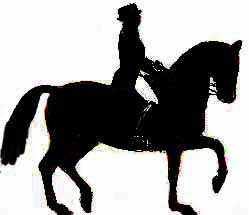
And just by way of explaining my use of the word 'idealistic' - It is clear from your previous posts that you hold both Nuno Oliveira and the sustainable dressage site in high regard. Below is a photo of Oliveira and below it a silhouette from the SD site that is meant to be an example of the wrong way to ride:
_.jpg

chacomo_forcefully_up.jpg


Things are not always so black and white and that's why I use the term idealistic.
 
ATA: I am not saying that we shouldn't strive for the idealism, just that it's not always as easy and simple as all that.
 
DabDab, what are those pics supposed to prove? You cant really compare them because Nuno isnt in side profile there this it's impossible to judge where the nose is in relation to the verticle. You can however see genuine lift of the hindleg unlike the shuffle that the forced GP outline is producing in the diagram
 
"She is the one who needs to take the cotton wool out of his ears" - that's exactly my point, but I do not think it is as simple as sitting in the right position and giving aids as you would to a schoolmaster. Like I have said before, my opinion is that this rider is far from perfect for Armas, but just because I or anybody else are not keen on her riding style doesn't mean that Armas' problems are as easy to solve as you and others have made out. They may be, but then again they may not.

Please don't think that I believe the issues he has will be easy to educate him out of, really I don't. I also do not think that I have ever stated that I did think it was easy. All I have tried to point out on these threads there is another way to train him/horses that, in my opinion, is far kinder and achieves better results than how he is being trained now. I am uncomfortable with this style of riding/horsemanship.
 
And just by way of explaining my use of the word 'idealistic' - It is clear from your previous posts that you hold both Nuno Oliveira and the sustainable dressage site in high regard. Below is a photo of Oliveira and below it a silhouette from the SD site that is meant to be an example of the wrong way to ride:
_.jpg

chacomo_forcefully_up.jpg


Things are not always so black and white and that's why I use the term idealistic.

I think, though I am not 100% certain, that this is Nuno Olivieras son?
 
Yep I do hold the training methods and philosophy towards horses that SD and Nuno Oliviera have in very high regard. I know that their training methods work and I know that I am far more able to look a horse in the eye when using their ideology than when using other ideologies.
 
And just by way of explaining my use of the word 'idealistic' - It is clear from your previous posts that you hold both Nuno Oliveira and the sustainable dressage site in high regard. Below is a photo of Oliveira and below it a silhouette from the SD site that is meant to be an example of the wrong way to ride:
_.jpg

chacomo_forcefully_up.jpg


Things are not always so black and white and that's why I use the term idealistic.

I think that is actually Nuno's son Jiao riding (not that it matters a jot), and technically the horse is "late" with the hind leg. What is supposed to be wrong with the silhouetted horse?
 
Last edited:
Please don't think that I believe the issues he has will be easy to educate him out of, really I don't. I also do not think that I have ever stated that I did think it was easy. All I have tried to point out on these threads there is another way to train him/horses that, in my opinion, is far kinder and achieves better results than how he is being trained now. I am uncomfortable with this style of riding/horsemanship.

Ah, I'm sorry - in that case I have misread the tone and meaning of your previous posts. It's just that you didn't really sound like you were speaking from your own experience, but rather quoting from websites and revered horsemen. And while that's all very inspirational it is a long way away from Armas' training situation. I am sure if the money and logistics would allow then J would have a rider of Oliveira's caliber to ride Armas in an instant. But like I say, I apologise if I have misread your posts as it sounds like I might of.

I think that is actually Nuno's son Jiao riding (not that it matters a jot), and technically the horse is "late" with the hind leg. What is supposed to be wrong with the silhouetted horse?

Sorry, I didn't really look at the rider carefully (just googled and pasted) - like you say it doesn't really matter, since he is also a wonderful rider - the photo was only really supposed to be illustrative of why I am making a distinction between the ideal that people aspire to and write down in books and the reality because Allover discussed my use of the term 'idealistic'.

Um I'm not entirely sure why the silhouette is supposed to be wrong - the accompanying text is rather confusing but basically discusses risking kissing spine and competition riders pulling the horses head into a high position. I took the picture off a page that was linked by Allover in another thread.
 
Ah, I'm sorry - in that case I have misread the tone and meaning of your previous posts. It's just that you didn't really sound like you were speaking from your own experience, but rather quoting from websites and revered horsemen. And while that's all very inspirational it is a long way away from Armas' training situation. I am sure if the money and logistics would allow then J would have a rider of Oliveira's caliber to ride Armas in an instant. But like I say, I apologise if I have misread your posts as it sounds like I might of.


Sorry, I didn't really look at the rider carefully (just googled and pasted) - like you say it doesn't really matter, since he is also a wonderful rider - the photo was only really supposed to be illustrative of why I am making a distinction between the ideal that people aspire to and write down in books and the reality because Allover discussed my use of the term 'idealistic'.

Um I'm not entirely sure why the silhouette is supposed to be wrong - the accompanying text is rather confusing but basically discusses risking kissing spine and competition riders pulling the horses head into a high position. I took the picture off a page that was linked by Allover in another thread.

Ah no, i do have some hands on/practical experience to draw upon. I am no Nuno though :) I trained with a guy in France who trained with Nuno and he did not like the son at all and was less than complimentary about his equitation skills!! I refer to the SD website as it describes it far more clearly than i ever could :)

The silhouetted horse is giving an example of a horse that is on the vertical but not through from behind, this causes extra stress on the back that can cause kissing spine.
 
There's a picture of a perfect piaffe (the grey horse) at the bottom of this article by Philippe Karl. It's also an interesting read if you're not too put off by the dodgy translation and the baffling maths formulas.

http://www.philippe-karl.com/modules/news/print.php?storyid=6&location_id=0&topicid=

I think it's obvious the difference between this and the silhouette on the Sustainable Dressage site.

You can also see PK performing piaffe right at the end of this video:

http://www.youtube.com/watch?v=rbWh_VpIN8Q

IMHO - beautiful.

Just thought it was time someone mentioned PK! He seems to get up a lot of noses in the dressage world, but you've got to admit it, he's doing something right. If Armas was mine... I'd get a PK-accredited trainer to work on softening his mouth and encouraging him to seek the contact rather than evading it.

However Armas's owner doesn't seem interested in classical riding!

I'll go back to lurking now.
 
What a fantastic article and I adore the piaffe pic- I have it framed on my wall already as my brother translated the book :)
 
Excellent! It is the most beautiful picture isn't it?

I think the PK method is much more demanding (on the rider) and more subtle than the conventional route, so I guess many people don't have the patience to pursue it, even though the argument from the horse's point of view (in terms of long-term soundness and lack of stress) makes it a no-brainer for me.

I think Armas would really relax if this approach was tried. I'd personally pay good money to see 29 training sessions posted on here with a PK coach on board!
 
Top