Severe Mudrash

equinehr

New User
Joined
30 January 2016
Messages
2
Visit site
My TB ex-racer mare has terrible mud rash on her legs, particularly her back legs. I have been washing them with Hibi scrub and trying to get some of the scabs off but it doesn't seem to be helping!
 
Last edited:

Hibiscrub is quite a harsh solution and not really suitable for that job. My preference would be to smother with flamazine every day for 10days. Washing all the time can be counter-productive
 
Are you sure it's mud fever sun sensitivity can look the same and requires different treatment, I also agree about the hibiscrub horrible stuff and can do more harm than good as can constant washing, I would get a vet out at least then you will know exactly what it is and if it is mud fever they can give you something that will clear it up.
 
She may need antibiotics to clear up a severe infection. I would call the vet and stop doing anything to her legs until she has been seen, as you're probably causing her a lot of discomfort.
 
As others have said. Flamazine is the best treatment for mud fever - and you can only get that on prescription in the UK. Untreated mud fever - and badly treated mud fever - can lead to cellulitis so antibiotics might be required if this is really bad. perhaps also - if you have not already done so - stop turn out so she is not getting muddy every day.

Once this outbreak has been treated you can use things like pig oil & sulphur to try to prevent it. But don;t apply anything like that whilst the scabs are still there.
 
I recently attended a very good vet clinic talk which concentrated on skin and their advice for mud fever scabs was NEVER pick them off. You are just exposing open flesh to more bacteria which makes the problem worse. Wash with medicated shampoo, dry well and leave them alone. They will fall off naturally when they have healed so stop picking.
 
I experienced this a few years ago with one of mine. He had to have antibiotics as it had become infected. He reacted badly to Flamizine, it caused terrible sores and bleeding. I tried every potion on the market, and he got less and less willing to have anyone near his legs. In the end I tried baby oil with flowers of sulphur, just slathered it on every day. The scabs softened and fell off, and eventually the hair grew back through, and there was no picking off of scabs - they just slid off when I next massaged in the oil. So that's my "go to" remedy now, and I've not had a problem since.
Top tip - cheap Superdrug baby oil, Flowers of Sulpher from "Natural Horseproducts.com" and a plastic drinks bottle with one of those sucky lids, make it up in that and slather it on. (spot test first!)
 
Are you sure it's mud fever sun sensitivity can look the same and requires different treatment, I also agree about the hibiscrub horrible stuff and can do more harm than good as can constant washing, I would get a vet out at least then you will know exactly what it is and if it is mud fever they can give you something that will clear it up.

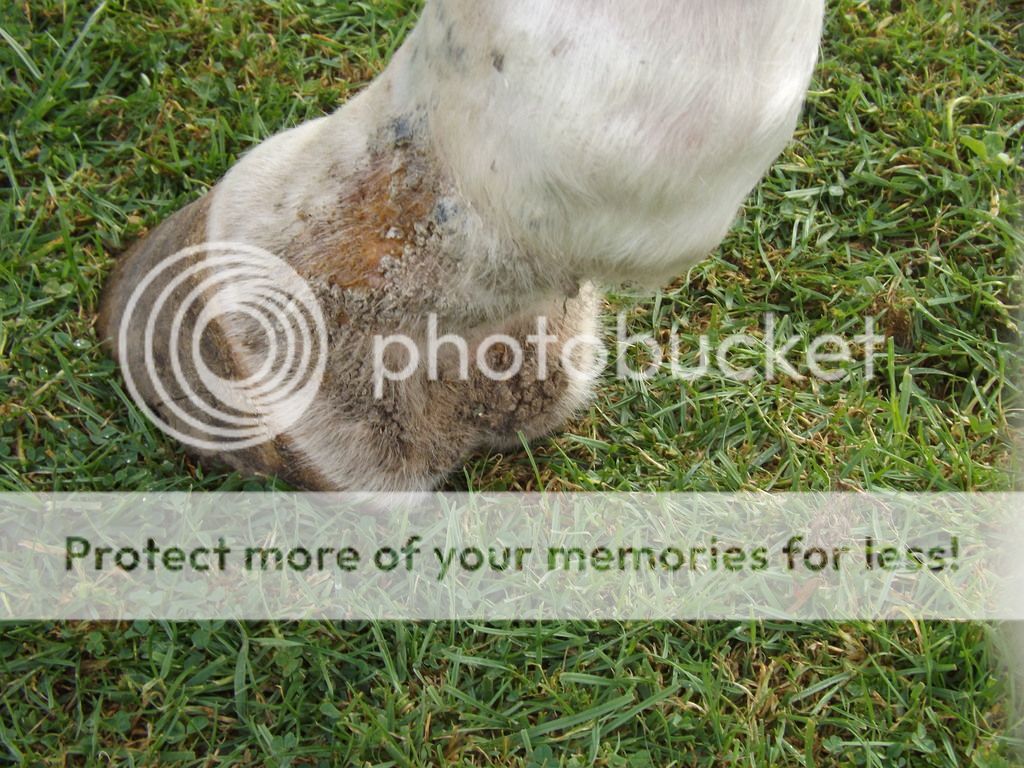
Sound advice, speak to your your vet OP, you may not be battling mud fever. The picture below is not mud fever for instance. This is a much improved case of severe UV, which has cost a lot of money, a huge amount of time and much heartbreak to treat. In mid summer I was considering PTS.

Put the hibiscrub in the bin, it has no place on open sores.

DSCF3716_zpsbhwgagfl.jpg
 
Sound advice, speak to your your vet OP, you may not be battling mud fever. The picture below is not mud fever for instance. This is a much improved case of severe UV, which has cost a lot of money, a huge amount of time and much heartbreak to treat. In mid summer I was considering PTS.

Put the hibiscrub in the bin, it has no place on open sores.

DSCF3716_zpsbhwgagfl.jpg

My Appaloosa got a touch of this over the summer. I put sudocream on and it seemed to sort itself out - can I ask what you used?
 
Providing it is mud rash, I found last year with my grey (with white socks) that washing once a week in Nizerol human shampoo worked wonders. You have to leave it on to soak in though and don't wash it off. I then when dry rubbed in a mixture of sulphur powder and talc. Once the scabs were falling off I loosened them with a curry comb and rubbed in more sulphur powder. It cleared it pretty bad mud rash quickly. For a preventative I use Baby Oil rubbed in so the mud doesn't stick to the skin easily, but as others have said some are allergic to it. Beware of pig oil and sulphur combined as quite a few horses have allergic reactions to that.
 
As an aside I have found using Mud Warrior supplement from Equine Answers helped prevent mud fever on my horses last winter. Although it gets slated by some people Hypocare worked really well when they had mud fever just by soaking the scabs in it and within a couple of days the scabs came off leaving healthy looking skin underneath.
 
My Appaloosa got a touch of this over the summer. I put sudocream on and it seemed to sort itself out - can I ask what you used?

My gelding has suffered from LV very severely in the past and i can honestly say that it has improved no end when I took preventative methods (spray for buttercups, stop feeding alfalfa, apply suncream) but if any scabs showed up (normally just in the crease at the back of the pastern/heel bulbs), I left them completely alone. It really was a case of look but DON'T TOUCH and the scabs just dropped off when they were ready to reveal healthy skin.

RE mud fever and scabs, my Vet has also told me that the latest recommendation is that the scabs should be left in place.
 
I had a TB x mare that used to get mud fever every winter and would start getting lesions in the autumn when the grass was getting a heavy dew. She was stabled at night in the winter and I used to take precautions like putting on Vaseline as a barrier cream everyday, but she always had some outbreaks. I found Equine Ameria's mud rash cream good for a cure, smells very nice!

However, I changed her feed to a Feed Balancer and although I kept on with the barrier cream, I noticed that she didn't get any more mud fever and so that continued during the time I owned her during wet winters and dry winters. So I think there can be a nutritional part to play in why some horses get mud fever.
 
My gelding has suffered from LV very severely in the past and i can honestly say that it has improved no end when I took preventative methods (spray for buttercups, stop feeding alfalfa, apply suncream) but if any scabs showed up (normally just in the crease at the back of the pastern/heel bulbs), I left them completely alone. It really was a case of look but DON'T TOUCH and the scabs just dropped off when they were ready to reveal healthy skin.

RE mud fever and scabs, my Vet has also told me that the latest recommendation is that the scabs should be left in place.

Thanks. When it first came through I was confused - she'd never had mud rash even when we were up to our knees in mud and this was the middle of summer. She was on alfalfa based chaff then so I'll knock that out of her diet. She's got pink skin so I'm used to putting the factor 50 on her face plus a UV facemask - factor 50 on her heels now too I guess (I think I could get my vet degree from this one horse alone.....)
 
Sound advice, speak to your your vet OP, you may not be battling mud fever. The picture below is not mud fever for instance. This is a much improved case of severe UV, which has cost a lot of money, a huge amount of time and much heartbreak to treat. In mid summer I was considering PTS.

Put the hibiscrub in the bin, it has no place on open sores.

DSCF3716_zpsbhwgagfl.jpg

don't know if the pic will come up again but I treated this very successfully with manuka honey. I didn't pick the scabs off just smeared the honey on liberally and they softened and came off by themselves.
 
Copious amounts of Karidox and filta bac was used on my horse. The sun has to be kept off his white legs.

The original problem started in the spring 2015. The horse had a touch of mud fever coming out of winter. I protected his legs with cow salve. A product I have used for years on the hunters. However, cow salve does not prevent sun burn, if anything it acted as a roasting aid effectively frying his legs. The white legs exploded and it took all summer and into autumn to get him right. He healed over winter and I was very quick this spring to protect his legs with UV boots. Successful until July but his legs broke out again.

This is an elderly horse with controlled cushings so his system is compromised. It is a heart breaking situation because he is very well in himself.
 
Top