ycbm
Overwhelmed
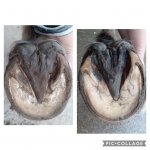
Usually the feet spread once the shoes are off, that's an odd one
I have found it more common for the feet to get smaller.
It depends, of course, on whether the foot is contracted or spread to start with.
.

Usually the feet spread once the shoes are off, that's an odd one

Perhaps it depends on the individual - we like that word here. The heels are still weak on the second photo.Reacher, I wasn’t aiming my post at you especially, and there are certainly bad farriers out there too. It’s just that moving away from a farrier to a barefoot trimmer is often mooted on here as being best for your horse.
I had done my research, got recommendations, and then that happened. My vet was also pointing out the poor foot balance, but the trimmer thought that they knew better than the vet...
I have found it more common for the feet to get smaller.
It depends, of course, on whether the foot is contracted or spread to start with.
.
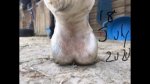
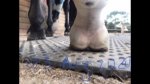
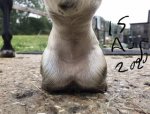

Tbh, I’m so fed up that I cba. I’m exiting horses when this lot have gone. Plus, the trimmer is a nice person, just not very good at trimming tb type feet. I’ve simply binned the whole barefoot trimmer thing as a bad idea and moved on.You MUST report that trimmer I am sure the EPA would like to know. They train for 2 years plus another year as an apprentice so I'd be worried if I had trained them.
Equally people should report bad farriery.
People don't though so it doesn't raise any awareness.

Hmm mm. I wonder if it's the same arrogant big cheese training farrier that we got for a short time up in Cumbria who would have a different apprentice do each fecking foot! And let one apprentice chop the big guy's frog until it bled then told me I best put hydrogen peroxide on it as it "must be thrushy".... he'd actually chopped into a keratoma in the frog... I think he travelled up from down your way (Cheshire? )


Reacher, I wasn’t aiming my post at you especially, and there are certainly bad farriers out there too. It’s just that moving away from a farrier to a barefoot trimmer is often mooted on here as being best for your horse.
I had done my research, got recommendations, and then that happened. My vet was also pointing out the poor foot balance, but the trimmer thought that they knew better than the vet...
Tbh, I’m so fed up that I cba. I’m exiting horses when this lot have gone. Plus, the trimmer is a nice person, just not very good at trimming tb type feet. I’ve simply binned the whole barefoot trimmer thing as a bad idea and moved on.
Now, the farrier I would gladly have reported. Those feet were shocking. The problem was, the horse was not in my care at the time she was shod, I did not employ the farrier, and the loan home clammed up. The farrier who took her on for me did a good job with her and agreed that the farriery was a shocker (as did the vet). But, my farrier was an older guy, not too well, and he told me he did not want the hassle of testifying against the other farrier. The way it works, a complaint is overseen by a local regional farrier rep. The regional rep was that same crap farrier, and my guy didn’t want to stir up a hornets’ nest.
So, lacking firm evidence as to exact dates/what had happened when she was out on loan, I had to leave it. So an arrogant big cheese training farrier with multiple apprentices is still out there and presumably allowing the same thing to happen.
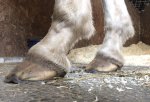
 . She needed box rest for two weeks.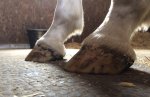
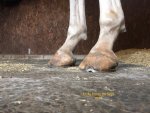
 ? That unfortunately did not work out on my n=1 sample of barefoot trimmers.

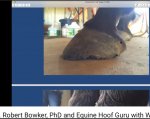

CS and heel is looking a million times better. What a difference a few weeks can make.
View attachment 54015
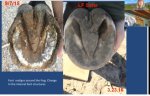
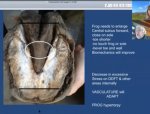
That's really interesting. Some of my 12 frogs are going that way! Good to know that it's a good thing!I’ve taken screenshots of some before and after pics of a navicular horse from the dr Robert Bowker videos mentioned on another thread .
There is a link to his videos here
http://www.thelaminitissite.org/feet-faq--articles/robert-bowker-hoof-anatomy-videos
There is a marked up ‘before’ sole photo (bottom photo) with black lines showing where the toe and heels should be. He trims them weekly, taking a little off each time to not make the horse sore. The after photo is about 7 months later. He says you need to bring the break over to within the white line (which would give most vets/farriers a heart attack) - but afterwards the horse was hunting barefoot.
Where the white circle is shows where the frog wants to grow larger since it supports the navicular bone - trimmers/farriers try and trim it off.
View attachment 54108
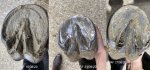
View attachment 54105View attachment 54106View attachment 54107
Oooh how did you get on top of the crack at the back of the hoof? from December to June I packed my boys feet with Red Horse Field Paste or Artimud and it helped, but it never quite went. I then switched to Hedgewith Sole Saviour which within a week made a huge difference, but every time we have a drop of rain it comes back again! Feel like I need something a bit stronger to really hit it. I'd say I'm at the same point as your middle picture at the moment.
Meticulously picked and brushed them out every day, brought him in at night to allow the feet to dry if wet (big, clean bed), and packed them with Sudocreme before turnout. Apple cider vinegar diluted to one part ACV, ten parts water, with a few drops of tea tree oil is a great home made, cheap remedy.


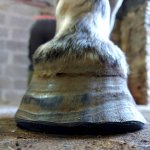

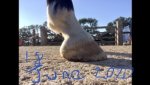
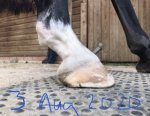
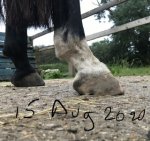
There is a lot going on with that foot! I'd be interested to see a sole view if you have one?Thought this might be an interesting picture for this thread. Shoes off in January. Farrier trimmed until May. We started trimming ourselves in June. There's also been a battle with mineral balancing going on in this time!
View attachment 55077
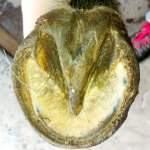
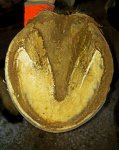
Thought this might be an interesting picture for this thread. Shoes off in January. Farrier trimmed until May. We started trimming ourselves in June. There's also been a battle with mineral balancing going on in this time!
View attachment 55077
WOW! That was one badly unbalanced and sick foot! So much improved in the top third, just look at that wonky event line come level ?