
Surface reviews needed

Joined
20 May 2010
Messages
13
Location
Stewarton, Kilmarnock
www.thornhillstables.co.uk
Looking for some help with picking a surface, husband is a civils contractor so we are doing groundworks ourselves. Large outdoor (53m x 36m) in scotland so watering is not a problem!! I KNOW inherited the size so stuck with that but taking up the whole lot and wanted peoples advice on a good surface to put back down, we are a livery yard with high traffic (around 30 horses a day) and multi discipline so want something that will be multi purpose and rideable pretty much every day if possible. Not sure if we can stretch to waxed surface so maybe equestrian grade silica + stabliser or rubber or a more economical waxed option.

martin collins activtrack which i love at £33k is well out the budget :(

Would really value other peoples preferences as I have seen numerous schools and samples of so many I need to know how these surfaces perform when used!!

Thanks in advance for your views!!
 
I am a YO too (30 liveries, plus my 7) and we have silica sand and Martin Collins Clopf for our 60m x 40m arena. Absolutely amazing stuff, rides like a waxed surface, and easy to maintain. We put the Clopf down last June, watered it well for a few days and then we didn't have rain until November and I didn't have to water it once :D Never tracks up even when people are jumping 130+. Also hasn't frozen yet (been down to -8C). Just make sure you have a good leveller, we have a Mayfield Super Leveller. I level it twice per week, sometimes only once....
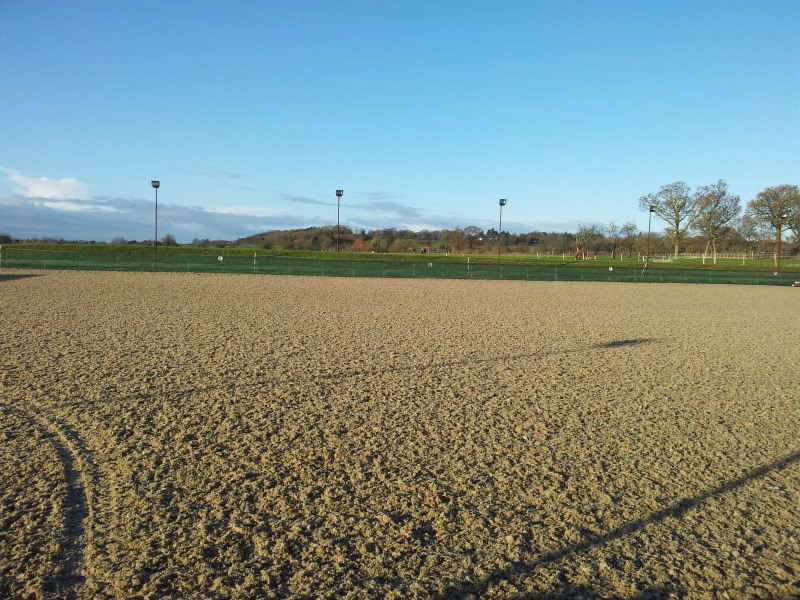
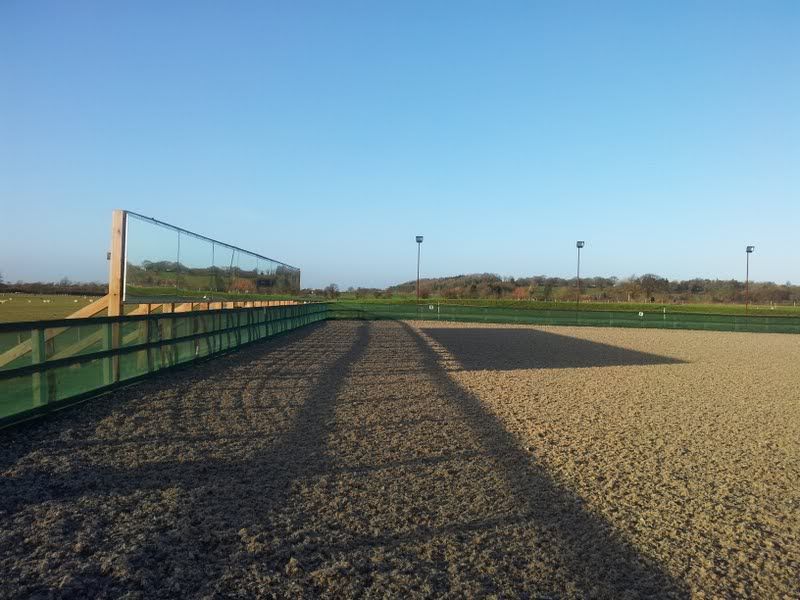
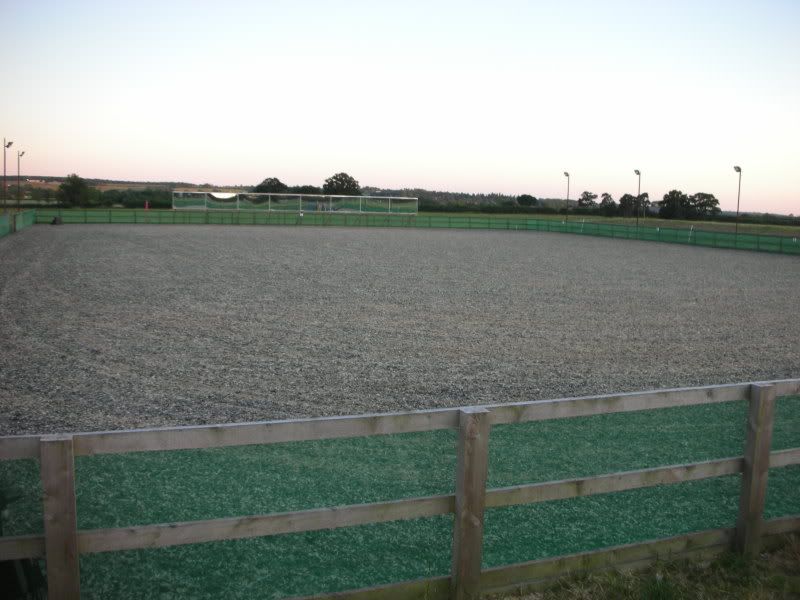
arenadec11.jpg


arenadece11.jpg


This was before we put the Clopf on (it was silica sand with rubber on top, but the rubber mixed in and the surface became too loose)...

016-2.jpg
 
Whatever surface you put down is only as good as what's underneath. The moral is dig down build up. we had silica sand and rubber tyre shreds, and it never froze or was unusable, that's mainly due to the layers underneath it to make it drain.
 
Agree with Kaylum. Get the drainage wrong and it doesn't matter how good the surface is. A surface that stays wet will freeze. I have heard of people not bothering with a base and so they have more money to spend on the surface. This of course is a complete waste of time. The motto with arenas is 'a job done wrong is job done twice'
 
Thanks million dollar for your suggestion! they have this down at rowallan i believe who is a neighbour of ours so going down there to have a good look.

Thanks for the drainage advice but as hubby is a civils contractor I am only too well aware of how much £££££ have to go underground, he specialises in digging holes and burying our money - gateways, paths all very expensive to sort!! our current surface has lasted 20 years so not bad going will be impressed if I can find something that does as well. we are however at logger heads over membrane hubby says we should put one down so drainage is protected and we can trun surface in years to come if need be but i have heard so many horror stories I am unsure - the domestic will continue over membrane until i find surface i suppose.

Thanks for all your help x
 
Would definitely recommend a non-woven geotextile membrane. The horror stories you hear about are from situations where the membrane was not installed properly. When installing a membrane you should treat it like lining a pond i.e. watertight. Any holes or gaps in joins will allow the surface above to move under the membrane thus lifting it. The slightest nick in the membrane needs to be repaired with a strong cloth tape. The membrane also needs to be secured to the gravel boards in order to fully contain the surface.

Silica Sand based surfaces are notorious for membrane problems as Silica Sand is like eggtimer sand and flows like water when dry. It is therefore essential all seams/joins are well taped. If tha sand can't get under the membrane it is not possible for it to lift unless the stone base underneath is not compacted properly.

There are situations where membranes have been left out and the surface has been fantastic which is entirely achievable but only with the correct sub-base materials.
 
I think the membrane thing is also because people don't understand that there are two types - it took me a while to work it all out when we were doing our surface. The 'non-woven' one mentioned above is like sort of compressed fleece, so the surface doesn't slip over the top of it. Woven membranes are more like the woven feed bags that you get. We used a woven one under the stone, then a layer of stone, then a fuzzy non-woven one under the surface.
 
Hiya, its K here from up the road! Just in case you didnt know, G from down the lane (this is getting very cryptic) works at the local sand quarry ;).

Please put something down that I will bounce on if Arnie and I part company :eek:
 
A very good point made above. So many get confused when differentiating between the two membranes. If used in the wrong order it not only will cost you money but will set you up for all matter of problems further down the line.

The 'Lower' membrane is used to seperate the sub-base (e.g. stone/crushed concrete) from the drainage system below. It prevents any dust/fines from migrating downwards and blocking the drainage system below. The lower membrane consists of a woven polymer which is very similar to the material used in dumpy bags provided by builders merchants with sand/gravel in. This material is very tough and can withstand the rigours of sub-base installation.

The 'Upper' membrane is a non-woven membrane used to seperate the sub-base (e.g. stone/crushed concrete) from the surface above (e.g. Silica Sand, Wood Fibre, Rubber Chip etc). This membrane is best described as a tough 'fleece' similar to that used by gardeners to protect plants from frost only much thicker. Without this membrane there is a very good chance that stones from the sub-base would work their way upwards into the surface (as per law of gravity). The upper membrane performs 3 main tasks:

1. To prevent mixing of the upper surface (e.g. Silica Sand, Woodfibre etc) with the sub-base below (e.g. stone/crushed concrete).

2. To grip the upper surface thus preventing slippage when pressure is applied by horses hooves.

3. To rip if the horses hooves were to go through the upper surface (if too shallow) and make contact with the membrane. Any other membrane would trip the horse and potentially cause serious injury to horse and rider.

One of the most critical factors in getting the best from your horse in a riding arena situation is ensuring that the horse is confident in the surface it is working. If the horse does not have a sure footing it will not have the confidence to perform at its best and in worst case scenarios may cause injury.
 
I watched our new membrane being installed last week. He got a blow torch and melted it together so now it is essentially 1 big sheet that is fixed to the outer kick boards.

Sand is now on and settling :) Can't wait to ride on it (having silica sand, rubber being added in next week or so)
 
Top