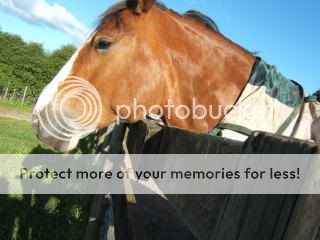
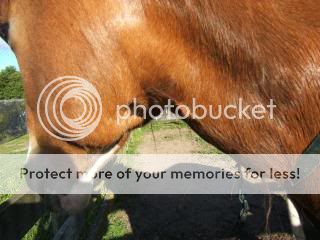
Swollen Parotid Glands

I don't know but I'm interested to hear what people say. My mare used to get this in the spring time, particularly in certain fields. However, since she has been kept on moorland grazing, where we don't have hedgerows or trees and the fields are grazed by sheep so no buttercups etc, she doesn't get it anymore. I assume it's related, but have never been sure what exactly caused it.
 
I am hoping someone will shed some light on it. The two heavy cobs were the worst I have even seen. it was obvious from half a field away this evening. It is bitterly cold here and has been all day. The grass is not rich, not fertilised and not new to them.
 
I am hoping someone will shed some light on it. The two heavy cobs were the worst I have even seen. it was obvious from half a field away this evening. It is bitterly cold here and has been all day. The grass is not rich, not fertilised and not new to them.

my two have had the same for the last two days my fields are not fertilised either and it's the same field they have grazed all winter, hopefully someone will have some answers.
 
I find they are worse when it is cold and windy, one cobby pony gets them really badly he has been very odd looking the last few days when I have brought him in, the tb's never have them nor do the ones living out 24/7 or if they do it is not when I look at them.
 
I am hoping someone will shed some light on it. The two heavy cobs were the worst I have even seen. it was obvious from half a field away this evening. It is bitterly cold here and has been all day. The grass is not rich, not fertilised and not new to them.

My big boy looks like he has hamsters in his, goes down in the morning but the other gelding in his feild has nothing
 
My mare gets them every spring, and in fact had them this winter too oddly. As far as I am aware, there is no exact cause known yet, but I am convinced with my mare it's when she is hungry, and stuffing her face permanently as a result so has her head down with an excess of saliva.
 
My poor girl has a terrible time if there are a lot of Buttercups in the paddock - she comes in looking like a hamster on a feeding frenzy. It all goes overnight if I take her off the grass. Until we discovered what was causing it she would come in with her face so swollen she found it hard to open her mouth. Yard owner has been awesome and is systematically working through the property spraying off the buttercup.

JAWSarahsswollenJaw001.jpg
JAWSarahsswollenJaw004.jpg
 
Last edited:
My cobby type gets it too, pretty much all year round, I keep her on quite a bare field and wondered whether this makes it worse. She is stabled overnight so they always settle again by the morning. I wondered if the cobs are more susceptible for some reason. I do feel a bit sorry for her with it when they are bad, it must feel strange and perhaps uncomfortable. My other pony on the same grazing doesn't get it at all and she is just as greedy lol.
 
I don't have any buttercups at the moment. The only common denominator is wind and low temperatures. Interestingly it is only the common bred horses that are swollen, the two quality horses have nothing.
 
When I spoke to my vet about it (my maxicob always used to get pronounced grass glands when the grass starts to come through), she assured me that the swelling is due to the horse chewing more frequently than usual, thus producing more saliva, and nothing to do with the composition of the forage.
 
I don't have any buttercups at the moment. The only common denominator is wind and low temperatures. Interestingly it is only the common bred horses that are swollen, the two quality horses have nothing.

My "quality" ID gets them AA. He regularly comes in looking like the elephant man which does somewhat ruin his good looks ����. I just ignore it, it all goes down overnight. Interestingly he's only ever had this problem since he's lived at current yard so suspect it's something in the mixture of grass or something in the hedge which is Hawthorne.
 
Our Police horses got it every spring. A bit offputting when you bring them in knowing you have to take them to football the next day, and wonder if they will be able to walk other than with their noses pointing firmly down the road :D

They were of a more common stamp, and the vet said that it was salivary glands. They always went down overnight, but we had a couple of new grooms convinced they had strangles!

ETA, this was one of mine, on a day off... Edward.

Edward%202_zpsheb5ouni.jpg


Showing what a common stamp we had, with the 7'3" Rambo mini skirt!!!
 
Last edited:
I do use the word 'common' with affection not malice, no offence meant at all to my own 'commoners' or anyone else's.

I could find a space for Edward, what a stamp.
 
My Anglo Arab TB x gets it badly when there is a flush of grass (fairly bald paddocks). Vets said it was due to over grazing - basically being greedy. He has come in over the last few weeks with a fat face but not every day. The cob x mare doesn't seem to be effected. So I suppose it's either a reaction or over salivating- he's an old boy with a bit of a parrot mouth, maybe he picks up more soil than the mare perhaps?

With this weird weather, the field gets a slight hint of Spring grass, then looks brown again.
 
Mine's an Arab, which doesn't work with the draught horse theory :p

I'm not sure about this "chewing more frequently" thing that some people's vets have suggested - with my mare it didn't necessarily correspond to there being lots of grass, but rather to time of year, specific field and possibly weather conditions (which never occurred to me before but seems entirely plausible). If it had been due to her eating/ chewing more, I would have expected it to correspond to going into a new field, which it didn't.
 
Top