Sycamore seeds in hay

AWinter

Well-Known Member
Joined
20 February 2021
Messages
293
Visit site
On full livery, found out last night the horses were fed from a bale full of sycamore seeds, no idea if they’ve eaten lots or none because it wasn’t noticed until this morning, the remaining part of the bale had about 10 leaves in, there were some at the bottom of the empty haynets.
Waiting on the vet calling back.

Any advice? I am so stressed and also not happy at all that it wasn’t spotted.
 
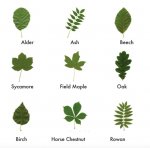
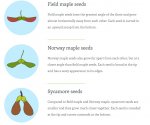
Definitely sycamore? There’s another tree that looks very similar which also has “helicopter seeds” which is common too. I can’t remember the name, will google!
 
Field maple is what I’m thinking of
 

Attachments

  • FCDD6599-BE30-4978-8ABC-5CB4CFF71A28.jpeg
    FCDD6599-BE30-4978-8ABC-5CB4CFF71A28.jpeg
    61.4 KB · Views: 48
  • 4BCA2CAD-F535-4C4F-A9A4-0BF84C4F7DC1.jpeg
    4BCA2CAD-F535-4C4F-A9A4-0BF84C4F7DC1.jpeg
    100.1 KB · Views: 48
OK, and I speak as someone who lost a horse to AM and had another at the vets for a week- don't panic yet. Chances are there won't be a problem - most of the time the seeds don't have enough Hypoglycin A to cause a problem and as PP said may be maple - is the nobbly bit round or flat? If it's flat it's maple & you are in the clear. If it's round get the vet to take bloods then you will know whether to panic or not. If there is a problem you've caught it early.
Good luck.
 
Definitely sycamore, if the horses get sick where do I stand legally? I know I’m thinking the worst but it’s not impossible that this mistake could kill them, I can’t believe this has happened, they’re not even remotely hard to spot.
 
Definitely sycamore, if the horses get sick where do I stand legally? I know I’m thinking the worst but it’s not impossible that this mistake could kill them, I can’t believe this has happened, they’re not even remotely hard to spot.
Of course it would be down to the supplier, but proving it would be harder.

I think you should be ok, but in any case I’d be having a stern word with the supplier and changing immediately. I’d expect them to take back any unused bales too. I hope your yard does the right thing.
 
Legally nowhere pretty much now youve raised it- if you know about it and continue or dont raise it etc you havent done what you can do to reduce risk
 
I'm sorry that you are in this worrying situation and hope that everything turns out ok for you and the horses.
I'm not sure how seeds would be in the hay as they don't usually fall until late October and hay is normally made in the summer. Also the turning of the grass to dry and roll - surely any seeds would fall out of the crop.
Try not to worry, I hope all is well.
 
I had sycamore bunches with leaves and seeds in haylage from a well known brand once. They sent me out a new pallet, after receiving detailed pics of the leaves/seeds. I was able to throw the original pallet away….compost it.

Worth taking good clear pictures of what you find in your bales and talking with supplier about the issue, who should replace them. They should know the field with the sycamore tree in it, and suggest to them to consider measures of either downing the tree completely, or crowning it to vastly reduce its leaf/seed drop, if its in a neighbouring field.

My haylage batch got tainted due to the previous autumn/winter winds, blowing off end twigs complete with leaves and seed bunches, with some singularly in the haylage. They were then rotting on the then cut haylage field, and got pulled into the next summer’s haylage crop, by the hay tedder machine, being set too low, to rake up the haylage.
Haylage and hay being long stalks could also easily act like a broom during tedding and baling processes, sweeping up previous autmn/winter leaf drop at soil level.

For all suspected acute poisonings the use of activated charcoal powder is common - a handful mixed in soaked speedibeet - probably 2 bowl feeds 1 hour apart as soon as possible after ingestion of toxin. This helps pull toxins from the gut wall. Green clay is used similarly.
Ask your vet if there’s anything else you can quickly give to pull or block potential toxins.
Milk thistle powder, and silymarin extract from milk thistle, is used commonly to help the liver fight toxins and repair.

Its always worth having 500g tub of activated charcoal in medical supplies/feed room for horses. The sooner they can be given this after eating something toxic, the more likely the charcoal can absorb the toxins, preventing full circulation in the body systems.

You’ll likely find they havent eaten much if they actually left leaves in their haynet, suggesting they didnt like the taste. Thats a good sign. Its more worrying when we find the net empty, and discover the hay has toxic weeds, leaving us to summise theyve likely eaten them.

Here’s info from liphook equine hospital about AM from sycamore toxicity:


What can be done to treat atypical myopathy?

IT IS A COMMON MISCONCEPTION THAT THE DISEASE ALWAYS RESULTS IN DEATH. HOWEVER, THE CHANCES OF SURVIVAL ARE 50:50 AT BEST SO IT IS VITALLY IMPORTANT THAT TREATMENT IS THOROUGH AND STARTS IMMEDIATELY. HORSES OFTEN GET WORSE FOR 24-48 HOURS BEFORE THEY START TO IMPROVE SO EVEN IF THE SIGNS ARE MILD TRANSPORT TO A HOSPITAL SHOULD BE CONSIDERED WHILST IT IS POSSIBLE.

In order to protect the kidneys from damage large quantities of fluids have to be given and for this to be achieved effectively hospitalisation is required. Fluids are also important because horses with atypical myopathy tend to become very dehydrated. Effective fluid therapy requires 24/7 nursing care. Atypical myopathy cases often become exceedingly painful and within a hospital it is possible to give infusions of powerful painkillers and anaesthetic drugs which cannot reasonably be administered anywhere else.

Supplementary vitamins and minerals have been shown in one study to be helpful in the treatment of atypical myopathy. In particular, carnitine, vitamin B1 and vitamin B2 might support the function of muscle cells. Vitamins C and E might be useful as anti-oxidants.

Reported mortality rates of clinical cases have ranged from 40% to 100% and vary from year to year. Most affected horses that are alive 5 days after the start of clinical signs are likely to recover. Initially recovery is slow, but most affected horses that recover go on to make a complete recovery and return to work with no long-term effects of the disease.


https://liphookequinehospital.co.uk...e-poisoning-in-horses-information-for-owners/

Fingers crossed your horses didnt ingest much, if any, and are fine x
 
Regarding legal issues - by law, any company providing a product must ensure it is fit for purpose.
With feed stuff suppliers there are stringent laws regarding their supply is safe for intended consumer. Equine feed suppliers should not be including in their product known toxic plants to equines. It is in their interest to educate themselves regarding what is toxic and ensure all fields are free of known toxic plants, before processing the field as equine forage.

Large known forage companies established with a reputation would have business insurance to cover them for loss and claims made against them. If their forage caused the death of a 150k racehorse, because of sycamore seeds, the owners can rightly sue, and the company insurance would foot the bill.

There may well be the argument tried from the company’s lawyer ‘it is on the onus of the owner to check what they feed to their horse‘, but animal feed laws do state the product must be safe and fit for consumption for the animal BY THE SUPPLIER.

However, mr farmer who sells just a few hundred of his spare bales to Annie for her cherished but low-value cob, is unlikely to have adequate insurance, and Annie could very well end up horseless and broken-hearted with no way of obtaining any compensation. Some farmers have farm insurance to cover their equipment and loss of their herds, but whether their policies extend to public liability due to death caused by their farm produce, is likely an insurance extension most small scale farmers dont avail of. Yet farmers who have to use public roads for transporting their machinery likely have public liability in case of accidents.

EU animal feed laws are strict, which i had the pleasure of reviewing because i considered suing. I had imported 1K of hay from another EU country, discovered to be full of toxic weeds, after much laborious liasing and notifying the company of these laws, i was ignored by them. I received 50% refund, whereas i should have got 100% refund. The hassle just to get 50%. The hay was not as described at all. They described in their advert exact grasses that would be in the hay. I enquired by email more details before ordering to confirm composition and the absence of weeds!. I had proof they lied, and their product was not as described at all. I simply didnt have the energy/time/money to trawl through a lawsuit…though i really wanted to, out of principle and having obtained stacks of incontestable proof for an open and shut case.

It would have cost me more than 1k to sue them, and if i had lost my horses to toxicity due to their feed, to get their low value paid me as compensation would have made the effort of suing more stressful, on top of the heartbreak, and i still would likely not have enough money to replace the horses after legal fees.
Our horses arent replaceable no matter their value to horse-lovers. Syndicate race horse owners and high-end competition horses are a different class of owner and see the horse as a financial investment mostly, yet they love them, and likely would be in a financial position to sue.

Animal food suppliers dance the grey area of people not being bothered to sue them, so they continue to shirk the laws they have NO IDEA they should be following.

Now that the the UK has left the EU, the UK animal feed laws apply, which likely will be copy and pasted from EU laws anyway, after these types of laws became standardised across the board with the formation of the EU.

Im hoping none of the above will be necessary or relevant in your case OP, but mentioned it in case you or anyone needs the info, after similar experiences.
 
Sorry to bump up an old thread but I thought it was better than starting a new one on the same topic. I realised this morning when finishing off a square bale that there were a few helicopters (less than 10) in the bale. A few of them still had the round seed heads, although they were cracked in half, some of them were just the helicopter wing but the seed was gone. I got rid of the hay, including what was left in the hay nets from last night. I was filling them in the dark last night and didn't notice the sycamore. Horses seem fine this morning but I'm stressed. I had about 150 small bales off of one supplier and this is the first time I've seen any sycamore in them. He assured me that there are no sycamore lining the fields that they're cut from.

Given that these seeds can travel up to 200 metres, how likely is it really that any hay won't have some in? Sycamore are so invasive, they're everywhere. Does anyone actually meticulously go through their hay before feeding? The seeds are easy to spot, but what about dried saplings which would just look like grass? :eek:

AWinter, were your horses okay?
 
Seeds can travel miles my friend had one die and the vet said one can kill. There is no safe way of checking for sure that they aren't on your land or in hay. Just do your best to try and avoid them.

Hope your horses are OK x
 
Sorry to bump up an old thread but I thought it was better than starting a new one on the same topic. I realised this morning when finishing off a square bale that there were a few helicopters (less than 10) in the bale. A few of them still had the round seed heads, although they were cracked in half, some of them were just the helicopter wing but the seed was gone. I got rid of the hay, including what was left in the hay nets from last night. I was filling them in the dark last night and didn't notice the sycamore. Horses seem fine this morning but I'm stressed. I had about 150 small bales off of one supplier and this is the first time I've seen any sycamore in them. He assured me that there are no sycamore lining the fields that they're cut from.

Given that these seeds can travel up to 200 metres, how likely is it really that any hay won't have some in? Sycamore are so invasive, they're everywhere. Does anyone actually meticulously go through their hay before feeding? The seeds are easy to spot, but what about dried saplings which would just look like grass? :eek:

AWinter, were your horses okay?

There could well be sycamore seeds in a hay field that doesnt have the trees lining that particular field.

Given the fact that last winter we had 9 strong wind storms blow through from the Atlantic (west ireland here so they were very strong for us and many hit the uk too )…i wouldnt be surprised to hear that leaves/seeds from trees had travelled a few fields from where they stood and affected 2024 summer hay crop.

That could be why youve never had them in your usual suppliers hay, but did from last years crop.

I have always meticulously gone through every bale my horses have ever eaten! Forced to due to finding toxic crap in ‘top quality’ advertised hay.

Its likely if you found 10 seeds per bale there likely would be 15-20, to account for the ones you missed, unless you went through the whole bale strand by stand, shaking out small handfuls.

Its a sad situation youre in because you have a reliable supplier. Its a loss to him and you. But sycamore can be deadly toxic, and the onus is on the supplier to supply non-toxic feed.
By all rights, you should notify supplier, ask for refund and return of bales, and source hay elsewhere.

Other mildly toxic weeds here and there can be allowed and easily seen and pulled-out of hay, but tiny potentially deadly toxic seeds are very difficult to remove.
 
There could well be sycamore seeds in a hay field that doesnt have the trees lining that particular field.

Given the fact that last winter we had 9 strong wind storms blow through from the Atlantic (west ireland here so they were very strong for us and many hit the uk too )…i wouldnt be surprised to hear that leaves/seeds from trees had travelled a few fields from where they stood and affected 2024 summer hay crop.

That could be why youve never had them in your usual suppliers hay, but did from last years crop.

I have always meticulously gone through every bale my horses have ever eaten! Forced to due to finding toxic crap in ‘top quality’ advertised hay.

Its likely if you found 10 seeds per bale there likely would be 15-20, to account for the ones you missed, unless you went through the whole bale strand by stand, shaking out small handfuls.

Its a sad situation youre in because you have a reliable supplier. Its a loss to him and you. But sycamore can be deadly toxic, and the onus is on the supplier to supply non-toxic feed.
By all rights, you should notify supplier, ask for refund and return of bales, and source hay elsewhere.

Other mildly toxic weeds here and there can be allowed and easily seen and pulled-out of hay, but tiny potentially deadly toxic seeds are very difficult to remove.

Thanks for the advice Purbee, I really appreciate it. To clarify, I have already fed probably 70 odd bales from this supplier this year, about half of my order, and this is the first time I've seen any sycamore seeds in a bale. So I'm hoping that this is a one-off and I won't find any more in any other bales. It is a worry though and I've disposed of the rest of the contaminated bale. Horses thankfully are still okay.
 
Sorry to bump up an old thread but I thought it was better than starting a new one on the same topic. I realised this morning when finishing off a square bale that there were a few helicopters (less than 10) in the bale. A few of them still had the round seed heads, although they were cracked in half, some of them were just the helicopter wing but the seed was gone. I got rid of the hay, including what was left in the hay nets from last night. I was filling them in the dark last night and didn't notice the sycamore. Horses seem fine this morning but I'm stressed. I had about 150 small bales off of one supplier and this is the first time I've seen any sycamore in them. He assured me that there are no sycamore lining the fields that they're cut from.

Given that these seeds can travel up to 200 metres, how likely is it really that any hay won't have some in? Sycamore are so invasive, they're everywhere. Does anyone actually meticulously go through their hay before feeding? The seeds are easy to spot, but what about dried saplings which would just look like grass? :eek:

AWinter, were your horses okay?

Hi the horses were fine, the seeds we had were quite large and were just sat in the bottom of empty Haynets.

I have sycamore issues at my new yard, albeit not in the hay as I get it from elsewhere, we have trees lining fields a good 300m away from the horses yet I was picking up dozens of seeds after strong winds.

I don’t worry about saplings in hay, they wouldn’t just look like grass if they got tall enough to be cut and I think they’re outcompeted.

I understand your worry but I also visit so many yards with sycamore on their grazing and it must get in their hay, I notice the horses seem to avoid eating them even on very short grass. This isn’t me trying to minimise the risk as it knocks me sick, but I also think there is only so much we can do when they travel so far. There have been horses living here for 10 years prior and they did absolutely nothing to control the seeds and didn’t get any sick horses. I know that doesn’t necessarily mean anything but it is somewhat reassuring.

I check my hay as I’m filling nets and I walk the area twice daily autumn and spring. We get sheep onto the fields in spring and I think they eat up any saplings. I wish the bloody trees didn’t exist.
 
Top