Talk to me about PSSM

Hence, if you are using supplementation with Vitamin E as a diagnostic trial, it is best to use the one that most horses can benefit from


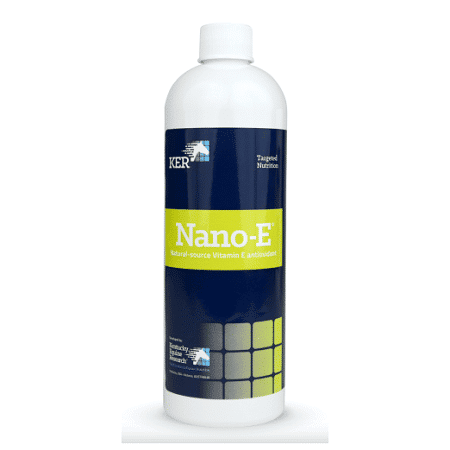
But the cost of Nano E is eye watering. It would make the difference for some people between keeping a horse alive and not. I don't see any problem with the strategy of testing the powders that most owners use and moving to Nano E if you don't get the results you are looking for.
.
 
Does anyone know an easy way to convert mg to IU? Both his hard feed and his supplement have vit e in so trying to work out how much (I’m going to hazard a guess at not very much)
 
I don't doubt Nano E is the gold standard but it also costs its weight in gold.

The 000iu for any particular horse is guess work anyway. I think most horses in this country are probably on the powder versions.
.

Well quizzies explanation was very insightful. I wonder how many PPSM horses have been "unsuccessfully" treated with vitamin E, but it could have been successful if they were able to actually absorb it?
 
Does anyone know an easy way to convert mg to IU? Both his hard feed and his supplement have vit e in so trying to work out how much (I’m going to hazard a guess at not very much)

Honestly, just get decent vitamin e and give him 10,000 ius. If he responds then you can tweak it. Mine did within 48 hours and within a week was urecognisable, so you will know quickly
 
Does anyone know an easy way to convert mg to IU? Both his hard feed and his supplement have vit e in so trying to work out how much (I’m going to hazard a guess at not very much)


Is it quoted in mg, Sarah? That's not normal.

Forage plus quote 5ml as 2000iu and 5ml is, if I recollect correctly, 3.5g. But it will depend on the concentration of oil they use, they aren't all the same.
 
I think I paid 180 dollars a month for Boggle on his vitamin E, which was 20mls/10,000 IU (I think). So that's maybe 140 pounds ish, IDK.

I have no idea what it costs to buy it in the UK but i'd suspect less, and I don't recall what the powder/pellet equivalent cost was.

I mean you may as well start with the stuff you KNOW your horse can definitely absorb, and if it works- switch onto the pellet or whatnot. Still a reasonably cheap diagnostic tool in the grand scheme of things.
 
I think I paid 180 dollars a month for Boggle on his vitamin E, which was 20mls/10,000 IU (I think). So that's maybe 140 pounds ish, IDK.

I have no idea what it costs to buy it in the UK but i'd suspect less, and I don't recall what the powder/pellet equivalent cost was.

I mean you may as well start with the stuff you KNOW your horse can definitely absorb, and if it works- switch onto the pellet or whatnot. Still a reasonably cheap diagnostic tool in the grand scheme of things.


Your definition of "reasonably cheap" is not universal. I know many people who would PTS a horse that needs the best part of £2000 a year of supplement to function.


Edit

10000iu of this is 40 ml a day, about £60 a week. Over three grand a year.


Last edited:
Your definition of cheap is not universal. I know many people who would PTS a horse that needs the best part of £2000 a year of supplement to function.


Edit

10000iu of this is 40 ml a day, about £60 a week. Over three grand a year.


Well it's the first horsey thing I've known to be MORE expensive in the UK than the USA!

I am simply saying that as a diagnostic tool to try and figure out what's wrong with a potentially PPSM horse... surely you'd want to go for the stuff you KNOW is going to work if thats the problem.

What you decide to do with the horse afterwards, knowing its ongoing medicine requirements, is another matter.
 
Is it quoted in mg, Sarah? That's not normal.

Forage plus quote 5ml as 2000iu and 5ml is, if I recollect correctly, 3.5g. But it will depend on the concentration of oil they use, they aren't all the same.
Yeah, in his hard feed and supplement. I’m probably overthinking it and it’s too small of a dose to even worry about so I’ll forget about it and just supplement with natural vit e 😂
 
Yeah, in his hard feed and supplement. I’m probably overthinking it and it’s too small of a dose to even worry about so I’ll forget about it and just supplement with natural vit e 😂


I would forget what's in any balancer or food you're using, it's almost always too tiny an amount to matter and it's invariably synthetic anyway which means you can halve it before you start!
.
 
Well it's the first horsey thing I've known to be MORE expensive in the UK than the USA!

I am simply saying that as a diagnostic tool to try and figure out what's wrong with a potentially PPSM horse... surely you'd want to go for the stuff you KNOW is going to work if thats the problem.

What you decide to do with the horse afterwards, knowing its ongoing medicine requirements, is another matter.


Given that it's not a life and death situation and there is time to work things out by trial and error, then personally I would go for the stuff that works for many, many horses and that I know I'm prepared to finance long term.

I don't think I could contemplate paying over £3000 a year on one supplement alone, when others are also likely to be required and base level costs also have to be met.

There are many people who simply wouldn't be able to find the money. .
 
Given that it's not a life and death situation and there is time to work things out by trial and error, then personally I would go for the stuff that works for many, many horses and that I know I'm prepared to finance long term.

I don't think I could contemplate paying over £3000 a year on one supplement alone, when others are also likely to be required and base level costs also have to be met.

There are many people who simply wouldn't be able to find the money. .

For the last time I am not saying it’s a cheap thing to maintain. But as a diagnostic tool it IS cheap when you consider the cost of a vet work up or even bloodwork that wouldn’t be far off a months worth of cost.

You may as well IF you can afford it, for the first month start with the thing that you know will work if it’s going to work, then switch onto the cheap (er) thing once you’ve got a diagnosis (and hope it continues to work).
 
For the last time I am not saying it’s a cheap thing to maintain. But as a diagnostic tool it IS cheap when you consider the cost of a vet work up or even bloodwork that wouldn’t be far off a months worth of cost.

You may as well IF you can afford it, for the first month start with the thing that you know will work if it’s going to work, then switch onto the cheap (er) thing once you’ve got a diagnosis (and hope it continues to work).


Have you considered the situation that if the cheaper option does not sustain the result, that a person can be left with a horse they cannot afford to treat or can't justify the cost of treating and will have to PTS knowing that they are doing so purely because they can't afford or justify the costs to treat it?

Not everyone has your level of income. £3k a year on top of all the other costs of keeping a horse is a huge amount to many people.
.
 
Sarah, sorry I took your thread off course. You should know within a very short space of time of vitamin E powder helps him. It acts very quickly if it works. Then you can choose whether to go straight for a workup or try Nano E.

I'm gutted for you that you have these worries but he couldn't have a better owner. Let us know how things go?
 
Have you considered the situation that if the cheaper option does not sustain the result, that a person can be left with a horse they cannot afford to treat or can't justify the cost of treating and will have to PTS knowing that they are doing so purely because they can't afford or justify the costs to treat it?

Not everyone has your level of income. £3k a year on top of all the other costs of keeping a horse is a huge amount to many people.
.

Oh stop it YCBM. It’s absolutely nothing to do with my income.

Any diagnostic for any horse is the same, an ongoing issue that requires maintenance will always raise that question with the owner. Whether it’s 6 monthly steroids, tildren, whatever it is. Every owner then has to decide if they can spend the money maintaining the horse or not. Or if they even want to which is also totally reasonable.

So what do you propose as the alternative? Let’s say someone has a PPSM horse but it doesn’t get diagnosed or successfully treated because it doesn’t respond to the type of vitamin E given. The outcome for that horse is likely PTS because, as far as I understand, they don’t exactly do well as pasture mates.

Jeez, my point alone was that most people would prefer to know that what they are doing to try and get a diagnosis, will definitely get them one and not leave a question mark if it doesn’t work of “oh well maybe he would have responded with the other type”.

Owners should be able to decide how and what they want to do, and quizzes response was really helpful in informing people why some horses may not respond to a certain type of vitamin E.
 
I've used this before, it appears to be alpha tocopherol and not the acetate. The small size is £43 which is affordable and should be enough to see if it works. It recommends 20ml a day but this is likely to be a maintenance dose for a resting horse, but still cost effect as a trial.

 
I've used this before, it appears to be alpha tocopherol and not the acetate. The small size is £43 which is affordable and should be enough to see if it works. It recommends 20ml a day but this is likely to be a maintenance dose for a resting horse, but still cost effect as a trial.


It will be the acetate version... it is how it is stabilised for long shelf life.
 
Agreed. I would start here before going down the PSSM rabbit hole.
Maybe, maybe not, see above, no 15, no 46.
A performance work out on a non-lame horse is not definitive about the issues presenting here, whether the horse has PSSM or not.
But there are enough ‘alarm bells’ ringing for an observant owner to at least consider the possibility, and to try likely ameliorative (and non-detrimental) measures.
 
Maybe, maybe not, see above, no 15, no 46.
A performance work out on a non-lame horse is not definitive about the issues presenting here, whether the horse has PSSM or not.
But there are enough ‘alarm bells’ ringing for an observant owner to at least consider the possibility, and to try likely ameliorative (and non-detrimental) measures.
Lameness can be subtle though. My sister's horse was similar described. He looked sound. Physio was happy with him. A performance workup identified subtle intermittent lameness in one hind. Turned out he had ocd in that stifle. Operation was successful and he is now forward and happy under saddle. I'm not suggesting that's what this horse has of course, just that a performance workup can be a very useful tool.
For what it's worth she went down the PSSM route initially. He was negative for PSSM1 and postive for something I can't remember with the other one. We know now it was the OCD causing symptoms.
 
Last edited:
My mare showed a marked improvement within 48 hours of going on the powdered Natural Vit E oil, so the results came in quickly.

I was gobsmacked. It was a last chance plucked off the forum as I’d run out of other ideas as to how to help her, she’d already had a full vet workup. I had been at the point of returning her to her breeder. I hadn’t expected the Vit E to make any difference.

I will have sourced the Natural Vit E from one of Forageplus or Progressive Earth.
 
For the last time I am not saying it’s a cheap thing to maintain. But as a diagnostic tool it IS cheap when you consider the cost of a vet work up or even bloodwork that wouldn’t be far off a months worth of cost.

You may as well IF you can afford it, for the first month start with the thing that you know will work if it’s going to work, then switch onto the cheap (er) thing once you’ve got a diagnosis (and hope it continues to work).

Honestly, you dont need to. It is very, very, very, very rare to use the Nano E in the UK. Oil or powered natural vitamin e works. Nano e is something to consider if you have a diagnosed horse not responding maybe, but its just not something I've seen used in the UK and when my mare had it I was on every facebook group, read every research paper I could find etc etc.

I've just had a quick look at nano e again. The only benefit is it has higher availability and apparently is absorbed quicker. Those things seem like nice things to have, but not necessary. Mine responded within 48 hours and within a week was radically different, so natural vitamin e does work quickly and well.
 
I've used this before, it appears to be alpha tocopherol and not the acetate. The small size is £43 which is affordable and should be enough to see if it works. It recommends 20ml a day but this is likely to be a maintenance dose for a resting horse, but still cost effect as a trial.


Dont use this, you would need to feed 100ml a day.

Use either forage plus or progressive earth natural vitamin e powder. It used to be about £15 for a months worth, but is probably a bit more now.
 
For what it’s worth, and I can’t believe I need to repeat myself, if the vit e doesn’t work (and bloods/hair test comes back fine) or I feel his symptoms getting worse, I will be sending him for a performance work up at the vets.

I’m by no means an expert, so I cannot say for sure that it isn’t a lameness issue. However, I went through enough of it with Nova to spot signs of pain even if lameness isn’t obvious. I know Nova was probably more obvious with her pain, as Shadow seems the more introverted type, but apart from the lethargy, I don’t really have anything to go to the vets with as he isn’t showing any other signs of pain whatsoever. Not even niggly little ones like a bit tail swishy to tack up or uncomfortable to pick his back feet up.

Before anyone says anything, I’m not adverse to going to the vets for a performance workup. In fact, I’m very much the kind of person who will ring the vets for anything that doesn’t feel right to me. I saw the vet more times than I saw my own parents last year! However, the vit e deficiency/PSSM thing seemed to match up with his symptoms and general demeanour - especially with the time of year and his breed. As others have said, adding vit e and keeping him warm with regular exercise isn’t going to have any negative effects if it isn’t vit e/PSSM. He’s not in a great deal of work anyway - mostly in-hand poles, hacking and one schooling session a week and I will always get off/stop my session if things don’t feel right.
 
An example for those who believe it is not worth trying Nano-E:

In horses, a blood level of >2mg/l of Vitamin E is considered normal, but in competition horses, it is advised to aim for a level >3mg/l, many perform best aroud 5mg/l.

This horse had been showing signs of a possible Vit E/muscle issue, so was fed 5,000iu natural vitamin E powder, as there was no response, a blood test was taken:

Initial results 0.9mg/l ...deficient, so Vit E increased to 10,000iu.

2months later : 1.0 mg/l.....no significant change in blood levels or horses clinical signs.

Changed to Nano-E 20ml ( this is 5,000iu and is the maximum dose recommended due to its higher bioavailibility)

1 month later : 2.0mg/l ...significant improvement in blood level and horses clinical signs.

Continued on 20ml Nano-E for a few months until blood level reached 5mg/l, then adjusted according to clinical signs.

The horse was able to happily continue competing at AM/PSG level dressage once a good level had been achieved. A higher protein level in the diet (specific range of amino acids) also helped....Low starch/high oil etc made no difference. He was not a true PSSM case, but just an indicator of how much individual variability there can be.
 

For the last time I am not saying it’s a cheap thing to maintain. But as a diagnostic tool it IS cheap when you consider the cost of a vet work up or even bloodwork that wouldn’t be far off a months worth of cost.

You may as well IF you can afford it, for the first month start with the thing that you know will work if it’s going to work, then switch onto the cheap (er) thing once you’ve got a diagnosis (and hope it continues to work).
I too would use the best product available. The important point is to find an answer, after that one can consider the future.
In trying to find another liquid oil in the UK I found this


there are several suppliers of the product. I haven;'t thoroughly checked it out yet, only just found it but I suspect it may be a good possibility

Have you considered the situation that if the cheaper option does not sustain the result, that a person can be left with a horse they cannot afford to treat or can't justify the cost of treating and will have to PTS knowing that they are doing so purely because they can't afford or justify the costs to treat it?

Not everyone has your level of income. £3k a year on top of all the other costs of keeping a horse is a huge amount to many people.
.

that is the same for all animal illnesses/problems.
 
Oil is a gold standard, but expensive, and hard to get out in right amounts to ensure eaten, especially if relying on others to do some of the feeding.
one of the reasons that I would love to go back to oil was how quick and easy I found it to feed. I knew that the entire dose had gone down. I find it very time consuming using powder in feed.
 
@J_sarahd I’m sure anyone who followed your journey with Nova know you will get the vet if there is the slightest chance your horse is in pain. Your plan sounds like a good one and this is another educating thread for folk.

I’m another that is so sorry things aren’t plain sailing with your new boy but hope you get to enjoy him very soon.
 
Top