onemoretime
Well-Known Member
I often use the term "hot ragging" when I hot cloth a clipped horse and people often ask me what I mean as they have never heard of it yet Ive been doing it for over 50 years.



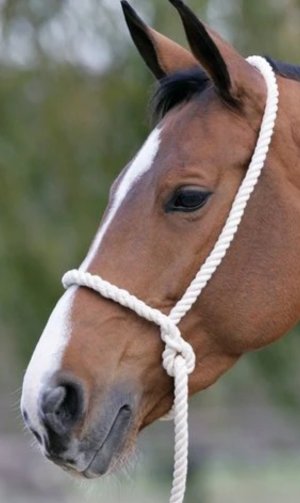
Yes that's what it is now, hence the confusion of the girls who worked at the yard when I asked for a halter. When I was riding as a child in the 60s/70s we called headcollars halter. I dont recall seeing a halter made of ropes.I dont think so. A halter is made of rope and can be tied with a slip knot
A head collar is leather or nylon straps with a buckle to fasten.

I dont recall seeing a halter made of ropes.
 I cant find any images to show you but they were very similar to the Welsh cob show halters, except the flat braided bit shown in this image would have been a flat piece of (usually) striped thick canvas material and no metal slip ring it would have simply been the canvas with a split hole through it for the rope to thread through. Or just the plain rope ones that you still see quite a lot of these days at sales and some showing too.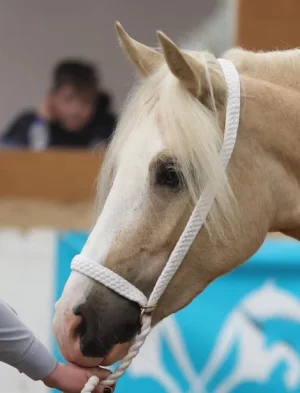

Not so. The farrier shod horses but the blacksmith repaired machinery and did any metal work.A blacksmith is now correctly called a farrier,was always just a blacksmith in ye olde days.

As per other's comments, as a child also riding in the 60s and 70s, headcollars were webbing with one of 2 types of buckles, or posh leather for going out. There was a spell of rawhide headcollars too, horrible things.Yes that's what it is now, hence the confusion of the girls who worked at the yard when I asked for a halter. When I was riding as a child in the 60s/70s we called headcollars halter. I dont recall seeing a halter made of ropes.

I doSet fair, a good thing to do and a nice term for it. Do people still say this?

I doubt we were posher than you. I'm talking riding hairy ponies at a riding school, I wasn't lucky enough to have my own pony. I cant remember what the 'halters' were made of, very much doubt they were leather, but I meant I can't remember seeing one like the knotted rope type that you have to tie to fasten. I wish I could remember what they were like back then.Really? We had more rope and canvas halters than leather headcollars back in the day, 50s through to 70s I am amazed you never saw any. Perhaps we weren't posh enough and still behind the times.
View attachment 171419

This looks like the kind of halter I tie together with a lead rope/dog leash/any other piece of rope when unexpectedly catching a loose horse. Didn't know it had a name.As per other's comments, as a child also riding in the 60s and 70s, headcollars were webbing with one of 2 types of buckles, or posh leather for going out. There was a spell of rawhide headcollars too, horrible things.
Halters were rope and we were forbidden to use them for tying up.
I've always kept rope halters in grabbing distance on the yard as easy to slip on anything. Decent ones in the box as used for in hand classes for some breeds still.
View attachment 171426
Pic above of what I called a cheap rope halter for yard use.
Yes, taught to quarter, strap, plait straw in, use logs to tie, thatch etc too


Don't you mean every day is a menage day?Every day's a school day!


faire le menage means do the housework I think!Your instructor was right. Menage (can't do the accent thingy!) has a totally different meaning.

Yes that's what it is now, hence the confusion of the girls who worked at the yard when I asked for a halter. When I was riding as a child in the 60s/70s we called headcollars halter. I dont recall seeing a halter made of ropes.
You fold the rug in half, but you groom the horse in quarters - usually near fore quarter, then move the rug to the front and do the near hind quarter, and repeat on the off side.Same here. To non riders a quarter of something measns one fourth, not the back half.
Yes, terrierliz! I was also taught to ‘quarter’, as in fold back the front left quarter of the rug, brush, fold back down, fold forward the back left quarter of the rug, brush, fold back down, and so on round the horse. Much harder when rugs were less technical and thicker!

Just checked with my mum (born 1951) and she said she always called them headcollars and the rope ones were halters (i still have some 40 year old halters i use when clipping!) Maybe it's regional? We're South WestYes that's what it is now, hence the confusion of the girls who worked at the yard when I asked for a halter. When I was riding as a child in the 60s/70s we called headcollars halter. I dont recall seeing a halter made of ropes.

I often use the term "hot ragging" when I hot cloth a clipped horse and people often ask me what I mean as they have never heard of it yet Ive been doing it for over 50 years.

Maybe (I'm Yorkshire). Maybe it was just the RS I went to that called them halters. I'd certainly never heard of headcollars until I returned to riding. Feel a bit stupid nowJust checked with my mum (born 1951) and she said she always called them headcollars and the rope ones were halters (i still have some 40 year old halters i use when clipping!) Maybe it's regional? We're South West

Thank you you have just reminded me what they were called.Maybe (I'm Yorkshire). Maybe it was just the RS I went to that called them halters. I'd certainly never heard of headcollars until I returned to riding. Feel a bit stupid now
Was your Gt Gt Grandfather related to the Dewars whiskey ?Not so. The farrier shod horses but the blacksmith repaired machinery and did any metal work.
The vet travelled from yard to yard and so doubled as a farrier. My gt gt grandfather William Dewar graduated MRCVS in 1839. In 1841 he was "entertained to dinner by a gathering of 50 people and given a handsome silver watch and a saddle and bridle, " a tribute to his work as a vet" which he must have been doing for years with no formal training.
In the 1841 census he was listed as a farrier. In the 1851 census he was listed as a veterinary surgeon. He was the first FRCVS in Scotland, a tall man with very long arms a great rider who rode many miles in a day and was known for his "terrible horses".
A generation later, medical treatment of animals had been formalised. His son (not an ancesror of mine) was Principal of the Royal Dick Vet. College in Edinburgh