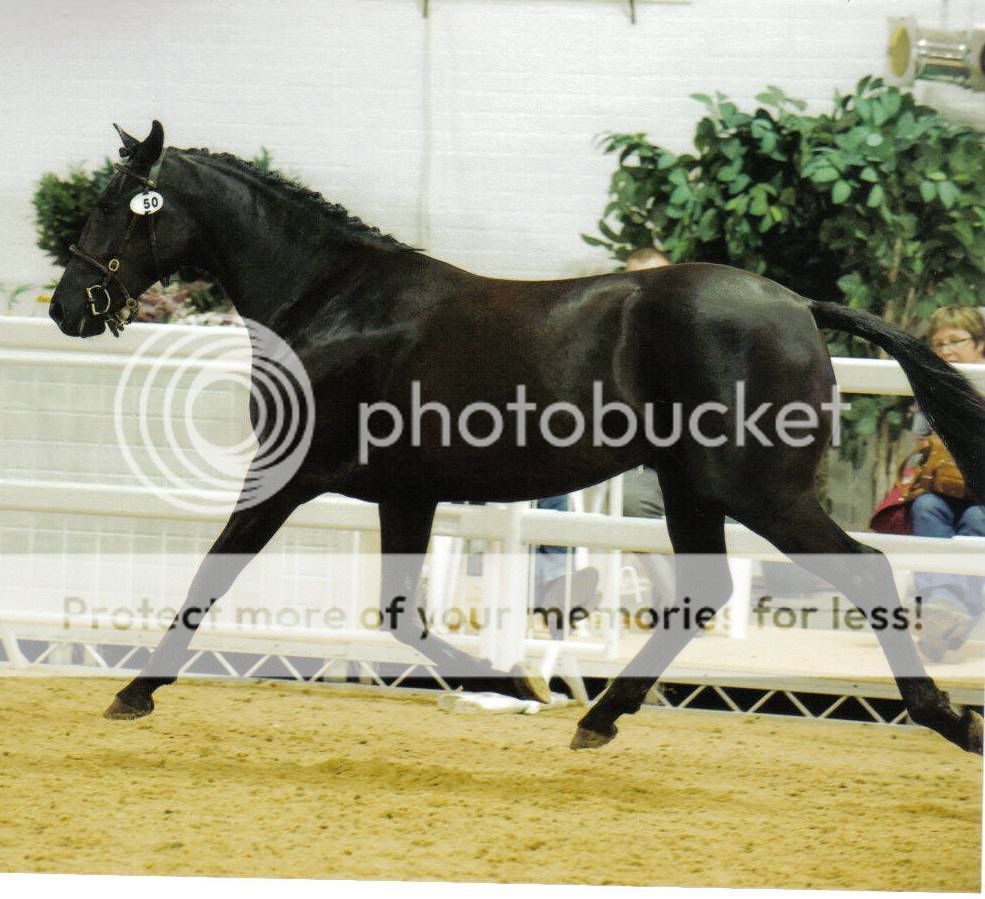
that amazing engagement of the hind leg..trained or breeding?

charlie76

Well-Known Member
Joined
27 March 2006
Messages
4,665
Visit site
Just wondering really. When you look at the top horses in the dressage world they have such power and engagement from their hind leg and show a huge flexion in the hock.
This then enables them to get so much lift and expression.
Is this some thing that is mainly bred into them or trained into them. If it is trained, how? I can do a million transitions on my horse. He can do half steps and collect but he has no where near that sort of push.
So where does it come from?
 
Born with it. It's why dressage people go on and on about the hind leg.
 
Born with it but can be ruined by poor training.

Or improved by great training ;)

Attended a clinic yesterday on transitions run by a certain HHO'er. Amazing how engagement can be improved by correct transitions and certainly improved both my horses hind leg engagement this morning putting into practice what had been learnt :D
 
Yes it's bred into them but that doesn't mean we shouldn't try to get our own horses to engage their hind legs as much as their "breeding", i.e. shape, allows. Be pleased with whatever improvement your horse shows and give yourself a pat on the back for caring about trying to school this into him/her.
 
Nicnac - what was the advice and exercises offered?
 
Anybody ever see the videos of Totilas as a four year old? Nice horse, good mover; NOTHING like the way he moves now (or rather, the way he moved with Edward Gal). Good mechanics/breeding massively enhanced by the training.
 
Both my horses are very well bred for dressage but I still can't achieve what you see in the pics. I guess I just have to be happy with what we do achieve.
 
Born with the potential.

Whilst I have only seen my horse (Dutch) move like that once or twice, he naturally uses his hindend. For example, when he spooks he steps under and lifts his shoulder. It feels more like a canter pirouette than a conventional drop shoulder and spin.
 
Nicnac - what was the advice and exercises offered?

Yes, please.

Re nature vs nurture, both, of course. :) But you can't improve beyond what the horse's body will allow and it will always easier to develop in horses with a natural inclination and aptitude t do the work. Luckily the vast majority of horses are not developed to their maximum potential or are even actively diminished, so there is almost always scope for improvement.
 
I'm going to elaborate on the "breeding" aspect! If by breeding you mean sports horse breeding, specifically warmblood I agree. I also think any "breeding" where the end result is a correctly proportioned well balanced horse counts too. My horse was bred for hunting and as such, his movement could be described as workmanlike i.e. it doesn't have the flashiness of a WB. However, he is is correctly proportioned with a strong yet supple back and hind leg so he can get a beautiful engagement! Mostly when he is messing about in the field with his friends but its lovely to watch... For me, it's all about the engine and I actually find what heuschmann would call "leg movers" a bit of a turn off.

You can see that this type of movement is specifically bred and not trained by looking at yearlings for sale on the continent. I guess my horse will eventually become flashier when he starts to take more weight behind and lifts his shoulder a little more, but I'd rather get the satisfaction of seeing this develop from my own training, than just buying it to begin with (with the obvious caveat that I compete against myself and don't care about winning, lol!).
 
Dont be drawn into thinking that yearlings on the continent are not schooled before being sold ! Thats the reason a lot break later down the line.
Back to the OPs question ,it is not so much breeding per se but more natural ability ! .You say your two horses are well bred for dressage but that does not mean they will always be good movers.
I am afraid that the best of continental breeding never finds its way over here (well not at the price mortals will pay) and this country is used as the dumping ground for their lesser able chuck outs.
 
I'm going to elaborate on the "breeding" aspect! If by breeding you mean sports horse breeding, specifically warmblood I agree. I also think any "breeding" where the end result is a correctly proportioned well balanced horse counts too. My horse was bred for hunting and as such, his movement could be described as workmanlike i.e. it doesn't have the flashiness of a WB. However, he is is correctly proportioned with a strong yet supple back and hind leg so he can get a beautiful engagement! Mostly when he is messing about in the field with his friends but its lovely to watch... For me, it's all about the engine and I actually find what heuschmann would call "leg movers" a bit of a turn off.

You can see that this type of movement is specifically bred and not trained by looking at yearlings for sale on the continent. I guess my horse will eventually become flashier when he starts to take more weight behind and lifts his shoulder a little more, but I'd rather get the satisfaction of seeing this develop from my own training, than just buying it to begin with (with the obvious caveat that I compete against myself and don't care about winning, lol!).
AHEM!!!
Most good welsh cobs move with great engagement behind. My stallion finds flying changes easy because of the amount of jump in canter. Not just warmbloods! A couple of pics of his kids... They all have it.....
befpics1.jpg
[/URL]
 
Those are lovely horses cd and good movers but I don't think that's the sort of movement the op is talking about. You really do see 'raw material' dressage bred youngsters who are capable of producing a more than vertical gaskin and hock articulation approaching 70°+ in the trot and who barely seem to touch the ground in front in canter.

Pd's point is valid - the auction horses are pretty 'produced' even pre riding age, but the fact remains they are still capable of that athleticism and expression.

Whether or not it's a good thing/what most of us need is a different conversation, and it certainly doesn't guarantee a successful dressage career. But a horse can only improve as far as its body will let it and at the to end the horses that win can do extraordinary things with their bodies.
 
I've always found this an interesting subject and have 3 horses who have a real difference in their hind leg action.
My mare swings through, she is IDxTB and so designed for little upwards push but lots of forwards. She is incredible tough and sound and agile and I am very realistic about what she is capable of acheiving, which is novice dressage really, although she does this level very well.
My gelding is a nice compromise,nice angles to his back leg, assisted by his loose back & swingy hips he reallyflexes and steps under his body and can feel incredibly powerful and engaged. He is an ISH and capable of far better work and jumping far bigger than the mare. He isn't extravagant, just quite correct and so he also has a nice hardy, footsure way about him.
My son's gelding is extravagant behind, not in a warmblood way, but because he is p/b iberian. He really flexes his hocks and sits naturally. BUT we struggle to get him forwards and soft and he is naturally tight in his overly short back, he is capable of being really decent but we'll see how long it takes us to connect the back end to the front!.
I think all of them are bred to have the degree of ability and engagement they have, (albeit on an amateur scale)and are examples of how you can only work within the horses natural ability and that the really top performers are bred that way.
 
Just wondering really. When you look at the top horses in the dressage world they have such power and engagement from their hind leg and show a huge flexion in the hock.
This then enables them to get so much lift and expression.
Is this some thing that is mainly bred into them or trained into them. If it is trained, how? I can do a million transitions on my horse. He can do half steps and collect but he has no where near that sort of push.
So where does it come from?

Some of it is natural of course some horses are naturally very active with the hindleg, but ime with my WB im just starting to get the lift & engagement through training.
Basically it comes from a very active hind, what i thought was active was no where near enough, now ive pushed for more & more activity im starting to see a real differance in his trot & canter. Mine can do transistions all day, even in-out of half steps but it isnt enough, i needed to ask for more snapping of the hind leg.
The activity im asking of this horse now is something that he wasnt strong enough to ask for before now ive worked my way upto it, i play with working trot into proper passage steps & out making sure he really pushes from the hind. Then i work him forward with loads of half halts tapping up the hind leg when needed. Lot's of shoulder in canter steps help lazy hinds in canter. Remember most horses are also one sided so will naturally have a slower hind leg, it's important to make sure all work is even.

Even my 6yo PRE is now being asked for more hind leg activity after a JLC lesson she really highlighted how im happy to coast along with a horse on the aids but no where near active enough.
 
Last edited:
Of course conformation matters - as does natural expression . . . but without the right education or the right attitude, the horse won't get to the top.

Nature? Nurture? Both.

P
 
Top