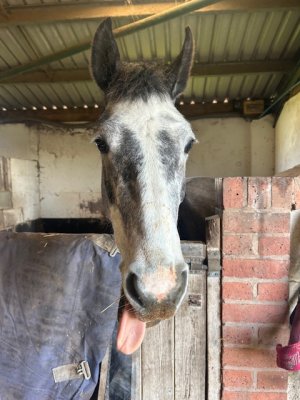
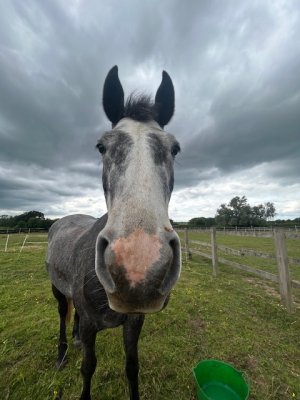
Things are a bit tricky again

Am I the other way round from you because I didn't have the op with my older cob, I have with my younger gelding. I have had 5 years of PSD now and younger cob has gone to a rehab for a few weeks, for him obviously but also to clear my head a bit. He has multiple issues at 6 years of age and I needed time to think about it all.

I think how they carry themselves going forwards is the key - but you know that and I am keeping everything crossed for you.
I’m not chasing insurance so the op is the last resort for me. I just don’t know if I’m wasting time/money going for the conservative methods first
 
Before making any decisions on the PSD op, I would want to see the figure for the percentage of horses operated on which are performing at their previous level (or their expected level if they never reached that) at one and two years after the operation.

The Internet seems to be littered with failures, or working for a while but breaking down quite soon afterwards, but I'm very unclear whether this is because the successes just aren't being talked about. I only know of 2 in real life and a 3rd by repute from a very reliable source, but all three failed, 2 immediately and one after about a year of apparent soundness.

I wonder if anyone else can get hold of any better statistics, your vet maybe? I'll have a search online.

I'm sorry you're back in this boat, S, it must be utterly soul destroying.
.
 
So sorry to read this @J_sarahd 🙁

I’m sure you’ll do the upmost possible for him to come right.. everything crossed. Xx

My friend has a 6yo mare which is slightly straight behind. She went to B&W Hospital and blocked to suspensories. They xrayed her hocks, clear but suspensory scans showed pathology. So steroid injected her suspensories and she was still 2/10th lame 6 weeks later. She went for a MRI scan of her hock/suspensories and mind blown when they saw her suspensories are absolutely fine, but she has changes in her hock joint. Medicated her hocks and now she’s sound, back in work.

I’m not saying it’s that with your gelding, but it opened my eyes a bit. The hospital said with scanning suspensories it can be difficult to get a true image and x-rays don’t show everything like a MRI, plus the suspensory block can also block part of the hock. She was very fortunate her mare was insured.

Not sure why I’m writing this, but thought it was really interesting. HAs your boy had his suspensories medicated?
 
Before making any decisions on the PSD op, I would want to see the figure for the percentage of horses operated on which are performing at their previous level (or their expected level if they never reached that) at one and two years after the operation.

The Internet seems to be littered with failures, or working for a while but breaking down quite soon afterwards, but I'm very unclear whether this is because the successes just aren't being talked about. I only know of 2 in real life and a 3rd by repute from a very reliable source, but all three failed, 2 immediately and one after about a year of apparent soundness.

I wonder if anyone else can get hold of any better statistics, your vet maybe? I'll have a search online.

I'm sorry you're back in this boat, S, it must be utterly soul destroying.
.
That’s the thing, I don’t want to do the op if the likelihood of him still breaking is still quite possible. I read that it was 70% of horses go back to full work after the N&F whereas it’s more like 50% with shockwave. Which makes me think I should do the N&F. It’s not even about the riding anymore - like I said, I could get a part loan or even a full loan if he is retired. I just want to fix him as best I can, I want to give him the best shot possible at being sound and happy.

In other news, he is really not happy about being on box rest. We’ve had headcollars thrown all over the place every morning and every evening.

IMG_1459.jpeg
 
So sorry to read this @J_sarahd 🙁

I’m sure you’ll do the upmost possible for him to come right.. everything crossed. Xx

My friend has a 6yo mare which is slightly straight behind. She went to B&W Hospital and blocked to suspensories. They xrayed her hocks, clear but suspensory scans showed pathology. So steroid injected her suspensories and she was still 2/10th lame 6 weeks later. She went for a MRI scan of her hock/suspensories and mind blown when they saw her suspensories are absolutely fine, but she has changes in her hock joint. Medicated her hocks and now she’s sound, back in work.

I’m not saying it’s that with your gelding, but it opened my eyes a bit. The hospital said with scanning suspensories it can be difficult to get a true image and x-rays don’t show everything like a MRI, plus the suspensory block can also block part of the hock. She was very fortunate her mare was insured.

Not sure why I’m writing this, but thought it was really interesting. HAs your boy had his suspensories medicated?
Thank you. He had his hocks medicated which seemed to help and then didn’t. Vet said this is probably because the steroids also had a bit of an effect on the suspensories. The vet and I basically agreed that I use these two weeks box rest to think about what I want to do. I’m leaning towards shockwave and steroids
 
Thank you. He had his hocks medicated which seemed to help and then didn’t. Vet said this is probably because the steroids also had a bit of an effect on the suspensories. The vet and I basically agreed that I use these two weeks box rest to think about what I want to do. I’m leaning towards shockwave and steroids

Ah - sorry! I missed that part!

Yes I’d go towards shockwave and steroids.. then slowly build him up. Xx
 
I've heard of a couple comiing sound with indiba & posture training, 1 has come back into full work, the other is OK with dressage & hacking but any serious amount of jumping makes him sore. Number 2 also has kissing spines so that could be the issue with jumping.
Good luck & from a personal point of view, rehab is hard & nearly broke me a few years ago. If you have an experienced rehab yard locally & can afford it I would send him there to give you a bit of a break.
 
I think it if were me I'd spend the summer resting, shockwaving and doing the steriods and reassess in the Autumn. Sorry I can't remember if he's insured or not?
Not for his hind legs unfortunately - hence why no chasing insurance issue but also why I’d like to try the “cheaper” route first.
I've heard of a couple comiing sound with indiba & posture training, 1 has come back into full work, the other is OK with dressage & hacking but any serious amount of jumping makes him sore. Number 2 also has kissing spines so that could be the issue with jumping.
Good luck & from a personal point of view, rehab is hard & nearly broke me a few years ago. If you have an experienced rehab yard locally & can afford it I would send him there to give you a bit of a break.
Thank you - thats what I’m hoping for Shadow. Honestly, I fully understand how tough rehab is. I rehabbed my previous mare through kissing spine, PSD and hock issues and she still wasn’t sound. She was also a nightmare to rehab, so hoping that Shadow might at least be a bit easier 🤞
 
I have had 2 have n&f (one after another, because my luck sucks) - both were ultimately retired but it was because the suspensories weren't the only problem. Having said that, i would do the op again, I wouldn't think twice about it, I think it gives the best chance of recovery and both horses don't seem to have suspensory pain now.
They think that the reason the neurectomy is needed is that due to anatomy, the suspensory will always be a bit puffy and will press on the nerve causing ongoing pain, even when fully healed, hence why some unoperated horses just don't get better. My vet advised me to save my money and not bother with shockwave as they didn't think the evidence is really there for long term recovery with it, but obviously your milage may vary.
 
I have had 2 have n&f (one after another, because my luck sucks) - both were ultimately retired but it was because the suspensories weren't the only problem. Having said that, i would do the op again, I wouldn't think twice about it, I think it gives the best chance of recovery and both horses don't seem to have suspensory pain now.
They think that the reason the neurectomy is needed is that due to anatomy, the suspensory will always be a bit puffy and will press on the nerve causing ongoing pain, even when fully healed, hence why some unoperated horses just don't get better. My vet advised me to save my money and not bother with shockwave as they didn't think the evidence is really there for long term recovery with it, but obviously your milage may vary.
I think I’m going to take these two weeks of box rest to really research and think about the best possible treatment. I just wish it was straightforward
 
That’s the thing, I don’t want to do the op if the likelihood of him still breaking is still quite possible. I read that it was 70% of horses go back to full work after the N&F whereas it’s more like 50% with shockwave. Which makes me think I should do the N&F. It’s not even about the riding anymore - like I said, I could get a part loan or even a full loan if he is retired. I just want to fix him as best I can, I want to give him the best shot possible at being sound and happy.

In other news, he is really not happy about being on box rest. We’ve had headcollars thrown all over the place every morning and every evening.

View attachment 159804
Sorry you're going through this.

I just wanted to say, I'd personally take the 70% with a pinch of salt. I just wonder how long vets follow these horses up for and how long do the horses return to work for(?) My mare will be in the success figure but I never expected her to go back to the work that caused the problem, she's retired and I haven't seen the vet that did the n&f since.

Not particularly helpful but I just question how accurate these figures are.

Having said all of that, I don't regret the surgery for one second. I've got a very happy (retired) mare. She had multiple problems but it seemed to all stem from the psd.
 
I’m not chasing insurance so the op is the last resort for me. I just don’t know if I’m wasting time/money going for the conservative methods first
I think the conservative option can be a good one with the correct rehab plan. I am really keen on indiba as well. I wish there was a clear answer.
 
I did purely the faschiotomy. This relieved the pressure in the leg, without de-nerving. He did rehab really well and was comfortable. But he sadly had endless other issues so never made it back to full work before being too unsound to even retire. Noone believed this was the PSD though.
Always happy to discuss more, I have had two with PSD and it is so draining making decisions x
 
I think the conservative option can be a good one with the correct rehab plan. I am really keen on indiba as well. I wish there was a clear answer.
Thank you - the thing with me is I am so fine with taking things slowly if that means a better result. I will (try to - we know it’s
not always easy with horses) follow things to the letter and would rather give an extra month of rest than rush things. He’s only young, so the slower I go now then (hopefully) the longer he will last
I did purely the faschiotomy. This relieved the pressure in the leg, without de-nerving. He did rehab really well and was comfortable. But he sadly had endless other issues so never made it back to full work before being too unsound to even retire. Noone believed this was the PSD though.
Always happy to discuss more, I have had two with PSD and it is so draining making decisions x
I didn’t realise they could do the F without the N. I think I need a really good chat with my vet now that it’s sunk in a bit. Obviously when I was at the vets and last chatting to her, I wasn’t exactly in the best frame of mind to be making decisions and asking the right questions. She’s away after this week until the start of June but I think the rest won’t make anything worse (and hopefully will make things better, even just a tiny bit) so I can properly talk to her once she’s back and we’ve had a few indiba treatments
 
My issue with statistics…. My horse was diagnosed with psd. I elected to turn her away then physio. Basically she’s had a successful long bs and be career and retired sound. However nothing has been recorded on any database as far as I’m aware. Vets do her jabs but have never enquired whether she’s sound.
 
I thought I’d update this as things are ticking along. Shadow is now out in his field prison and actually being a really good boy. We have had two moments of excitement, which put my heart in my mouth, but I know that’s completely normal and 99.9999% of horses would do the same or worse.

He has had two indiba sessions and one shockwave (technically two but they made an error with the first one…) with another one scheduled for this week. I am also going to get his feet xrayed. I didn’t do it at the workup as I just couldn’t afford it and wanted to put the money towards getting the suspensories sorted but then I realised that if he does have NPA, I’m just chucking money away as he won’t be sound until we fix that.

People with NPA experience, did you go for wedges, hoof boots with 3 degree pads or barefoot with a different “type” (for want of a better word) of trimming?

He’s feeling better in that he is really marching out when I bring him in and has gone quite cuddly - not sure if the box rest etc has strengthened our relationship or he’s just feeling happier. Obviously no idea if he is any sounder as I’ve not trotted him up and won’t until I get the go ahead from the vets. He’s got 2.5 weeks left of field prison and then I’m not actually sure what our next phase is yet.IMG_1572.jpeg
 
That all sounds good so far.

Sorry that I cannot help with NPA - my gelding has goodish confirmation and foot balance is fine behind but it would seem he has offset onto his fronts so we tried shod but he seems more comfortable barefoot, so shoes are off again. Hopefully your farrier and vet can discuss once you have done the xrays.

I should think the happier disposition is a good sign - my boy is so much happier at the moment so looking back I can see how uncomfortable he must have been.

Let us know how he is when the vet is happy to trot him up.

I have just started him on feedmark best flex, as I thought that would be worth a shot too.

ps during our early rehab phase, my gelding had 2 moments of madness as well, I think I cried at that point.
 
With the NPA Alfie had in his hind feet I went for the option of pretty much 24/7 in Cavallo trek boots, 3 degree scoot wedge pads cut to size and then a 12mm closed cell foam pad on top of that to give stimulation to the sole and frog.

I trimmed his feet myself on a 1 to 2 week schedule to keep everything growing in the right way.

Having the 3 degree wedge pads provided immediate and noticeable relief to the discomfort he had in his SI area. He also no longer stood on poo to jack the backs of his hind feet up.

I would have been happy to do it barefoot with no boots, and the plan was to drop the pads when his digital cushion has developed enough, but he needed the wedges temporarily to stop other compensations higher up his body causing issues elsewhere.

I did consider glue on shoes, but I still would have wanted his feet trimming every couple of weeks and using the boots was the better option for us at the time.
 
With the NPA Alfie had in his hind feet I went for the option of pretty much 24/7 in Cavallo trek boots, 3 degree scoot wedge pads cut to size and then a 12mm closed cell foam pad on top of that to give stimulation to the sole and frog.

I trimmed his feet myself on a 1 to 2 week schedule to keep everything growing in the right way.

Having the 3 degree wedge pads provided immediate and noticeable relief to the discomfort he had in his SI area. He also no longer stood on poo to jack the backs of his hind feet up.

I would have been happy to do it barefoot with no boots, and the plan was to drop the pads when his digital cushion has developed enough, but he needed the wedges temporarily to stop other compensations higher up his body causing issues elsewhere.

I did consider glue on shoes, but I still would have wanted his feet trimming every couple of weeks and using the boots was the better option for us at the time.
Thank you this is really helpful.

He is in for his next shockwave on Friday so I might ring and see if they can squeeze in an xray too but if not then I’ll get him in asap
 
So he had his feet x rayed today. Not NPA thankfully but he is flat footed (0 degrees on one foot and 1 degree on the other). You can’t tell from the outside as he has quite nice little feet. The plan is to trim to them this time and then potentially put pads/wedges in for a few cycles.

I found out that he had always been shod all round prior to coming to me (I didn’t take his shoes off) and that he was actually going really nicely with them on. I asked the vet if there was a connection and she said potentially yes. So, maybe he will be one who always has to wear a full set to stay comfortable.

Whilst not great to have a horse who needs pads/wedges and a full set of shoes, it is at least a bit comforting to have an answer with an easy-ish fix. I obviously know that just whacking shoes on him won’t fix it and I still need to get the inflammation in his suspensories down and rehab that along with his posture. But hopefully, if we manage to do that then there’s less chance of it recurring if we have his feet sorted.
 
Much like with Nova’s thread, I think I’m going to keep this going as a rehab/recovery thread, as I know from experience that having someone’s whole story in one place is invaluable when you get the news your horse has PSD.

He had the farrier the other day and, whilst he isn’t in work, it was recommended that we trim the toe back as much as possible and keep his heel. And then the next shoeing cycle, the vet recommended pads/wedges but the farrier actually said he would recommend starting with normal shoes with a bit of length behind and a shorter breakover.

The difference already in his posture is incredible. He was always quite camped under, as some of you know - I was always told this is likely down to strength behind and him just needing to build muscle. But recently, especially the past few days, I’ve noticed him standing a lot more like a normal horse. It’s not perfect, it’s not always both legs and it’s not all the time but it’s progress in the right direction.

There’s so much negativity around treating PSD the conservative way and it’s so difficult to see progress when they’re just out in a small paddock and you only see them (and want to see them!!) walking. But just a small shift in his posture has made me realise that maybe I will get my pony back.
 
My littlest cob is sound with lateral extensions on her hinds. She was barefoot and grumpy for years and getting her shod has made such a huge difference to her comfort levels and also her personality.

It was that and the x-rays which made us go down the shoe route which was eye opening for me from the 'any horse can go barefoot' argument. Genetically some horses need more help than others. If yours is comfortable in shoes then don't let anyone persuade you otherwise.
 
My littlest cob is sound with lateral extensions on her hinds. She was barefoot and grumpy for years and getting her shod has made such a huge difference to her comfort levels and also her personality.

It was that and the x-rays which made us go down the shoe route which was eye opening for me from the 'any horse can go barefoot' argument. Genetically some horses need more help than others. If yours is comfortable in shoes then don't let anyone persuade you otherwise.
Definitely! As much as I’d prefer him to be able to stay barefoot (mostly for my own bank balance), if he needs shoes to be comfortable then he needs shoes. Like you said, some just need a bit more of a helping hand than others
 
Updating this rather than starting a new thread.

For those that keep their horses barefoot with similar issues to Shadow, how often do you get them trimmed? And how quickly did you notice a difference (either from trimming or shoeing)?

I brought Shadow in from the field the other day to check him over after he’d swapped fields overnight with another and noticed that he was standing camped under slightly again. Farrier came out on Friday and trimmed him again - it had been about 4 weeks since his last trim. The vet is coming this Friday so farrier was reluctant to put shoes on until our pre-booked appointment on 22nd and to see if the vet would be happy with barefoot but more regular trims.

I am a bit stressed because I don’t know if I’m doing things right
 
It'd be interesting to see a picture of his current posture and close-ups of his current trim. Lots of knowledgeable people on here that may see something...or overwhelm you do I don't blame you for not wanting to do that!

Standing camped under can be for a variety of reasons. It can be from sore lower back, sore lower legs, or soreness in the hooves. So there may be something just not quite right with the trim/his hooves at the moment. Especially if he's just been trimmed. Getting the toe back and heels where they should be is a big part of it, but you're already working toward that.

Mine is flat footed, but we've learned how to trim to that, and haven't had any issues since. His sole depth is actually within healthy range, so that helps. Flat footed horses just seem far less tolerant if the trim gets even remotely too aggressive, IME.

Mine is trimmed every 3 to 4 weeks. If there's a difference (positive or negative) I'll normally notice it at about 24 hours post trim.
 
It'd be interesting to see a picture of his current posture and close-ups of his current trim. Lots of knowledgeable people on here that may see something...or overwhelm you do I don't blame you for not wanting to do that!

Standing camped under can be for a variety of reasons. It can be from sore lower back, sore lower legs, or soreness in the hooves. So there may be something just not quite right with the trim/his hooves at the moment. Especially if he's just been trimmed. Getting the toe back and heels where they should be is a big part of it, but you're already working toward that.

Mine is flat footed, but we've learned how to trim to that, and haven't had any issues since. His sole depth is actually within healthy range, so that helps. Flat footed horses just seem far less tolerant if the trim gets even remotely too aggressive, IME.

Mine is trimmed every 3 to 4 weeks. If there's a difference (positive or negative) I'll normally notice it at about 24 hours post trim.
He stands much better post trim and it gets progressively better for at least a week, week and a half. We think the camped under stance is due to the angles and so the trim is helping that massively.

I’ve just come up to clean his the cut he sustained during his nighttime field swap and took a step back and he was standing really well. So the trim is definitely helping, I guess I’m just wondering if I was aiming to keep him barefoot, would it be a 2-3 week cycle? Or even shorter?

I am just weighing up my options (and overwhelming myself in the meantime). I am happy to do whatever the vet/farrier thinks is best for him, but sometimes I find vets (in general) usually go for the “obvious” solution - in his case wedges and pads.

I am learning all the time at the moment. I’ve never had to think this much about feet and was quite naive to how the smallest change can affect them so much!!
 
He stands much better post trim and it gets progressively better for at least a week, week and a half. We think the camped under stance is due to the angles and so the trim is helping that massively.

I’ve just come up to clean his the cut he sustained during his nighttime field swap and took a step back and he was standing really well. So the trim is definitely helping, I guess I’m just wondering if I was aiming to keep him barefoot, would it be a 2-3 week cycle? Or even shorter?

I am just weighing up my options (and overwhelming myself in the meantime). I am happy to do whatever the vet/farrier thinks is best for him, but sometimes I find vets (in general) usually go for the “obvious” solution - in his case wedges and pads.

I am learning all the time at the moment. I’ve never had to think this much about feet and was quite naive to how the smallest change can affect them so much!!


Would your farrier be open to you making small trims with a rasp in between? You might be able to work out some sort of self-maintenence plan if you're comfortable with it.

I like short trim cycles. Horses hooves have been growing like weeds here due to our current weather pattern, so I did rasp a tiny bit at about 1.5 weeks. Otherwise, I've usually trimmed at 3 to 5 weeks for my unshod horses. It depends on growth, what we're doing, and just that individual horse.
 
Would your farrier be open to you making small trims with a rasp in between? You might be able to work out some sort of self-maintenence plan if you're comfortable with it.

I like short trim cycles. Horses hooves have been growing like weeds here due to our current weather pattern, so I did rasp a tiny bit at about 1.5 weeks. Otherwise, I've usually trimmed at 3 to 5 weeks for my unshod horses. It depends on growth, what we're doing, and just that individual horse.
I could ask him but I’ve literally never done it before so I’d be so worried about getting it wrong!
 
Top