
Trotwork as especially strenuous for the horse

stangs

Well-Known Member
Joined
18 September 2021
Messages
3,221
Visit site
In The Athletic Development of the Dressage Horse, De Kunffy writes “the trot wears the horse down; the canter, on the other hand, tends to build him up.” Full text below:
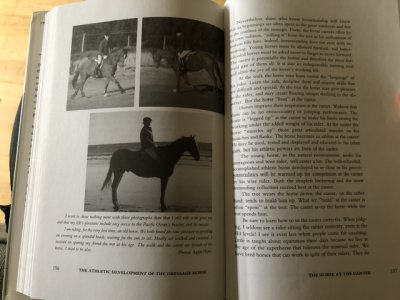
IMG_2703.jpeg

He gives no particular evidence for this, but it’s got me pondering - is this true?

I’m sure I had read somewhere that trotting uphill strains the SI and so it’s preferable to canter uphill instead. Then there’s the eternal debate as to whether trotting or cantering on the roads is less concussive. And I’ve been wondering whether one of the reasons polo ponies can have such long careers* is because they do so little trotwork.

*(I know there’s an issue with horses being “polo sound” but there are still a lot of older polo ponies competing at a decent level while being genuinely sound.)

Does anyone know of other evidence regarding trotwork being possibly detrimental, or at least more strenuous, on the horse than canterwork?

Trot is generally the default faster gait; i.e., people tend to warm up in trot before they start any cantering; a light schooling session or hack will usually involve walk and trot rather than walk and canter. Is this an attitude we should be changing: should we be treating canter as the default/easy option instead?
 
I have read that 15 mins trotting per day is a good way to promote weight loss in ems horses so I suppose that it is because it is a more energetic gait. Having said that, I think that all my ponies have preferred trotting to cantering.

It’s a really interesting topic and I’d like to see what other people know about it x
 
I learned to ride as an older adult so may be have some batty ideas. But even on my first hacks we did long stretches of rising trot. It was so tiring for us older adult beginners that my friend and I called it "riding teachers' trot. When I hack out alone, I make my share trot up a certain hill on the way home and explain to her that it is what the YM would make her do, the equivalent, YM said, of a human going to the gymn.
 
I was taught the same when I was younger, but I was the age before I would have thought to ask/look for evidence so not sure really.

The only thought I had was that the trot that most horses have is not terribly 'natural' physiology-wise in that we selectively bred the diagonal trot for carriages. Other non-trot gaits do seem less strenuous and more suitable for the 'job' of the trot pace than trot is.
 
I dont know, but I do know that when you watch horses in the field they do tend to canter far more then trot if they want to move out of a walk.

But, I'm afraid while doing fittening work polo ponies do loads of trotting, I used to ride polo ponies, and my best friend was a polo groom for many years, and after their first six weeks of walk we used to do a lot of trotting. I think their long careers are more likely due to their winters spent in the field, so having a good chunk of time off every year probably helps them stay sound.
 
It likely depends to some extent the speed of the gait and the quality of the gait for that particular horse.

But as an example, a friend when fittening a specific 5* horse, a fairly heavy type and not a natural mover, avoided trot for the most part. He would obviously practice the trot for dressage, but otherwise the bulk of his work was either walk or canter. He had a choppy concussive natural trot and his training was under the advise of a proper old school vet
 
I can’t remember who, what, when or why but I do remember being told that cantering was easier work. I must admit don’t actually do a lot of cantering as roadwork is in walk and the tracks are too hard to do anything other than walk at present and when in the school we generally doing pole work so walk and trot with a bit of canter. Reminder to self and horse more canter.
 
But, I'm afraid while doing fittening work polo ponies do loads of trotting,
For years I had lessons next to a polo field with a canter track and for years also OH had a spectating membership at Cowdray Park Polo Club and we watched many many high goal polo matches. I never saw any significant trotting either on the canter track or during games. It was walk or canter even when ponies were being ridden by grooms to points where the riders might change mounts during a chucka.
One did see rising canter to spare the ponies backs going onto the field. At that time, being passionate about polo, I tried to learn rising canter but I never managed it.
 
For years I had lessons next to a polo field with a canter track and for years also OH had a spectating membership at Cowdray Park Polo Club and we watched many many high goal polo matches. I never saw any significant trotting either on the canter track or during games. It was walk or canter even when ponies were being ridden by grooms to points where the riders might change mounts during a chucka.
One did see rising canter to spare the ponies backs going onto the field. At that time, being passionate about polo, I tried to learn rising canter but I never managed it.

I know plenty of people I respect who think that rising to the canter isn't good for the horse so, if they're right, your did those ponies a favour!
 
I was told by my vet that when I’m warming my horse up I should walk, then canter then trot rather than the more usual walk, trot, then canter. Engages everything before trotting, which I guess would support the OP? 🤷🏻‍♀️ He does have mild ks and is a long horse so engaging his core is something I need to work on regularly.
 
I was told by my vet that when I’m warming my horse up I should walk, then canter then trot rather than the more usual walk, trot, then canter. Engages everything before trotting, which I guess would support the OP? 🤷🏻‍♀️ He does have mild ks and is a long horse so engaging his core is something I need to work on regularly.

Definitely get a better trot after canter with mine. Repeat reminder to self need to do more canter
 
For years I had lessons next to a polo field with a canter track and for years also OH had a spectating membership at Cowdray Park Polo Club and we watched many many high goal polo matches. I never saw any significant trotting either on the canter track or during games. It was walk or canter even when ponies were being ridden by grooms to points where the riders might change mounts during a chucka.
One did see rising canter to spare the ponies backs going onto the field. At that time, being passionate about polo, I tried to learn rising canter but I never managed it.
Yes, I'm sure, but once ponies are playing high goal they are extremely fit, and I agree they don't trot much then. I said trotting is done a lot in the fittening stages after the initial six weeks of walk. This is long before matches are played.
 
Yes, I'm sure, but once ponies are playing high goal they are extremely fit, and I agree they don't trot much then. I said trotting is done a lot in the fittening stages after the initial six weeks of walk. This is long before matches are played.
The same when I was working with them - then you get onto the canter work. I never did rising canter but I had an instructor obsessed with 2 point position when I was younger so my thigh muscles were good!

No idea if trot is harder but I do know canter loosens up the sacroiliac area and a lot of horse's trot work improves with more canter work.
 
I would agree with it on the whole.

It is easier/ more common for horses to move in poor balance and on the forehand in trot.
I think canter naturally engages more of the muscles for self carriage and moving well across the horse's back.
Perhaps I am biased as I find canter easier too and would rather do a canter pirouette than leg yield in trot 🙈

Out hunting etc. I prefer a collected canter in a light seat, compared to belting along in trot and I think it is less of an impact on the horse's body.
 
I would agree with it on the whole.

It is easier/ more common for horses to move in poor balance and on the forehand in trot.
I think canter naturally engages more of the muscles for self carriage and moving well across the horse's back.
Perhaps I am biased as I find canter easier too and would rather do a canter pirouette than leg yield in trot 🙈

Out hunting etc. I prefer a collected canter in a light seat, compared to belting along in trot and I think it is less of an impact on the horse's body.
I was advised by a senior endurance vet that canter on the road (with an unshod horses) would be preferable to trot for miles. On level but hard ground I have usually preferred to canter since then.
 
I think it can possibly vary between horse's? I think my native finds trot an easier pace and it is certainly is more economical for him than canter. You can pop him into trot and he'll happily stay there for plenty of long trots (and I can use trot as an active recovery period) without feeling like it's terribly hard work and without losing form but we have to work much harder at maintaining canter fitness and form.
 
I think it can possibly vary between horse's? I think my native finds trot an easier pace and it is certainly is more economical for him than canter. You can pop him into trot and he'll happily stay there for plenty of long trots (and I can use trot as an active recovery period) without feeling like it's terribly hard work and without losing form but we have to work much harder at maintaining canter fitness and form.
Of course! Horses for courses, a Dales, Hackney, Welsh D, standardbred etc will also go a lot more ‘naturally’ in harness than a blood horse. But trot work is excellent for fittening horses, and doesn’t have to be concussing along on tarmac surfaces.
 
Very interesting topic. What about canter being 'one sided' though? You must need to be careful about cantering equally on each lead so the muscles develop evenly on both sides?
So is trot if you're rising on one diagonal though, riding wise both paces need "management" to limit one sidedness
I'm not sure on canter v trot, canter feels nicer to maintain for prolonged periods, but there's the moment where all the horses weight is on one foreleg whereas in trot weight is even throughout
 
Very interesting topic. What about canter being 'one sided' though? You must need to be careful about cantering equally on each lead so the muscles develop evenly on both sides?

When we were dressaging I’d practice walk to canter on the field tracks to get both strike offs on a straight line. It is a good point as imagine people and horses often favour one side over the other.
 
In The Athletic Development of the Dressage Horse, De Kunffy writes “the trot wears the horse down; the canter, on the other hand, tends to build him up.” Full text below:

View attachment 163425

He gives no particular evidence for this, but it’s got me pondering - is this true?

I’m sure I had read somewhere that trotting uphill strains the SI and so it’s preferable to canter uphill instead. Then there’s the eternal debate as to whether trotting or cantering on the roads is less concussive. And I’ve been wondering whether one of the reasons polo ponies can have such long careers* is because they do so little trotwork.

*(I know there’s an issue with horses being “polo sound” but there are still a lot of older polo ponies competing at a decent level while being genuinely sound.)

Does anyone know of other evidence regarding trotwork being possibly detrimental, or at least more strenuous, on the horse than canterwork?

Trot is generally the default faster gait; i.e., people tend to warm up in trot before they start any cantering; a light schooling session or hack will usually involve walk and trot rather than walk and canter. Is this an attitude we should be changing: should we be treating canter as the default/easy option instead?
Think it's because canter has that momentvof suspension where trot doesn't.

Looking at my beagle, she will often run in a lope which I suppose is a canter in a horse, it's a pace which I've always assumed covers more ground and is less strenuous. Unless that's just the beagle way.

It's a rolling gait.
 
When I had my first horse diagnosed with arthritis, the vet told me then to warm up with masses of walk and then canter, as the assymetrical gait was less demanding for them than trotting, and last year when my share horse was treated for sacroiliac issues, another vet gave the same advice for that.
 
As others have said I think it varies between horses and also what you decide as a trot. Amber has a long strided very flat ranch trot (scores super at shows) which she can keep up all day easily, if I want an English working trot that's harder for her.
She'll chose ranch trot over canter/lope, but she'll choose canter/lope over English trot. We don't trot on roads or hard ground anyway. We just work between again a long strided flat ranch walk and more English collected walk for fitness on hard surfaces.
Western has certainly introduced me to more gears within each gait.
 
The sec D will generally choose trot over canter- she will belt across the field in trot and only slip into canter when she can no longer keep up. (obviously if they're all having a hooley she gallops about as the others do)
The old boy will transition to canter at a much lower speed than her, but if he's not in a rush he will trot or jog rather than canter, unless he's going up a steep hill. He is also generally much more workmanlike in his paces though, whereas the sec D has been bred for a flashy trot.
 
The only thought I had was that the trot that most horses have is not terribly 'natural' physiology-wise in that we selectively bred the diagonal trot for carriages. Other non-trot gaits do seem less strenuous and more suitable for the 'job' of the trot pace than trot is.
What do you mean by non-trot gaits? At least with pacing in dogs (and I would think horses too, given their shape), the idea is it's less efficient and more strenuous on the spine [x].

I think it can possibly vary between horse's? I think my native finds trot an easier pace and it is certainly is more economical for him than canter. You can pop him into trot and he'll happily stay there for plenty of long trots (and I can use trot as an active recovery period) without feeling like it's terribly hard work and without losing form but we have to work much harder at maintaining canter fitness and form.
Looking at other poster's replies, could that be because he doesn't have to engage the same muscles when trotting so it's easier for him/his heart but not necessarily better MSK-wise?
 
Interesting post worth following . I must admit I find it easier to go to canter from a walk but that is me or maybe it is my horse as well. I do not do enough canter though I do know that.
 
Interesting subject. My pony is newly back end just a baby. We only canter out hacking as always assumed canter in the ménage would be quite difficult for an unbalanced baby. We have worked on balancing the trot so maybe I should be cantering now?

I will continue to watch this space.
 
Top