What supplements do you feed and why?

Some really interesting comments. I first owned horses and ponies light years away from today, when virtually all feeds were made from scratch.

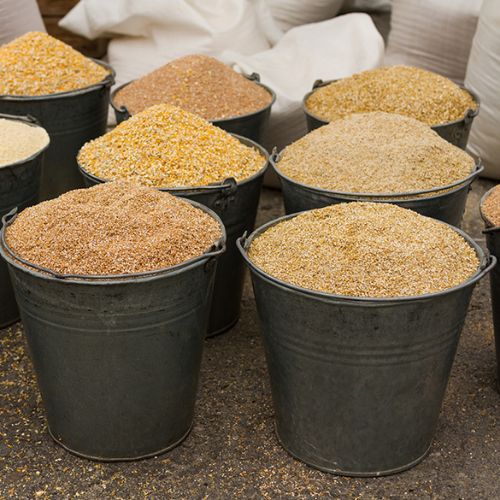
I recall soaking and cooking linseed and barley in a huge 'jelly pan' and mixing each feed to individual needs. I think the only 'supplement' we used was cider vinegar! We fed bran, oat or lucerne chaff, boiled barley, cooked linseed and molasses (and Lucerne hay)

The horses' and ponies' coats shine and they all kept great condition. I recall at a NHS riding exam a couple of us being asked about feed and one unfortunate candidate mentioning pellets (an anaethma to BHS instructors!) the examiner looked witheringly at the candidate and said "and what happens when the nut factory breaks down?!".

Of course these days virtually all horse feed is manufactured pellets of some sort for convenience and due to time constraints. Arguably it's also better balanced, being 'scientifically formulated' as dog food has been for years. Inevitably though it's 'one size fits all' even with various formulas.

If you're considering the addition of supplements of any manufactured variety which aren't specifically veterinarian prescribed, then honestly save your money. Here's a great article written by Kentucky Equine Research which explains equine nutrition very well:
Those were the days.....getting bawled out for cooking linseed jelly in Mother’s pressure cooker....split seeds glued to the rubber seal🤭😱
Rolled oats, damp bran and salt for hunters, bran mashes when they got home (dried-on bran takes some shifting off the kitchen towels, too) - unbalanced, unscientific, yet horses did far more activity, looked good and hardly ever seemed to be ill (just as well, since there were far fewer vet treatments, either)
We did hear about pony nuts, but our Instructor thought they were floor sweepings!
‘supplements’ were just when you gave them an apple, carrot or slice of bread.
 
I have a poor doer TB (almost died of emaciation 15 years ago) who needs something like Protexin to keep condition on - prebiotic and probiotic to maximise the food he ingests. Feed the supplements they need, not the ones you fancy might make them live forever?

ETA - Years ago I did feed magnesium oxide to an over reactive horse I had bred and that made all the difference - magnesium blocks the over production of adrenaline, another example of a supplement for a reason
 
Last edited:
I'm not a massive supplement feeder in general.

My old boy had garlic and fenagreek leaves for his COPD - worked a treat for him along with an adjusted management plan.

My older gelding went on spillers supple and senior balancer in his old age to help his joints.

And I've just started giving my youngster rigcalm on the advise of the vet - hoping to calm the nippy behaviours and discourage the 5th leg issues.
 
If you're considering the addition of supplements of any manufactured variety which aren't specifically veterinarian prescribed, then honestly save your money.

I don’t agree with this.

Sure, the vast majority of supplements are not giving the effect people think they are. Many aren’t scientifically backed, or use active ingredient amounts below that which has been proven to work.

But there is a lot of good evidence for various supplements eg glucosamine & chondroitin, MSM and omega 3 as joint supplements, yeast and probiotics for gut health (both mentioned in your article), valerian as a calmer.

And beyond that, some supplements are actually needed in some cases to balance the diet. Some places in the UK are selenium deficient and should be feeding additional selenium. When you feed linseed or copra or bran, you feed too much phosphorus and should be balancing it with a calcium source such as limestone flour. These are things a vet won’t prescribe but a decent independent nutritionist will advise on.

Do some people waste a lot of money on supplements? Yes. Are manufactured supplements that are not vet-prescribed a waste of money? Not necessarily.
 
I don’t agree with this.

Sure, the vast majority of supplements are not giving the effect people think they are. Many aren’t scientifically backed, or use active ingredient amounts below that which has been proven to work.

But there is a lot of good evidence for various supplements eg glucosamine & chondroitin, MSM and omega 3 as joint supplements, yeast and probiotics for gut health (both mentioned in your article), valerian as a calmer.

And beyond that, some supplements are actually needed in some cases to balance the diet. Some places in the UK are selenium deficient and should be feeding additional selenium. When you feed linseed or copra or bran, you feed too much phosphorus and should be balancing it with a calcium source such as limestone flour. These are things a vet won’t prescribe but a decent independent nutritionist will advise on.

Do some people waste a lot of money on supplements? Yes. Are manufactured supplements that are not vet-prescribed a waste of money? Not necessarily.
A big consideration might be finding that decent, independent nutritionist....
For sure, excess phosphorus is scientifically shown inadvisable, which I do not doubt for one second, but can anyone explain how so many animals performed and worked so consistently, while being so persistently poorly nourished?
And why, in contrast - witness endless issues and threads about such issues - so many horses now have so many dietary related health and behavioural problems, given the expansion of availability and information about diet and supplementation? They should be healthier and happier than ever! (Unless it’s a curse relating to owners who post on social media?)
 
A big consideration might be finding that decent, independent nutritionist....
For sure, excess phosphorus is scientifically shown inadvisable, which I do not doubt for one second, but can anyone explain how so many animals performed and worked so consistently, while being so persistently poorly nourished?
And why, in contrast - witness endless issues and threads about such issues - so many horses now have so many dietary related health and behavioural problems, given the expansion of availability and information about diet and supplementation? They should be healthier and happier than ever! (Unless it’s a curse relating to owners who post on social media?)
No doubt, there are far more company reps who want to sell you a product! And the way the industry pushes these things is a big problem - I really agree with you there.

it’s a good question. Think about it like this - humans often don’t eat an ideal diet, and when you notice the effects tends to be a) if trying to perform as an athlete and b) when you age.

Take human athletes from 1950-80 - they weren’t dying from malnourishment, but they couldn’t compete in most sports now against modern top conditioned athletes, part of that conditioning being their nutrition. In rugby, my other main sport, they’d literally be flattened. Not all horses are athletes, but you’d like to think we followed best nutritional science practices for them the way we do for human athletes - and certainly there’s a sporting disadvantage if there are inadequacies in the diet.

And of course, modern horses are working and living healthy lives to a much older age than in the past. 18 and 19 year old Olympic horses would have been scoffed at in the past, and we see them semi-regularly now.

Beyond that, we’re also seeing lower incidences of nutrition related diseases in horses. Equine motor neuron disease for example is caused by vitamin E deficiency - the incidence has fallen off a cliff since 2007 when the NRC recommendations for Vit E were increased and feed manufacturers started adding more into commercial feeds. We don’t see it very often these days - but go back to the 1980’s to mid 2000’s and horses kept stabled were at risk.

I think we sometimes look back with rose tinted glasses, honestly. More horses are more healthy now than then, part due to advances in medicine and part in nutrition. Did individual horses do ok? Yes - but plenty of human teenagers seem to do fine on a diet of sugar, salt and booze.
 
No supplements but does get a daily balancer (Heygates) and herbal mix instead of chaff, this contains meadowsweet, milk thistle, dandelion, burdock, chamomile, hawthorn, spearmint nettles, echinacea, rosehips, seaweed, marigolds and cleavers. Recently discovered my new horse has CPL and marigold and cleavers seems widely used in CPL circles
 
After years of plaing guess work on what is needed and finding some work and some don't, mine now see a Zoopharmacogonyst (sp) twice a year and have a self selection by the horses to choose what herbs/minerals they want. Most enlightening to see it in action, and they seem to choose things that correspond with their workload/illness recovery so I feel that it is a worthwhile investment in a more targetted supplement regime.
 
I mix TB's Healthy Herbal Musli with some really basic chaff to pad it out and get them lots of nice herby things in... it's made up of:

Dried alpine grasses and herbage, black oil sunflower seeds, cold pressed linseed oil, toasted linseed shreds, carrot, apple, parsnip, beetroot, cornflower petals, calendula petals, rosehips, fennel seed, nettle, elderflower blossom, marshmallow root, aniseed.

They have a handful of this mix as a base feed. I have a really picky gelding who needs some supplementary support and it helps him want to eat it :D

Supplement/balancer wise they have:

Arthritic cob: Spillers lite and lean balancer, Bute, Vit E, YuMove

Old man but still in work: Spillers lite and lean balancer, Vit E and YuMove

The lovely herby feed smells amazing, and covers the funny tastes/smells of the YuMove (fishy GLM) and the Vit E, which smells a bit like paint stripper!

They look fantastic and nowhere near theirs ages (19 & 20), full of energy and life and most importantly, they appear very comfortable in their bodies.
 
Years ago we did feed supplements. Anyone else remember limestone flour for calcium, cod-liver oil for joints, linseed for 'bloom', various herbs?

There has also been a change in the horse food available, even straights are different varieties, same as grass and hay.

ps yes, I do feed vits and mins, like a lot of places the soils here (and the plants that grow in it) can have deficiencies so this is a way to balance things out.
 
Last edited:
No doubt, there are far more company reps who want to sell you a product! And the way the industry pushes these things is a big problem - I really agree with you there.

it’s a good question. Think about it like this - humans often don’t eat an ideal diet, and when you notice the effects tends to be a) if trying to perform as an athlete and b) when you age.

Take human athletes from 1950-80 - they weren’t dying from malnourishment, but they couldn’t compete in most sports now against modern top conditioned athletes, part of that conditioning being their nutrition. In rugby, my other main sport, they’d literally be flattened. Not all horses are athletes, but you’d like to think we followed best nutritional science practices for them the way we do for human athletes - and certainly there’s a sporting disadvantage if there are inadequacies in the diet.

And of course, modern horses are working and living healthy lives to a much older age than in the past. 18 and 19 year old Olympic horses would have been scoffed at in the past, and we see them semi-regularly now.

Beyond that, we’re also seeing lower incidences of nutrition related diseases in horses. Equine motor neuron disease for example is caused by vitamin E deficiency - the incidence has fallen off a cliff since 2007 when the NRC recommendations for Vit E were increased and feed manufacturers started adding more into commercial feeds. We don’t see it very often these days - but go back to the 1980’s to mid 2000’s and horses kept stabled were at risk.

I think we sometimes look back with rose tinted glasses, honestly. More horses are more healthy now than then, part due to advances in medicine and part in nutrition. Did individual horses do ok? Yes - but plenty of human teenagers seem to do fine on a diet of sugar, salt and booze.
Definitely no pink specs! far more ‘comfortable’ now, what I don’t appreciate is why things aren’t a great deal healthier - humans or horses.
Horses now live longer than traditional, working draughts, altho like human nonagenarians, centenarians, how many are truly active and healthy rather than arthritic and geriatric retirees, is less clear.
There have always been some long livers - my own grandparents had two ex pit ponies, aged 32 and 34, plus one ancient cart mare, none of them scientifically fed, and there might have been a great many more if people had had the wherewithal and incentive to keep oldies. The economic focus has certainly changed.
Olympian anything is admirable, if untypical, altho currently much dispute about how ‘healthy’ or happy elite sport horses are? Individually, horses don’t jump any higher (record 1949), altho an elite group do so more regularly (reflects breeding, training as well as nutrition and vet attention), and some run faster than previously. Similarly human athletes, yet the population at large hardly runs / jumps / does much at all, and minimally in comparison with earlier generations.
Definitely eradicated some ghastly diseases; more pathologies freshly understood; with new threats coming over the hill....
However, in the UK there seem to be far too many (possibly even the majority?) of private riding horses which are far less physically fit than riding horses typically were, despite the good intentions, access to knowledge and care that modern owners have! Not mere jaundiced observation, but well-recognised as an issue by equestrian vets.
 
I feed reactively based on symptoms and stop them if I see no difference:
- all round vits and mins because he started chewing the fence and eating dirt, both behaviours have now stopped - £11 every 2 months
- marigolds and cleavers because his legs fill when he comes in, this visibly helps - £15.75 every month (he gets a handful)
- Boswellia for anti inflammatory reasons as he had surgery on his stifle, I will continue this for arthritis risk - it was cheaper to buy separately than buy the upgraded joint supp with it in - £18.75 every 2 months
- Aviform joint supplement - see previous stifle surgery/joint needing support - £54 every 3 months

I have also fed Valerian if he is coming back into work, or going out after a period of rest - and Aloe Vera when he first arrived due to the journey over.
 
They’re all on a balancer as the bulk of their feed. The older 2 get buteless as that seemed to be the most cost effective boswelia. The TBy one gets 4 feet (biotin). They get electrolytes (applytes) on an as need basis. Sometimes the ulcery 2 get gastrivet around stay aways.
 
Owning a mare who has PSSM (now retired which takes the pressure off somewhat) I became the queen of supplements.

For most of the UK we will be deficient in selenium. Farmers have known about that for a long, long time but horse owners have only relatively recently caught up. We also understand more about vitamin E and its association with selenium. This year I am finding I'm needing to supplement vitamin E in summer to all 3 of mine which I think is because the grass growth is so poor. Did horses manage without it decades ago? Probably most did OK. Is it still better to supplement the working horse now we have more information? Absolutely.

My littlest cob is on bozmerix. Genetics haven't done her any favours and nor did running with stallions so she needs the help. Back when I was a kid she'd either have had a sachet of bute or would still be running with a stallion producing pretty foals despite the fact that the last (& final) one seems to have inherited the dodgy breathing. With bozmerix and remedial shoes she can stay in work which means she stays fit and healthy.

Otherwise there is a vitamin & mineral balancer for all 3 and because the bigger cob gets fed oats I also have a bag of limestone flour although I think the calcium in the sainfoin chaff he gets helps balance the oats.

We've also learnt a huge. huge amount about gut health and how important it is to the rest of the body in recent years. I'm about to re-order oily herbs because I think all 3 of mine were better on them gut-wise and they're cheap.

I'm lucky because I have old permanent pasture to graze mine on and my hay comes from similar. Unfortunately the hay is from within a couple of miles so is unlikely to balance out the really low selenium and copper in my area. Farmers have always given cattle drenches when they know there is a shortfall or put out minerals so I'm not sure why horse owners wouldn't
 
Definitely no pink specs! far more ‘comfortable’ now, what I don’t appreciate is why things aren’t a great deal healthier - humans or horses.
Horses now live longer than traditional, working draughts, altho like human nonagenarians, centenarians, how many are truly active and healthy rather than arthritic and geriatric retirees, is less clear.
There have always been some long livers - my own grandparents had two ex pit ponies, aged 32 and 34, plus one ancient cart mare, none of them scientifically fed, and there might have been a great many more if people had had the wherewithal and incentive to keep oldies. The economic focus has certainly changed.
Olympian anything is admirable, if untypical, altho currently much dispute about how ‘healthy’ or happy elite sport horses are? Individually, horses don’t jump any higher (record 1949), altho an elite group do so more regularly (reflects breeding, training as well as nutrition and vet attention), and some run faster than previously. Similarly human athletes, yet the population at large hardly runs / jumps / does much at all, and minimally in comparison with earlier generations.
Definitely eradicated some ghastly diseases; more pathologies freshly understood; with new threats coming over the hill....
However, in the UK there seem to be far too many (possibly even the majority?) of private riding horses which are far less physically fit than riding horses typically were, despite the good intentions, access to knowledge and care that modern owners have! Not mere jaundiced observation, but well-recognised as an issue by equestrian vets.
Couldn't agree more with everything you say!! Well done :-)
 
Definitely no pink specs! far more ‘comfortable’ now, what I don’t appreciate is why things aren’t a great deal healthier - humans or horses.
Horses now live longer than traditional, working draughts, altho like human nonagenarians, centenarians, how many are truly active and healthy rather than arthritic and geriatric retirees, is less clear.
There have always been some long livers - my own grandparents had two ex pit ponies, aged 32 and 34, plus one ancient cart mare, none of them scientifically fed, and there might have been a great many more if people had had the wherewithal and incentive to keep oldies. The economic focus has certainly changed.
Olympian anything is admirable, if untypical, altho currently much dispute about how ‘healthy’ or happy elite sport horses are? Individually, horses don’t jump any higher (record 1949), altho an elite group do so more regularly (reflects breeding, training as well as nutrition and vet attention), and some run faster than previously. Similarly human athletes, yet the population at large hardly runs / jumps / does much at all, and minimally in comparison with earlier generations.
Definitely eradicated some ghastly diseases; more pathologies freshly understood; with new threats coming over the hill....
However, in the UK there seem to be far too many (possibly even the majority?) of private riding horses which are far less physically fit than riding horses typically were, despite the good intentions, access to knowledge and care that modern owners have! Not mere jaundiced observation, but well-recognised as an issue by equestrian vets.

I mean, years ago, a 16-18 year old horse was old. Now, even big horses can often expect to be ridden usefully into their 20’s. Look at the many posts in this forum asking whether buying a 16-18 year old is worth it - it certainly wasn’t in the 90’s. Small ponies have always had a tendency to be long lived, but big horses not so much.

The issue of most humans/leisure horses being less active and fat is a very real one - but not really related to supplementing feeds. Obesity is a huge issue but more often linked to grazing and activity, including field movement. So yes a big issue, but not really related to whether horses do better on a diet that isn’t deficient in various elements.
 
One wouldn't presume to reinterpret what various commenters have stated in this thread.

My understanding from the foregoing post was the question of why, when we supposedly now have greater knowledge and better equine nutrition (or for that matter, human) there is such a global obesity epidemic and horses which now are less fit and/or overweight than they were years ago.

There are multiple variables involved and the question of the role modern equine nutrition plays in this is certainly one of them.

I'd disagree that 18 year old or older horses are biologically 'younger' than they were in the past, or that they are necessarily a 'good' buy, contingent of course on the prospective role a purchaser has in mind at the time.

Again, there are multiple factors potential owners will consider when purchasing a horse, of which chronological age is just one.
 
One wouldn't presume to reinterpret what various commenters have stated in this thread.

My understanding from the foregoing post was the question of why, when we supposedly now have greater knowledge and better equine nutrition (or for that matter, human) there is such a global obesity epidemic and horses which now are less fit and/or overweight than they were years ago.

There are multiple variables involved and the question of the role modern equine nutrition plays in this is certainly one of them.

I'd disagree that 18 year old or older horses are biologically 'younger' than they were in the past, or that they are necessarily a 'good' buy, contingent of course on the prospective role a purchaser has in mind at the time.

Again, there are multiple factors potential owners will consider when purchasing a horse, of which chronological age is just one.
Well, this is a pretty good interpretation!
I think the oldest recorded horse was 62, another draught that pulled barges all his life, eighteenth and early nineteenth centuries…..
Previously, as in prior to contemporary marketing of the truly dizzying range of equine supplements, adding ‘minerals’, based on locally-understood farming experience, was not unknown. There is a considerable difference! I have witnessed owners having to give (unnecessary) buckets of feed simply to put all the supplements into, even adding extra feed, molasses, whatever to
 
Well, this is a pretty good interpretation!
I think the oldest recorded horse was 62, another draught that pulled barges all his life, eighteenth and early nineteenth centuries…..
Previously, as in prior to contemporary marketing of the truly dizzying range of equine supplements, adding ‘minerals’, based on locally-understood farming experience, was not unknown. There is a considerable difference! I have witnessed owners having to give (unnecessary) buckets of feed simply to put all the supplements into, even adding extra feed, molasses, whatever to
Disguise the supplements! (Sorry, pressed wrong buttons….)
 
One wouldn't presume to reinterpret what various commenters have stated in this thread.

My understanding from the foregoing post was the question of why, when we supposedly now have greater knowledge and better equine nutrition (or for that matter, human) there is such a global obesity epidemic and horses which now are less fit and/or overweight than they were years ago.

There are multiple variables involved and the question of the role modern equine nutrition plays in this is certainly one of them
I think we also have to look at people's lifestyles - in my youth most would finish work and have a short commute home so could ride a horse (& many mothers didn't work). That's very different now.

There was acreage so lots lived out and self exercised (housing estates around here now). Permanent pasture is very different to the ex dairy farms many livery yards have. We could also hack for miles because the traffic was less heavy. I laughed when the old boy who used to live next door told me where he rode his dad's work horses on a Sunday. Thats a constant stream of 60mph traffic and unrideable these days.

Most horses i know carrying too much weight are doing it off the back of grass and too little exercise, not compound feeds or supplements. Your wallet may suffer chucking various herbs and minerals in a bucket but its unlikely that's causing blubber.
 
I think we also have to look at people's lifestyles - in my youth most would finish work and have a short commute home so could ride a horse (& many mothers didn't work). That's very different now.

There was acreage so lots lived out and self exercised (housing estates around here now). Permanent pasture is very different to the ex dairy farms many livery yards have. We could also hack for miles because the traffic was less heavy. I laughed when the old boy who used to live next door told me where he rode his dad's work horses on a Sunday. Thats a constant stream of 60mph traffic and unrideable these days.

Most horses i know carrying too much weight are doing it off the back of grass and too little exercise, not compound feeds or supplements. Your wallet may suffer chucking various herbs and minerals in a bucket but its unlikely that's causing blubber.
Impact on wallet was part of the original post, it has to be very significant on multiple wallets to create the supplements diversity and industry now existing!
I don’t disagree with what’s written here, and calories in supplements aren’t causing unfit horses (even when concealed in additional food); rather it’s symptomatic of accompanying changes in attitude - love my horse, will buy extras, give extra things (including feed and training bribes) that might make him feel or perform better, but will at least make me feel a more considerate person - instead of commencing a sensible programme of actual activity or training. Or even , whisper it, ‘work’.
OK, not all horses or owners are physically up to dynamic exercise (getting a bit that way, myself), but when owners post they have ethical issues with the concept of working horses, or won’t insist the horse goes for a ride because it has shown clear preference for eating its head off in the field with its mates instead, owners who think making horses work is speciesist, exploitative and morally wrong - there’s a problem.
Back to the supplements - suspicion must remain that for each one really benefitting the horse, there will be another nine benefitting the owner’s psyche, albeit not their pockets.
 
I think we also have to look at people's lifestyles - in my youth most would finish work and have a short commute home so could ride a horse (& many mothers didn't work). That's very different now.

There was acreage so lots lived out and self exercised (housing estates around here now). Permanent pasture is very different to the ex dairy farms many livery yards have. We could also hack for miles because the traffic was less heavy. I laughed when the old boy who used to live next door told me where he rode his dad's work horses on a Sunday. Thats a constant stream of 60mph traffic and unrideable these days.

Most horses i know carrying too much weight are doing it off the back of grass and too little exercise, not compound feeds or supplements. Your wallet may suffer chucking various herbs and minerals in a bucket but its unlikely that's causing blubber.
This.

Supplements in a bucket aren’t what causes obesity - it’s the over feeding of other hard feed (even though there are many lower calorie or forage based options compared to the past, if they don’t need hard feed they shouldn’t get it!) and massively massively the grazing and preserved forage.

Many farmers don’t take a second cut of hay now. The average quality is therefore just better and higher calorie.

Dairy grass is more common for grazing than it’s ever been and we know it’s worse for horses.

And more horses are turned out individually or in smaller groups on smaller plots of land, meaning they move less. There’s great studies on track systems showing how much more we can get horses to move in the field (where most of their time is hopefully spent) and combat obesity.

Less exercise is absolutely part of it too and it’s complex - but the nutrition aspect of obesity isn’t to do with supplements in a bucket.

Do all supplements have positive effects? Absolutely not. Are there plenty that either balance horse feeds appropriately or have proven positive effects in horses? Absolutely. And I’ll stand by the fact that vet recommendation of supplements shouldn’t be a requirement to think one is needed.
 
No supplements but does get a daily balancer (Heygates) and herbal mix instead of chaff, this contains meadowsweet, milk thistle, dandelion, burdock, chamomile, hawthorn, spearmint nettles, echinacea, rosehips, seaweed, marigolds and cleavers. Recently discovered my new horse has CPL and marigold and cleavers seems widely used in CPL circles
Is that the Heygates Country Herb Chaff that contains all those herbs?
 
I have a poor doer TB (almost died of emaciation 15 years ago) who needs something like Protexin to keep condition on - prebiotic and probiotic to maximise the food he ingests. Feed the supplements they need, not the ones you fancy might make them live forever?

ETA - Years ago I did feed magnesium oxide to an over reactive horse I had bred and that made all the difference - magnesium blocks the over production of adrenaline, another example of a supplement for a reason
Another vote for protexin. Their products are excellent and actually work in my experience.
 
I feed:

Oily herbs mix...though the yard doesnt seem to be feeding this or is feeding sporadically or not the right amount despite talking to them twice in the past 3-4 months (seriously dying for an assisted DIY space to come up!!!). This does help his coat, weight, and sarcoids...but I guess what do I know about my own horse? 😡😡🤬🤬

Equimins AC

Vit E as he is EPM

Jiaogulan to help blood flow

I have just started him on pea/potato protein as well

The grass that he is on is almost non existent and the soil is chalky and devoid of anything good. He is also on soaked hay as he is sensitive to sugar and barefoot. I have tried him on/off the above and have adjusted various amounts to see if any difference and there always is, particularly with his coat and feet. I am trying the protein as he really struggles with building muscle in general and when I did a calculation, he was very low so giving it a go.

I have tried other supplements and balancers including protexin, brewers yeast, etc. but didnt see much of a change. That said he was on completely different feed so may have a better effect now.
 
Top