
What would you do with this horse?

Michen

Well-Known Member
Joined
22 January 2014
Messages
12,869
Visit site
Such a long, complex story for anyone that doesn't already know from the Boggle thread but I have a beautiful rising 5 year old who sadly got EPM (we think), something that causes neuro symptoms here in the US. He made a remarkable recovery and was cleared as non neuro on several different occasions by different vets.

He has since moved with me to California and the terrain here is very different. We have these crazy short very sharp hills. The kind that make your shins hurt to walk down! Whereas before in Colorado there were plenty of hills but it was more of a constant, albeit very much a work out, gradient rather than anything too crazy. That said I did notice last summer he was rushing down a little sharp bank I had, and going up it he’d sort of climb up on his toes a little. I put it down to being a young baby horse and because he checked out neurologically under all the vet tests with their hill at the clinic etc I didn’t worry. However it’s been more and more at the front of my mind as he’s just not been improving with a particularly steep hill here. He starts getting fidgety and either overly rushy or overly cautious going down hill when long reining or in hand. My biggest suspicion was that he was lame in front as he does have some significant side bone.

Anyway, I had the vet out today. He’s sound as anything- he looks fantastic on a hard trot circle even. He passed every neuro test. Then we got to the hill (I wanted this specific one because I just didn’t think anything less would show what I was worried about) and the vet agreed I was right to be concerned and felt it was most definitely neuro. She said she’d be hard pushed to say he wasn’t safe to ride on the flat given everything, he literally walked perfectly through a row of thick wide raised cavelleti poles. But ultimately, there’s a tiny deficit left there and it’s one that I now know is there. He has also tripped a bit when spooking or whatnot, it’s nothing that I’d have been concerned about as a young horse but of course now I am. I think ultimately, I just can’t imagine ever riding this horse outside of an arena. And maybe not even then frankly.

And that leaves me to where I am now as to what to do with him. He gets fat on thin air. If he’s to retire which I suspect is really the only way forward, he really must be out with a herd on good acerage so that his life is enriched. His current barn is not ok for that. Finding that around here is not really that feasible (though I’d definitely try) and in Northern California the grass is lethally sugary when you do get the acerage. The vet agreed with my concerns. I could send him to Arizona to a barn that I really trust (ironically he got the EPM there but that is what it is and is done now and it’s prevalent everywhere really). But he got fat there too once they started irrigating the pasture so he’d need to spend probably a third of the year or so in a muzzle. Is that even fair I don’t know. I don’t really want to send him anywhere else out of state, particularly because I wouldn’t then be able to check on him.

The other option is do I try and get him going and maybe someone would want him as a little low key dressage horse? I just don’t even know… maybe I’m being way too fussy? He also needs a new saddle, so I’d need to front up another chunk of cash to invest in that. I spent the best part of 25k on this horse last year as he also landed in hospital with an infection that took a lot of dollar to save him from, plus the EPM, plus a lameness etc.

I just don’t know what to do. He looks so good, so sound, it’s just this last 5% and now that I know.. I can’t ignore it and ultimately I love hacking. It’s not worth it for me to put the time and energy into bringing on a young horse that I’ll never feel comfortable hacking. Putting him down is definitely not on the cards, he’s super happy and looks so great in himself and his body in general right now. And I love him, and I owe him the best life I can give him. I’m hoping that one day I’ll have a place with land and I can manage him exactly as needed for his weight and movement.

Sorry for the essay and sob story, horses eh? They just break our hearts. Photo of my gorgeous, plucky little dude. The irony is I was just getting excited about a potential second youngster to put in a field because I felt uncertain atlas would stand up to much work. But because of future long term soundness, not neuro. Yet he’s super sound. And any ideas of a second horse leave me cold, I just want to pack up my horsey things and have a break from it all.
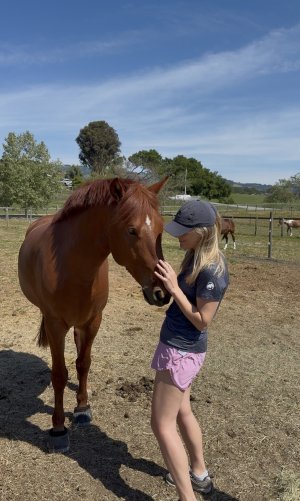
IMG_1936.jpeg
 
Last edited:
Could you lease him to someone wanting a little dressage horse from your yard where you can keep an eye.

I could certainly see but he’s soooo far from a finished product, so I’m not sure who would feasibly want to take him on. And if he should even be ridden at all? It’s hard.
 
It’s so so difficult… personally I don’t think I could loan him out with his history just in case anything DID happen as I’d never be able to forgive myself. Whether you should get on yourself and see how things go is a completely different conundrum (personally I probably also wouldn’t as I’d be too paranoid but you could make plenty of arguments for seeing how he goes with gentle flatwork)

In an ideal world for a retired weight loss POV he’d probably best on some kind of track system setup where he can have lots of movement and restricted grass access at times when it would be too rich for him but you’d likely want one with very specific types of surface (ie not too deep, good grip, ideally not super loads of rocks / tree roots to navigate) and on fairly flat land where any slopes are fairly gentle and going to hazard a guess such a place would be a unicorn to find and get that you want him either close enough to keep an eye on or with someone you really trust.

I think in the circumstances you’re in (where your long term plan is to have some land that you can then create a good setup for him on) then sending him to retire at a yard you trust on the understanding he’ll likely have to spend 3 or 4 months a year in a grazing muzzle might be the current best compromise. (I’ve had a few horses that have needed to wear muzzles for 6 + months of the year and they coped… the Welshie used to ask you to put it on so he could go out, he understood that muzzle = playtime with friends and was ok with it, which is weird for a horse who was such a drama queen over everything else! The Highland had slightly stronger opinions on it!)

In an ideal world you’d also do groundwork with him for a bit of extra calorie burning / muscle maintenance if you could find somewhere close enough to allow you to do that but sounds like that possibility doesn’t exist right now.

It’s ok not to be able to be super woman. You can only do the best you can with the resources currently available. (That doesn’t mean you can’t change your mind down the line and making a decision about what’s best right now doesn’t mean you can’t decide to do something else in a few years time)
 
Thanks for writing that out, it was help to think about. Truly hard with the barns here, land is a huge premium and the land that isn't is unbelievably steep. I do have one I'm waiting for a call back from but the pasture just looks soooo green and lush I just worry. And it's 45 mins away so realistically I wouldn't be able to do much ground work with him other than 3 days a week or so.

At the moment he is about a 50 min drive away for ok turnout (small paddock) but great facilities and care. It works because I have a trainer work with him half the week, it wouldn't work if I needed to be there 6 days a week. Obviosuly now I don't want to be having a trainer involved which runs at an extra $800 a month nearly.
 
I’m not sure the slight oddness approaching steep hills would worry me too much, unless you can definitely say it’s causing pain? I don’t know much about neurological symptoms in horses.

I had a nasty fall which has resulted in suspected nerve damage. After 30-40mins of walking my right leg starts to become difficult to lift and it starts to drag on the toe a bit. However, it doesn’t actually hurt, it’s a mild inconvenience. It doesn’t stop me from taking Erin out for 1hr in-hand walks fairly regularly. I wonder if this might just be some “leftovers” from his issues, that although mildly inconvenient, may not be causing real harm. Maybe talk with a few vets about what hacking workload they’d be happy with? But I may be barking up entirely the wrong tree here! If so, ignore me!
 
Because he’s “floating” going down a hill with his feet and when he walks up hill, he kind of digs in with his toes and doesn’t fully lock his knee. Like he’s climbing up, his legs remain sort of bent as he goes up.

Vet felt very sure that this was neurological rather than pain or a young horse struggling (especially as he’s not improving)
 
I don't know too much about neuro issues, but if it's only on the hills that you're seeing the problem, would it be worth trying some physio/groundwork and seeing if he (ideally) improves with strength or stays the same?
If he isn't getting worse with gentle work and being in work will allow him to have a better quality of life then I'd say it's worth keeping him as a hack/flatwork horse and just taking it easy on steep ground (perhaps hop off and lead on the steeper bits?). You might also be able to find a sharer for that.
Obviously it's tricky if you're thinking of sending him away, as it's harder to keep an eye on what a loaner/sharer is doing, but if he went back to Arizona the barn there might be able to keep an eye/suggest someone to keep him in work and thus his waistline in check?
 
Last edited:
Because he’s “floating” going down a hill with his feet and when he walks up hill, he kind of digs in with his toes and doesn’t fully lock his knee. Like he’s climbing up, his legs remain sort of bent as he goes up.

Vet felt very sure that this was neurological rather than pain or a young horse struggling (especially as he’s not improving)
But anyone and anything that walks up or down a steep hill adjusts their movement to accommodate for a drop or rise? When we climb hills we walk on the front of our foot and when we go down we brace and extend our legs much more than we would on the flat.
 
The vet doesn’t feel its pain. She feels he’s neuro, he doesn’t entirely know where his feet are on a hill that steep. So he’s getting agitated and then as he’s going down he just doesn’t look right.

Then there is of course the idea that he has tripped a bit even on flat, and how much of that is a normal young horse and how much could be a lingering neuro deficit.
 
But anyone and anything that walks up or down a steep hill adjusts their movement to accommodate for a drop or rise? When we climb hills we walk on the front of our foot and when we go down we brace and extend our legs much more than we would on the flat.

He doesn’t walk normally up and down the hill or adjust in a way that the vet feels is normal or appropriate. Not sure what else there is to say about it. It was enough to concern me, he hasn’t improved, and that was why I had the vet look.
 
He’s also done a solid three months of ground work, poles, long reining. With me and with a really top notch trainer. Lots of cavalleti. He has regular body work. So I don’t think any more groundwork is really going to change this one situation.

Ultimately, the vet saw it and said “this is a neurological fail”. I’m not sure I’m willing to ignore her conclusion. There’s a reason a hill is a test for a neuro horse…
 
I don't know too much about neuro issues, but if it's only on the hills that you're seeing the problem, would it be worth trying some physio/groundwork and seeing if he (ideally) improves with strength or stays the same?
If he isn't getting worse with gentle work and being in work will allow him to have a better quality of life then I'd say it's worth keeping him as a hack/flatwork horse and just taking it easy on steep ground (perhaps hop off and lead on the steeper bits?). You might also be able to find a sharer for that.
Obviously it's tricky if you're thinking of sending him away, as it's harder to keep an eye on what a loaner/sharer is doing, but if he went back to Arizona the barn there might be able to keep an eye/suggest someone to keep him in work and this his waistline in check?

Yeah, these are things I'm asking myself. But I think it leads to a bigger question- should there be any grey area. Getting on a horse is risky. Getting on a young horse is riskier. Getting on a young horse with any amount of neuro deficit... I'm just not sure that I feel comfortable with that. I am pretty sure my partner would be really uncomfortable with it to, although he'd of course respect my decision.

I am just feeling very paranoid about the idea of him doing a big spook on even some flat concrete and him falling over if he didn't regain his footing. I know that can happen to a non neuro horse too, but I really am not sure I can stomach knowing the added risk and the paranoia I'd feel with every stride.
 
If it’s that mild it seems like it would be unlikely to pose a significant risk, if you’re particularly worried, it could be worth getting off for the hilly bits?

Like I said, I have my leg issue, but I also have 0 inner ear balance (clinically, my vestibulae were drilled through for cochlear implants), so I have compensatory patterns and I can’t balance with my eyes closed, yet I can ride bareback, including spooks and jumping. I cope, give him time to adjust to his new normal, and I’m sure he’ll be safe enough for you. Even if he still looks abnormal with particularly steep hills, it’s likely that he will develop better understanding of his body with more time and potentially groundwork/in-hand walks on the hills to give him practice. Again, I’m not an expert, but this sounds familiar to me.
 
Yeah, these are things I'm asking myself. But I think it leads to a bigger question- should there be any grey area. Getting on a horse is risky. Getting on a young horse is riskier. Getting on a young horse with any amount of neuro deficit... I'm just not sure that I feel comfortable with that. I am pretty sure my partner would be really uncomfortable with it to, although he'd of course respect my decision.

I am just feeling very paranoid about the idea of him doing a big spook on even some flat concrete and him falling over if he didn't regain his footing. I know that can happen to a non neuro horse too, but I really am not sure I can stomach knowing the added risk and the paranoia I'd feel with every stride.
That makes sense, but as you say there are risks on a conpletely healthy horse- I've had horses fall while riding (as I'm sure most people have) and *touch wood* we've all walked away unharmed.
There are also a whole host of problems you might never know about (aneurysms &c.) that could make a horse drop dead underneath you. At least if you know there might be issues you can pick your ground/gait appropriately.
I think it's ultimately something you have to do your own risk assesment on- I probably would ride, although perhaps only sedately/picking the ground conditions carefully, but other people might be more cautious, I don't think either position is wrong.
Third choice, get a second and pony him off the new one to keep him trim!
 
Yeah, these are things I'm asking myself. But I think it leads to a bigger question- should there be any grey area. Getting on a horse is risky. Getting on a young horse is riskier. Getting on a young horse with any amount of neuro deficit... I'm just not sure that I feel comfortable with that. I am pretty sure my partner would be really uncomfortable with it to, although he'd of course respect my decision.

I am just feeling very paranoid about the idea of him doing a big spook on even some flat concrete and him falling over if he didn't regain his footing. I know that can happen to a non neuro horse too, but I really am not sure I can stomach knowing the added risk and the paranoia I'd feel with every stride.
This is the exact sort of stuff I myself would be paranoid about but I can completely get that someone else who risk assesses in a slightly different way might come to a different conclusion re riding in the arena if the horse looks good on a flat, even surface.

(My own paranoia about this kind of stuff was making it hard for me to think getting back on Fuzzball was a good idea when he also looked odd going up & down hills & was also stumbling / on occasion on the flat even without the pain components involved with him)
 
Thank you. I need to have a good long think. There's so many variables to this. I have already been "cautious" getting on him because of the neuro history. My heart was in my mouth when he tripped pretty majorly The other day just on the flat on the concrete. He nearly went down but did recover. I put it down to a spook and a young horse just not being able to find his legs quick enough but of course it adds to a picture in my mind.

Then I think back to a in hand hack I took him on in October which involved a section of super steep trail and he tripped going UP it, again I brushed it off. And it wasn’t surprising given he sort of climbs up, like his legs just don’t really straighten with each stride when he gets to a gradient like that.

I’ve also seen him perfectly buck spin rear in the pasture and not make a single mistake so each time I’ve had a slight worry I’ve brushed it off but then today I had the vet walk out to this specific spot because it was just bothering me.
 
Yes he can but the point is he clearly has some neuro problems still. So how will I feel doing any kind of hacking, steep or otherwise?

Ultimately you are getting on a horse that doesn't 100% know where his feet are. He doesn't generally do big spooks, but I have no idea if/when he does and I'm on him, how easily he will regain his footing.

I don't think it's crazy to not be too keen on the idea of getting onboard a young horse with all that in mind but maybe I am just way more risk adverse than I used to be, IDK.

Also the hacking here is just steep. Truly gradients that are very different to anything I’ve experienced before. I’m not sure it’s as simple as saying I just won’t ride on steep hills, I’d be getting on and off all the time and my biggest pleasure with horses is, frankly, hacking. I feel stressed just thinking about it right now with him.
 
Last edited:
I would hack out in hand/ long rein but I'd continue to start him under saddle as planned in the school. I'd use the time starting him to gauge whether he is getting better or worse. If he gets worse, there is your answer. But if he gets better and better then it could be something like inflammation causing pressure somewhere on a nerve, and it totally resolves itself or it improves over time.

I only lose dexterity in my left hand very occasionally now when I have a flare up of my disc injury. That has just been time and Pilates. I used to lose feeling too, and it used to affect my leg too. I've even started working in my upstairs office again after five years of being effectively grounded. Whatever the neuro issue is may not be related to the EPM, and it could be something that strength and time sorts out.
 
I think maybe you are being more risk averse now you’re settling down 😀 everyone is risk averse to some degree when they’re younger although not necessarily when they’re older…….much much older. I would maybe try to stop worrying for now, continue you doing things as they are and reevaluate in a couple of months or so. You’re going to be plenty busy enough planning the big event?!
 
Thanks guys. This is really helpful.

I am wondering whether to move him to a barn with 24/7 turnout on a hilly pasture (the one that I mentioned as being an option), even if it does mean muzzling. It doesn't look crazy hilly but it's definitely got some hills some flat. My concern at the moment is that his movement is very controlled always. He goes from stall/run to a flat, small paddock. Or he's worked.

Maybe he'd benefit from more free movement on more varied terrain? Or, he'd fall flat on his face and hurt himself. But perhaps then I'd know!
 
I agree with LG.

Also, turning him out onto a hilly pasture and seeing how gets on with it isn't stupid. Living his life in a stall/run and a small paddock won't help him learn how to compensate for any neuro issues he might have or get strong and coordinated on hills in any sense.

I'd probably crack on with the dressage and see if hills improve with different turnout.

My horse lives in a muzzle for over half the year. Eh. It's fine. Needs must.
 
Yeah. I’m gonna go see this place tomorrow. F*** I HATE the idea of uprooting him again I really do, and the barn was a great place and still is at a time where we needed stability and care and safety. It’s been a sanctuary for that. It’s a top notch facility with the very best footing and care and just a beautiful environment.

But I do think there could be a lot of benefit, as you said, to the above. Maybe it’s make or break time.

Is she in it 24/7? That’s the part I was worried about as when I’ve muzzled before they’ve mostly had a break overnight or whatnot.
 
She is in it when turned out, which was 6 hours per day at most last summer.

I am not keen on 24/7 turnout for her. So many yards love that in the summer, which is a pain. But she actually has an EMS diagnosis, so....
 
Top