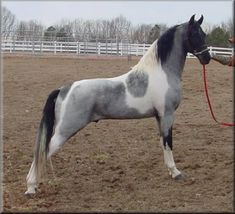
What's a "Blue and White Mare"?

27578.jpg
There's one advertised on the for sale section to the right of my page: "Kind blue and white 15.2 all rounder".
I've been away from the UK for 20 years... what on earth does "blue and white" mean - she doesn't appear to be a carousel horse...:D
 
It's a stupid term, along with lemon and white and tri-coloured that seem to have seeped in from the dog world. Chocolate palomino is another one that grates as it's so inaccurate - do they mean sooty palomino or silver bay? Who knows as I've seen it used for both.

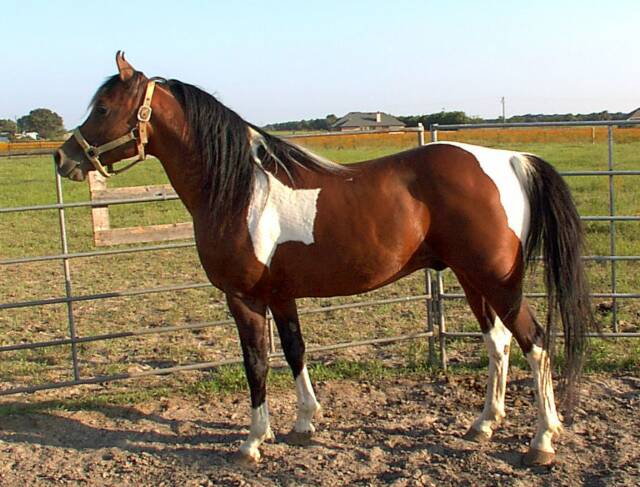
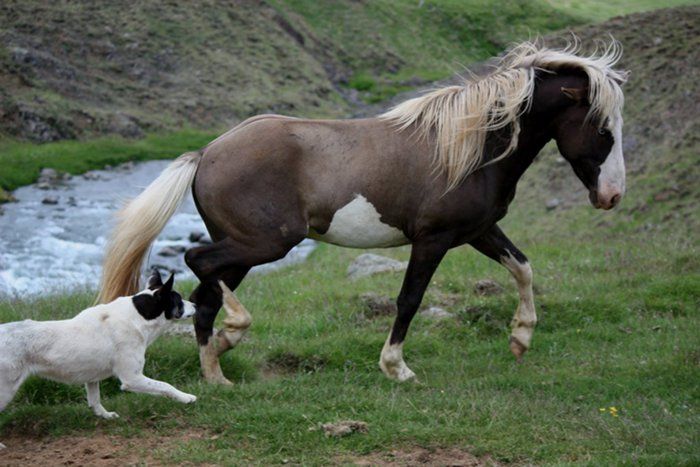
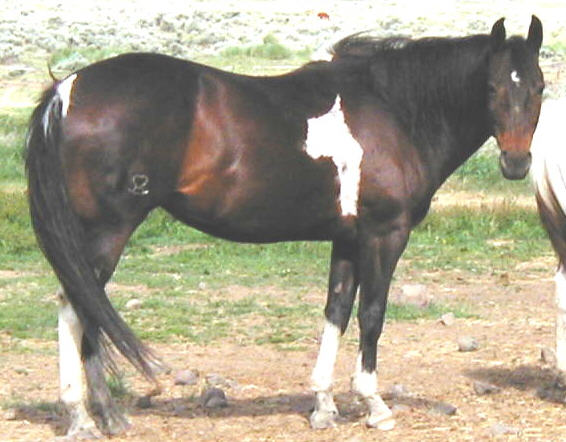
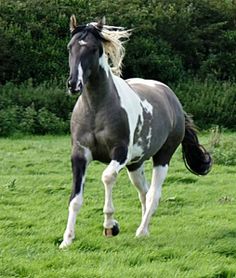
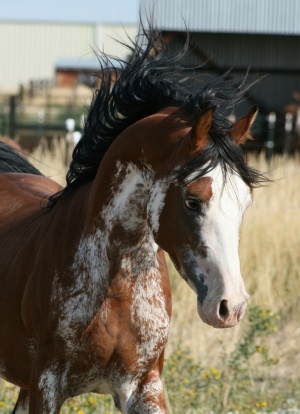
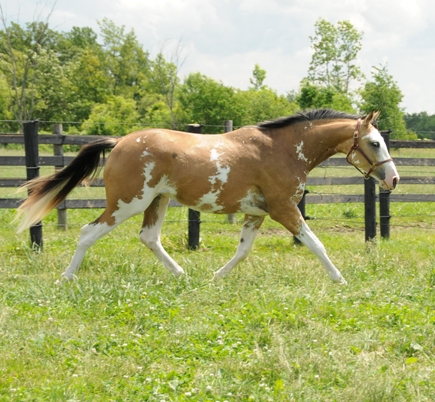
The horse in the photo above, is a grey tobiano, but I have seen 'blue and white' used for black dun + a pinto gene and Black based roan + a pinto gene.
 
Hardly a new term Faracat, I bought a blue and white mare (and was advertised as such) in 1970, extraordinarily similar to MaisieMc's photo. I'd still descibe her as such.
 
Definitely been in use for over twenty years though, my grandfather always called horses blue/white, red/white etc, as did his father before him; the alternatives were either piebald or skewbald, which didn't really describe them very well. He'd have been properly bamboozled by all the new terminology as far as colouring goes; a bit like me really!
 
Faracat, my mother had 3 blue & white shetties, the last passed away in 1979, all foaled in the late 40's & early 50's (we learnt to ride on them).
We also had tri-coloured shetties in the early 70's and I currently have a tri-colour cob :)

So, not new, or 'seeped in' term at all :) (IMHO)
 
OP as others have said, blue and white has been a term that's been around for a really long time. I personally don't mind "blue and white" even if it is incorrect but I can't stand the inaccurate tri-colour being used. Sorry TFF :wink3:
 
Ok, maybe I'm completely wrong on the origin. I had been told (by a very elderly horse lady) that it 'was a term for dogs dear' as she only had piebalds or skewbalds (before the genes had been researched). However the fact remains that I personally (:p) find it a very vague and silly term, especially with our greater understanding of colours, due to the research that has been done.
 
OP as others have said, blue and white has been a term that's been around for a really long time. I personally don't mind "blue and white" even if it is incorrect but I can't stand the inaccurate tri-colour being used. Sorry TFF :wink3:

No worries SF :)
I've had piebalds before, but current Fuzzy is tri-coloured - a lovely dark mahogany, white and some black in mane & on odd patches :) (faracat, what DO you call it?)
 
No worries SF :)
I've had piebalds before, but current Fuzzy is tri-coloured - a lovely dark mahogany, white and some black in mane & on odd patches :) (faracat, what DO you call it?)

Bay tobiano most likely although if yours does indeed have black on the body then you may well be the lucky owner of a rare tri-coloured :smile3: I have a few bay tobianos; brown and white bodies with black running through their manes, tails and points.
 
Bay tobiano most likely although if yours does indeed have black on the body then you may well be the lucky owner of a rare tri-coloured :smile3: I have a few bay tobianos; brown and white bodies with black running through their manes, tails and points.

When people tell me they own a tri-coloured (pet hate of mine, too), I always ask them why, as you wouldn't refer to a bay as 'bi-coloured'. They usually reply with 'ah, yeah, never thought of it like that'.
 
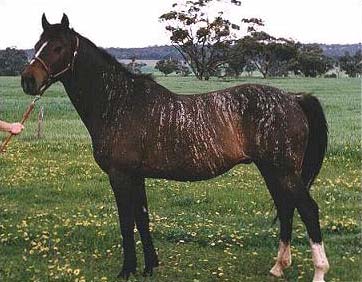
tris are usually chimeras aren't they?

litningur2031.jpg

2097250850105967226S600x600Q85.jpg


and missc's titch had some ginger spots, hope she doesn't mind me borrowing!

28195_582671177140_1028503_n.jpg
 
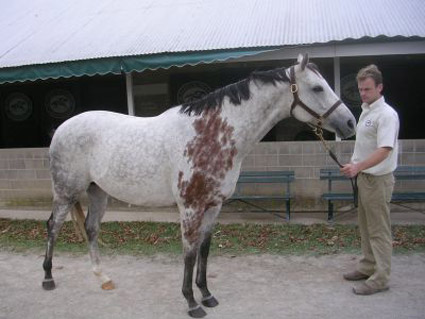
Blue and white is, as others have correctly said, grey and white. So eventually like any other grey horse the "blue" or grey patches will lighten and the horse will end up white. It does amuse me when people then refer to the fully greyed out blue and white horses as "historical coloured" as though that makes them more special than any other greyed out horse. After all a horse that has been born bay and then greyed out isn't referred to as a historical bay.......
 
Blue and white is, as others have correctly said, grey and white. So eventually like any other grey horse the "blue" or grey patches will lighten and the horse will end up white.

I always lurk in the corner on threads regarding colour as they fascinate me - although I am definitely in the group of 'uneducated piebald, skew bald, not really knowing what the specifics are of pinto/tobiano'

I do know of two 'blue and white' horses, one of which was fully grey aside from when clipped or wet and you could make out the pink skin and 'blue' patches. However I also know of one that is 20years young and still has patches of blue roan and hasn't 'greyed out'?? Why would this be? This confuses and intrigues me!
 
Last edited:
The thing is, whilst I trust that you are completely right FC & SF, for someone who has relatively limited knowledge in colour genetics of horses, I find simple terms such as "blue and white" and "piebald" so much easier to relate to, which is probably why they are so commonly used.

Tri-coloured has always ignored by me, I just don't accept it is anything really.
 
When people tell me they own a tri-coloured (pet hate of mine, too), I always ask them why, as you wouldn't refer to a bay as 'bi-coloured'. They usually reply with 'ah, yeah, never thought of it like that'.
What if the bay has white markings (which are caused by 'pinto' genes of course)? Does that count as three colours on the horse, or is it another arbitrary situation, like when does a the horse have enough white to count as a 'coloured' thing?

Anyhoo - would all of these count as tri-coloured in your opinion? If not, why not?


FinancialParte1052%20copy.jpg

Colour - Sooty buckskin Frame overo

scout12_op_640x487.jpg

Colour - Bay Tobiano

SlettuskjStodhFjalli.jpg

Colour - Flaxen chestnut Splashed white

3a71aa262d147947d3ee80a8164852d9.jpg

Colour - Silver dapple Splashed white

tobiano_minimal.jpg

Colour - Seal brown Tobiano


100_2754_edited.jpg

Colour - Bay Dun Tobiano


5aa4c3c9241dd952cb7c36cd969b4587.jpg

Colour - Black Dun Tobiano


MAHOGANY_BAY_holsteiner_attila101112_LR.jpg

Colour - Bay Sabino


18be614e65a267c2355256b546c5194f.jpg

Colour - Bay Sabino

SimbaTwistjune%2012.jpg

Buckskin Sabino


bloody-shoulder1.jpg

Colour - Bloody Shouldered Grey (looks to have a bay base colour)


catchabird.jpg

Colour - Seal Brown White Brindle

0f16a97c5b53700d1410927b94f3156a.jpg

Colour - Black Roan Tobiano

Also, what about spotties? If they have three colours, do they count as tri-colours? What if you have spots and a pinto gene?
 
The thing is, whilst I trust that you are completely right FC & SF, for someone who has relatively limited knowledge in colour genetics of horses, I find simple terms such as "blue and white" and "piebald" so much easier to relate to, which is probably why they are so commonly used.

Tri-coloured has always ignored by me, I just don't accept it is anything really.

I do understand about simplicity and have no issue with it, but I actually prefer 'grey and white' or 'grey skewbald' if the pinto gene is unidentified. Blue is used for black based roan (and is it the Roan gene, sabino or a varnish roan?) and black based duns as well as grey, so it's just too arbitrary.
 
I always lurk in the corner on threads regarding colour as they fascinate me - although I am definitely in the group of 'uneducated piebald, skew bald, not really knowing what the specifics are of pinto/tobiano'

I do know of two 'blue and white' horses, one of which was fully grey aside from when clipped or wet and you could make out the pink skin and 'blue' patches. However I also know of one that is 20years young and still has patches of blue roan and hasn't 'greyed out'?? Why would this be? This confuses and intrigues me!

This is like mine, at the age of 18 he is maybe a couple of shades lighter than he was as a 6 year old. I've also noticed over the years I've had him there seem to be more of his colour scheme than there used to be years ago..
Mind you the black roan tobiano is similar to his colour. What's the difference between a black roan and a blue roan?
 
CC at 3 years old on the left and 6yo on the right. She's still referred to as Blue and White as when clipped or wet, you can see her patches

10172606_10152313733741132_985569450793334067_n2.jpg


ETA sorry the pics are so big
 
FC: I personally wouldn't class any of them as tri-coloured because IMO, they are not.

As I said earlier, just because a horse technically has two 'colours' on its body (bay, buckskin, flaxen chestnuts, greys with bloody shoulders as per some of your examples, etc) I would not call it (say buckskin, for example) a 'bi-coloured'- therefore, just because a horse has 3 colours on its body, I wouldn't call it a tri-coloured. ;)

Not sure if you got the wrong end of the stick in my other reply, I was actually saying I *didn't* like the tri-coloured terminology, not that I agreed with and used it myself- but then I am a bit weird, personally. :p
 
Top