White Line Disease/Seedy Toe

SatansLittleHelper

Well-Known Member
Joined
27 December 2011
Messages
5,789
Location
Shropshire
Visit site
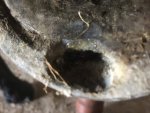
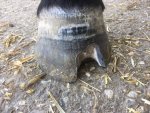
Does anyone have experience with this at all please..?? My friend's cob has been diagnosed with it (she's only had him around 6 weeks).
Vet has said for the farrier to come and give the offending hoof a good scrape out and then he's to be stabled for 2 weeks to keep in clean. Regular trimming and obviously no ridden work for at least 6 months.
Has anyone else had a horse with it snd have you had to resort to remedial shoeing..?? Any long term issues..??
Thanks in advance
 
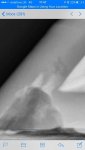
I will get pics but none at present. Horse went to the vets to have xrays and nerve blocks due to lameness but he was seen by the senior equine vet who diagnosed it and said that no further investigation was required.
 
Robin got terrible wld in all 4 feet. We plodded on (the farrier did not help matters) until his last be event of the summer and he needed to visit the farrier there twice! After that his shoes were removed, the crud cut out, and stayed off for about 3/4 months until it grew out. It was winter by then so ground softer. Each night I brought him in and scrubbed his feet then sprayed alamycin spray all round. It grew out uneventfully and he has been fine since. Although I changed farrier and panic each time he comes until he shows me the white line. I also put him on formula4feet which has def helped. I reduced that and after a while feet started breaking a bit so put it back up.
 
Get the farrier to open it up. I used clean trax and put a big waterproof bag over the 2 hooves I was treating And tied it with gaffa tape and left it for 45 mins each time (3 times over the course of 6weeks) then I dried the feet and packed with tea tree oil soaked cotton wool in the holes the farrier has cut.

The wld I treated the same but with a mixture of tea tree oil and red horse hoof packing. Once clear I would keep it at bay with Milton once a week. Pick out then scrub the hoof with a stiff brush then soak or spray the Milton over the feet.
 
I will get pics but none at present. Horse went to the vets to have xrays and nerve blocks due to lameness but he was seen by the senior equine vet who diagnosed it and said that no further investigation was required.


I've seen plenty of seedy toe and wld. It rarely, ime, makes them lame and i've never heard of it needing box rest or a prolonged break from work to fix. I would get a farrier to find how deep it goes, because if it is right up inside the wall it does need drilling out to get the air to it to kill it. That might require a shoe to stabilise it while it grows out.

If it's not deep enough to need drilling out, I'd use Red Horse Hoof Stuff, which cleared seedy toe in a horse i had tried cleantrax on several times.

If this horse passed a vet six weeks ago when your friend got it, I'd suggest that she tests the blood sample. And I might be looking for another vet to take the x rays as a precaution, so as not to spend ages fixing the wild only to find it wasn't the cause of the lameness.

.
 
My mare had it in the past . I got it dug it out as best I could , soaked in milton, sprayed with foot rot spray and packed the holes with Keratex hoof putty which got changed regularly and the holes resprayed and allowed to dry before they were repacked. I rode her in boots while it was growing out, which it did quite well. Infection through old nail holes had set it off.
 
Yes I've just about got on top of one of mine who had it, we kept his front shoes on, farrier cut out about an inch up his foot each time he was shod, I would scrub it with a toothbrush and iodine before packing it with coppersulphate mixed in Stockholm tar, farrier suggested to keep him shod in front at least and to keep using side clips on the shoes rather than a toe clip as he has experienced WLD coming back with a toe clip. He was never lame with it.
 
Did the vet do any nerve blocks or x rays on this foot?

I can’t reconcile a horse needing 6 months off with a vet just handing the case over to a farrier to dig the infection out. As I said above, it was definitely a vet who needed to drill out my mare’s extensive seedy toe, once that was done he handed over the on going care to the farrier.

She did need to be shod after a fortnight of box rest and regular cleaning as she was left with a massive hole. The hole was packed with Keratex putty and she was then able to be turned out, she stayed sound throughout. I had it x rayed afterwards to be sure that all the seedy toe had grown out.

Cleantrax and red horse products are also very good.
 
Mine had a case of seedy toe that had eaten its way about half way up the hoof wall, and did cause lameness. Treated it the same as a hoof abscess - farrier took the shoe off, dug it out and poulticed for a week or so. There was quite a bit of dead tissue that needed to come out. Sprayed the hole with VetSec blue spray, which seems to work very well for seedy toe, at least for the bacteria in my fields anyway! This was in the middle of winter so I was quite cautious with turning her out in a hoof boot until it had a chance to seal over and protect the sensitive tissue.

She came sound pretty much as soon as the entry hole had been opened up. Tried to stuff it with keratex hoof putty, but it didn't tend to stay in. No further issues once the hoof grew out. 6 months off sounds very excessive, mine probably had 3 or 4 weeks off total, including 1 week box rest at the beginning whilst it was poulticed, and that was probably over cautious as she also had some mild bruising.
 
I used athletes foot powder successfully when Granny horse got a bit of WLD. It was minor and hadn't caused lameness. Farrier did a small resect from the wall to expose it and suggested the athletes foot powder as it helps dry it our.
 
This is one of the most bizarre veterinary threads in a while. I’m actually not sure what to say so won’t say anything ?

Glad I'm not the only one lol. I admit to having limited experience with WLD but I think my friend may have gotten the wrong end of the stick with the vet. One of the vet's present for diagnosis is one of the vet's coming to do Rex's xrays on Tuesday so we are going to query what's been said.
The vet's have dug out in the hoof and applied terramycin spray. Now the farrier has to come out and give it a good dig out and then horse needs foot kept clean/dry hence stabling (2 weeks seems excessive to me) as he lives out 24/7. Regular farrier work from then on with supporting shoes if needed.
Upon further discussion with my friend the vet said it could take 6 months or more to properly come right...I'm thinking she has taken it that he can't be ridden in that time perhaps..??

ETA:
*Our vets aren't numpties and have a superb reputation in the horsey community.
*Maybe being over cautious with the two weeks boxing..??
*Horse is lame so can't be ridden anyway but the riding is very unimportant at the moment regardless
*Vet thinks this could have been going on some time and the change from the wet, marshy ground he lived on to our hard ground is what lamed him, farrier thinks similar
*The lameness is mild, he's still moving around etc

I will try to get pics when I'm over there later
 
Last edited:
Mine had seedy toe on and off for a couple of years. It didn't stop me riding him, and I eventually got rid of it by twice weekly soaking his foot in Milton sterilising fluid, diluted obvs, for twenty minutes a time. Never had shoes on, but I did keep trimming them a lot, a mm at a time, but maybe that helped.
 
It does sound like something had got lost in translation :).

If the foot is going to be dug out extensively to get rid of all the crud, then a fortnights box rest to keep it clean and thoroughly open to the air afterwards is understandable - it’s what happened to my mare. He might be rather sore on it for a while, too.

Was it X rayed? Seedy toe can track up a long way. Maybe the vet is going to show the farrier the X rays?
 
This thread reminds me about that you can never take for granted what people actually hears, remembers hearing after talking to veterinarians (nor doctors). It isn't always the person's fault, some people are better at their job than they are at people communication, but sometimes, due to for example stress, it happens that the owner gets the wrong end of the stick.

I hope it is possible to get some clarifications from the veterinarian on Thursday.
 
Sometimes even very experienced vets can get distracted by poor feet and assume they are the cause of lameness.
I had a lame pony (most people thought he was sound but you could feel he was reluctant to go engage his hind end when ridden)
I travelled about 1.5 hours to a equine hospital. The vet just blamed his feet and thought he was just footy (early days in barefoot and was in need of a trim) ended up having a bit of a barney with the vet as he didn't feel the need to do further investigation. I pushed him and sure enough the horse had injured sacroiliac.
The very experienced equine vet was a bit mortified that he initially wrote it off as just footy and I wouldn't say he made that mistake again in a hurry.

I would think the 6 months off you mentioned was lost in translation and the vet meant 6 months to grow out.
 
Yes. Horse came from Ireland with old abscess hole turned into seedy toe. He was lame on it (not obviously- only sported by vet), kept resting the hoof, had x rays done and there were gas pockets tracking up towards pedal bone. We tried to treat it conservatively and kept digging but he ended up having a resection with a stabilising heart bar shoe on it.
He was actually still lame on it for about 6 months whilst the hoof capsule grew out. It was even MRI’d with nothing found to my memory other than the slight distortion. He came sound on it once it had grown out completely.

Vet report sentence re the hoof. It had very nearly grown out at this point but still slightly there and still lame.

C7B9E087-C1F6-4DEF-A6C1-32B07F3C29A5.jpeg59C1CDF9-3874-4FDC-801B-2696B2024AAF.jpeg8E05AC3F-15D1-4E2D-A21F-D3E2DC8BBDE9.jpegBE1589D7-42DE-495A-AB0A-F086D470FABA.jpeg
 
Last edited:
Yes. Horse came from Ireland with old abscess hole turned into seedy toe. He was lame on it (not obviously- only sported by vet), kept resting the hoof, had x rays done and there were gas pockets tracking up towards pedal bone. We tried to treat it conservatively and kept digging but he ended up having a resection with a stabilising heart bar shoe on it.
He was actually still lame on it for about 6 months whilst the hoof capsule grew out. It was even MRI’d with nothing found to my memory other than the slight distortion. He came sound on it once it had grown out completely.

Vet report sentence re the hoof. It had very nearly grown out at this point but still slightly there and still lame.

View attachment 50404View attachment 50405View attachment 50406View attachment 50407

Even though I've seen pictures like that, and worse, before, it is still a little bit of a shock. Like that second picture, it just feels so wrong to see a hoof look like that.
Lovely to hear that he became sound afterwards.
 
Even though I've seen pictures like that, and worse, before, it is still a little bit of a shock. Like that second picture, it just feels so wrong to see a hoof look like that.
Lovely to hear that he became sound afterwards.

It was quite shocking. And I did hesitate about the resection. But you don’t want those gas pockets tracking towards the pedal bone and the horse was getting more and more unsound... I tried cleantrax and it wasn’t improving.

Not unreasonable for a horse to be lame with a massive whole in its hoof at least, not least because it’s unstable. But I was surprised it took so long for him to become sound on it even when it was well on its way to disappearing!
 
Top