Wobblers Syndrome

CastlelackSportHorses

Well-Known Member
Joined
9 September 2024
Messages
437
Visit site
Has anyone's horse been diagnosed and if so can you tell my symptoms they may have had in the lead up?

I posted recently about my 20yr old rescue boy loosing a lot of condition lately.
6 weeks on now we are definitely on the right road but I have noticed he is finding it more difficult to get down for a roll(Will abort mission once on his knees)
He has damaged his stable door twice now(We think from having difficulty getting up or down)
He is also very unstable in hind end when walking, and tripping over himself.

Now he was diagnosed 6 years ago with severe KS so we no that he has spinal issues.
Im just wondering could this all be connected to one big thing.

He is bright and cheery in himself and grubbing well. I just worry he is in pain.
 
I thought Wobblers was usually diagnosed in younger horses?

If he is 20 he may well have other problems. I know some horses live until 30, but others don't. If he can't get up and down easily I would take that very seriously because it must be stressful if he can't get down to rest, or conversley get up quickly if he wants to.

Good luck with finding out what is wrong.
 
I have a wobbler, he has an unstable vertebrae in his neck which has resulted in bone remodelling and pressure on the spinal cord. I first knew there was something wrong when he went absolutely berserk when I was riding him, bucked me off and then proceeded to gallop round the school, hit the fence twice and only stopped when he was exhausted. He looks pretty normal in the field but toe drags in walk and he can't canter a circle lunging (on the right rein particularly) without changing legs, going disunited or starting to panic. He passes the tail sway test but fails badly on hoof placement. He was at one point unresponsive along his back with the panniculus test but that has improved.

To check how he is doing I periodically go through the neuro tests in this video.


It's possible that your horse now has arthritis in the spine which has caused extra bone growth and this is now a problem but there are other things in older horses which affect them getting up - I had one with fetlock arthritis in the hind legs.
 
I thought Wobblers was usually diagnosed in younger horses?

If he is 20 he may well have other problems. I know some horses live until 30, but others don't. If he can't get up and down easily I would take that very seriously because it must be stressful if he can't get down to rest, or conversley get up quickly if he wants to.

Good luck with finding out what is wrong.
I agree with this. If he already had kissing spines, then it's quite feasible this has gotten worse or there are arthritic changes further along (SI). I'm afraid I'd be seriously considering his future at this point. Rolling is one of the basic behaviours I use as a marker for making *that* decision, so I'd start with pain relief if he's not already on it, upping it if he is and thinking about whether you want to go down the diagnostics route (consider if it will change the outcome or management). Sorry you're having to deal with this.
 
When our elderly, much loved cob mare, who had been with us for over 20 yrs, had trouble walking and didn't seem to know where she was putting her feet, especially going downhill, we had her pts.
Vet and farrier had been involved with multiple visits for 6 weeks during the Beast from the East but we had to do the kindest thing for her.
 
I agree with this. If he already had kissing spines, then it's quite feasible this has gotten worse or there are arthritic changes further along (SI). I'm afraid I'd be seriously considering his future at this point. Rolling is one of the basic behaviours I use as a marker for making *that* decision, so I'd start with pain relief if he's not already on it, upping it if he is and thinking about whether you want to go down the diagnostics route (consider if it will change the outcome or management). Sorry you're having to deal with this.
His vets didnt recommend pain relief when he was diagnosed 6years ago but I may go down the route and see if it improves him.
I just dont know If I can get on board with long term Bute for a horse. Like it will eventually destroy his gut/kidneys.

I am watching him like a hawk to see what sort of "normal" behavior he can do. I will not prolong any suffering as he is very special to me, but also I don't want to jump the gun!
 
If he won't roll due to discomfort, is it likely he's reluctant to lie down too? If he won't lie down he won't be getting the necessary period of REM sleep each day and that quickly leads to sleep deprivation. That's always one of my indicators for making a quality of life decision.

I'm so sorry you're going through this 🫂 .
 
My old mare (24 yrs old) was found to have a neurological issue that meant she couldnt walk in a straight line and was very curved round to the left. Vet spoke to Oakham who recommended anti inflams and steriods and a months box rest. She could never be ridden again. At the end of 4 weeks she was 'ok' enough to go out in a small paddock but i used to hear her bumping the side of the stable and she would stand on her own back hooves at times. I couldnt see her like that for the rest of her life so i made the decision to pts 4 months later as she would have good days and bad. It was the right thing to do for her and i dont regret it one bit even though it broke my heart.

I would speak to the vet again for guidance.

So sorry you are experiencing this, its heartbreaking but the best thing is to do whats right for the horse (not saying you wont but our judgement can be clouded when emotions get in the way)
 
His vets didnt recommend pain relief when he was diagnosed 6years ago but I may go down the route and see if it improves him.
I just dont know If I can get on board with long term Bute for a horse. Like it will eventually destroy his gut/kidneys.

I am watching him like a hawk to see what sort of "normal" behavior he can do. I will not prolong any suffering as he is very special to me, but also I don't want to jump the gun!
I think you need to dispassionately decide what a 'good quality of life for a horse' means to you. Then work out whether your horse currently has a good QOL. If not, is that something that vet intervention could improve?

I'm sorry but for me a horse not being able to get down/up for a roll would be a pts situation. That wouldn't be jumping the gun.
 
I think you need to dispassionately decide what a 'good quality of life for a horse' means to you. Then work out whether your horse currently has a good QOL. If not, is that something that vet intervention could improve?

I'm sorry but for me a horse not being able to get down/up for a roll would be a pts situation. That wouldn't be jumping the gun.
I want to give him more time to see. Currently their on turnout pens as fields are soaked. So i know he wont roll there, will give him a week or two out on grass by day and see. Ill also be speaking to vet regarding neuro exam.
 
OP you could also look at threads by @Horsekaren who has a beautiful chunky cob called Strawberry iirc who has wobblers and was retired. I don't know if she's still active on here, but the pre-diagnosis threads will probably still be here if you want to search for them.
I don’t think she’s still here but that was definitely a frustrating vet journey
 
I just dont know If I can get on board with long term Bute for a horse. Like it will eventually destroy his gut/kidneys.
The key word here is eventually, horses can live many years on a low dose of bute without issues. The one I mentioned with fetlock arthritis was on bute for 8 years and he died from what I assumed to be a heart attack in the field. This is years ago when there were no other options. It's an inexpensive option to try for a couple of weeks to see if it helps.
 
Short term comfort is better than long term pain. Mine had had a liver issue 3 years previously but then did at least a couple of years on bute without issue. Obviously we didn’t know it would be ok but if it wasn’t he’d have gone then instead of 2 years later.
 
Has anyone's horse been diagnosed and if so can you tell my symptoms they may have had in the lead up?

I posted recently about my 20yr old rescue boy loosing a lot of condition lately.
6 weeks on now we are definitely on the right road but I have noticed he is finding it more difficult to get down for a roll(Will abort mission once on his knees)
He has damaged his stable door twice now(We think from having difficulty getting up or down)
He is also very unstable in hind end when walking, and tripping over himself.

Now he was diagnosed 6 years ago with severe KS so we no that he has spinal issues.
Im just wondering could this all be connected to one big thing.

He is bright and cheery in himself and grubbing well. I just worry he is in pain.
Reply 23

 
His vets didnt recommend pain relief when he was diagnosed 6years ago but I may go down the route and see if it improves him.
I just dont know If I can get on board with long term Bute for a horse. Like it will eventually destroy his gut/kidneys.

I am watching him like a hawk to see what sort of "normal" behavior he can do. I will not prolong any suffering as he is very special to me, but also I don't want to jump the gun!

Why? He's 20. He's far more likely to die of something else than liver/ kidney damage. Would you deny your grandma daily painkillers like Ibuprofen? It's the same thing. People are so damn afraid of painkillers, but don't think twice when putting their horse on things like devil's claw, turmeric or boswellia and such....


Doesn't sound like wobblers btw. Wobblers is usually diagnosed in foals. Sounds more like arthritic changes in the neck pressing on the spinal chord giving neurological symptoms.
 
Why? He's 20. He's far more likely to die of something else than liver/ kidney damage. Would you deny your grandma daily painkillers like Ibuprofen? It's the same thing. People are so damn afraid of painkillers, but don't think twice when putting their horse on things like devil's claw, turmeric or boswellia and such....


Doesn't sound like wobblers btw. Wobblers is usually diagnosed in foals. Sounds more like arthritic changes in the neck pressing on the spinal chord giving neurological symptoms.
And tbh a bit, or even a lot, of bute isn't going to change that.
 
Sounds more like arthritis to me. One of my retired boys (20 years old) has arthritis in his knees and I carefully monitor that he can get down and up easily. The day he looks to not find it easy is the day I will be having a conversation with the vet. He is also on a bute every other day with the vets blessing and so see him prancing around the field you wouldn't think there was anything wrong.

With an older horse a small regular dose of bute is highly unlikely to cause damage before something else gets them. My old mare was on a bute every other day for over four years. My vet said that is I was giving her 6 a day she would be concerned.

Has your vet considered arthritis with your horse?
 
Doesn't sound like wobblers btw. Wobblers is usually diagnosed in foals. Sounds more like arthritic changes in the neck pressing on the spinal chord giving neurological symptoms.
No it's not! It can be. The congenital form. Four months to 12 months. But not always. cvm (cervical veterinary myelopathy sometimes known as malformation) is the same as Wobblers but it tends to be the congenital type.

In older horses it can be caused by traumatic injury to the spinal cord, running headlong into a telegraph pole, for example or falling onto the neck.

It can be caused by over feeding of calcium or I believe acheiving a calcium /phosphorus imbalance and feeding to fast growing types of horses such as TB's or WB's - in other words too rapid growth.

Geldings far outnumber mares. Horses are more predisposed to wobblers when they have long necks and are of certain breeds like WB/TB/SHires/Quarter Horses.ultimately ataxia can be caused by a myriad of other reasons so xrays or a myelogram under GA is the diagnostic tool of choice but risky when a horse with a neuro deficit is coming round from anaesthetic.

In America they surgically treat with a fairly good prognosis
https://equinewobblers.com/ but I think over here they don't.

It also depends what veterbrae are effected. I seem to remember being told C6 was particuarly difficult to treat.
Finadyne was the drug used to transport my horse to Liverpool for diagnostic testing as its very good for bone inflammation.
 
Last edited:
No it's not! It can be. The congenital form. Four months to 12 months. But not always. cvm (cervical veterinary myelopathy sometimes known as malformation) is the same as Wobblers but it tends to be the congenital type.

In older horses it can be caused by traumatic injury to the spinal cord, running headlong into a telegraph pole, for example or falling onto the neck.

It can be caused by over feeding of calcium or I believe acheiving a calcium /phosphorus imbalance and feeding to fast growing types of horses such as TB's or WB's - in other words too rapid growth.

Geldings far outnumber mares. Horses are more predisposed to wobblers when they have long necks and are of certain breeds like WB/TB/SHires/Quarter Horses.ultimately ataxia can be caused by a myriad of other reasons so xrays or a myelogram under GA is the diagnostic tool of choice but risky when a horse with a neuro deficit is coming round from anaesthetic.

In America they surgically treat with a fairly good prognosis
https://equinewobblers.com/ but I think over here they don't.

It also depends what veterbrae are effected. I seem to remember being told C6 was particuarly difficult to treat.
Finadyne was the drug used to transport my horse to Liverpool for diagnostic testing as its very good for bone inflammation.

You're absolutely right, but still, most commonly it is younger horses that are affected. Sometimes (or rather, most often) it's horses and not zebras when you hear hoof beats 😉 In a 20 year old horse the cause is most likely arthritis.
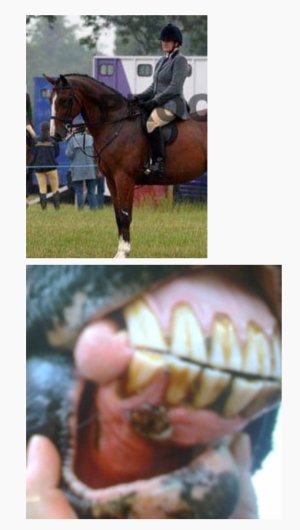
 
You're absolutely right, but still, most commonly it is younger horses that are affected. Sometimes (or rather, most often) it's horses and not zebras when you hear hoof beats 😉 In a 20 year old horse the cause is most likely arthritis.
I certainly agree with you about bute. Bailey was on it half a sachet a day for about 8 yrs, gradually increasing to one in the last couple of years and the last few days on 2 a day.

The only thing she ever got was a mouth ulcer. It was a particuarly nasty one and it was never proven it was from the bute but I do believe it can from time to time cause ulcers.
 

Attachments

  • Screenshot_20250204_183331_Chrome.jpg
    Screenshot_20250204_183331_Chrome.jpg
    298.3 KB · Views: 25
Top