Your opinions ?

Joined
10 March 2009
Messages
7,682
Visit site
Fellow dog walkers dog just done its knee ligament. Vet has told owner it would cost about £3000 ( I think he has insurance) but says its not worth doing it. Dog is about 8, mixed breed, corgi size, but is hugely overweight and has arthritis in his back legs, also a large fatty lump on one back leg. Can just about put weight on bad leg but the other arthritic one is taking most of his weight.
Owner says he is just going to keep him going! Dog is very stoical type, doesnt whine or cry. Im horrified at this, but am I wrong? I havent said anything to him - yet !
 
, What does the vet mean by 'it's not worth doing it'? I can't imagine any vet actually saying that, the might say 'it will cost £x', or 'I recommend thinking very carefully about this op, the risks are yyyyyyyy, associated with GA and prognosis isn't good' or the vet might say that rehab will be difficult after surgery for a very overweight arthritic dog but they usually let the owner make the decision.
 
I think the vet has said that because the dogs other leg would not be able to take the strain while the bad leg was being healed. Also owner has said before that previously vet has said dog wouldnt make it through anaesthetic to have the fatty lump removed.
Owner cant seem to accept dog needs to lose weight, but a 20kg corgi size dog is massive, my corgi cross is between 12 and 13k
and vet says he is about right. I know I wouldnt let my dog go on like that.
 
I can't see that a torn cruciate would be anything but painful.

My nephew ruptured his playing American football. He wore a brace while waiting for his op.

Is there a suitable brace available for a dog? In addition to weight loss of course.
 
Last edited:
I can't see that a torn cruciate would be anything but painful.

My nephew ruptured his playing American football. He wore a brace while waiting for his op.

Is there a suitable brace available for a dog? In addition to weight loss of course.
I partially tore my cruciate (2/3rds severed), orthopaedic specialist recommended that physio rather than an operation would be better, though i do have the option of an operation in future. His recommendation was based on the fact that i do not take part in high impact sports or things like dancing and the fact that i had the ankle on my other leg reconstructed not long before and the pressure would not be good for it!
it was extremely painful at the time, spent 8 weeks in a brace and 12 weeks after that of physio but now im back to normal activities with no problems

A cruciate operation is not a small job, it is a complete replacement with tissue being taken from elsewhere, it may be that the dog is unlikely to have suitable tissue to take from elsewhere.
 
Conservative management should do a dog of that size well. There’s 3 main types of surgeries for dogs that size but all still carry long recoveries, crate rest and not always 100% outcomes. There may already be meniscus damage for example. I wouldn’t PTS an 8 year old small breed over a knee, it’s quite possibly been weak for years! I expect it’s not a great conformational case for the surgery being dwarf legged, so that may limit the types of surgery that can be done. The recovery for conservative management shouldn’t be too long especially if it’s not a full rupture and it doesn’t sound like he was ‘active’ beforehand. Obviously the other ligament is at risk too, so it’s not that the surgery is a quick fix and all is done. There wouldn’t be many small breeds left if we got rid of those with luxating patellars or not quite 100% cruciates! I’m not saying it’s ‘right’ but how many happy sometimes hoppy behind JRTs are out there. She could get a second opinion on it but conservative management seems a sensible option for a sedate middle aged dog. Even a quick surgeon a cruciate is going to be twice the GA of a lipoma removal plus much stronger pain relief is needed obviously. Again she could get a second opinion or a referral to a hospital with boarded anaesthetists and cardiologists on hand (I assume it has pretty severe heart issues if they don’t even think it can survive a lipoma removal?) , but that’s all getting quite involved for a surgery where you can ‘just’ wait for recovery instead. Having your tibia sawn up and plated isn’t a ball of laughs pain wise.
Cruciates is pretty much the only reason I insure my stupid spaniel!
Ps. There’s a pretty active FB owners group for conservative management of cruciate injuries in dogs that is likely to give her some tips!

Here’s Fitzpatricks page on it, and we all know he’s not afraid of a dramatic op on an older animal.
https://www.fitzpatrickreferrals.co...ion-of-cranial-cruciate-ligament-ccl-disease/
 
Last edited:
I'm not sure of the percentage but the majority of dogs that do a cruciate will tear the other in the opposite leg within a few years. It is a long, slow rehab. Given that insurers will place an exclusion on the opposite limb after one going, any further issues would have to be self-funded. This too may be a thought in the vets head, if not likely to be possible. 'Conservative management' is an option - generally for smaller dogs (as in corgi) but under 15kg and younger in years. This relies on scar tissue forming to support the joint.

If the dog belongs to an older person with limited finance and mobility - as in incapable of walking the extra miles/ paying for aqua therapy, then I can see that conservative management may be advocated. In other words, attempt to diet, by restricting intake, pain relief and possibly a brace. There are a few facebook groups for conservative management that could be worth pointing the owner towards.
 
Not every dog is a candidate for surgery.

I suspect the vets advise was conservaive care given the underlying factors. Cage rest and minimal walks for several weeks. Pain control. A serious diet to bring down the weight and take the pressure off the legs. Trying to save the other leg from blowing essentially until the cruciate leg remodellels,scars up and becomes more stable. Its a long painful process but it's not a fate worse then death. I wouldnt euthanise an 8 year old for cruicate damage...though I did pts my 13 year old lab for it as it happens. She wasnt a surgery candidate either.

What the owner took from the conversation may be quite different....and how much they have chosen to implement is often a different story.
I've started sending home written guidelines for these types of cases because compliance to the plan tends to be awful.

A 8 year old obese dog with arthritis is not a candidate for cruciate surgery. Esp if theres also limb deformitites present.

The obesity is likely the biggest issue as it happens. Fix that and the dogs likely to improve dramatically when it comes to mobility.
 
Wow, that is one fat corgi. A friend had one of her corgis do a partial tear. She crate rested him and brought him back slowly. He wasn't overweight and she was very strict with his caloric intake. After the crate rest she did a lot of swimming for him to help him get back in shape. The first thing I would do with that fat corgi is get the extra weight off. Cutting off the amount of food, substituting green beans and canned pumpkin for 1/4 of his intake, no treats and lots of swimming. Rest during the non swimming times.
 
From what the owner has said today he is not planning on the op, crate rest or even trying to diet, judging by the amount of treats it got this morning ! I think he's just hoping the dog can carry on, if the dog was whining or crying I think he would have a rethink, but assumes the dog is not hurting! I did try and say I didnt think it was kind to keep him going ( not in a confrontational way) but I think its fallen on deaf ears. I am goin g to be avoiding walking my dog at the same time in future. Ive said "think" a lot but cant be bothered to edit !
 
From what the owner has said today he is not planning on the op, crate rest or even trying to diet, judging by the amount of treats it got this morning ! I think he's just hoping the dog can carry on, if the dog was whining or crying I think he would have a rethink, but assumes the dog is not hurting! I did try and say I didnt think it was kind to keep him going ( not in a confrontational way) but I think its fallen on deaf ears. I am goin g to be avoiding walking my dog at the same time in future. Ive said "think" a lot but cant be bothered to edit !

That is a welfare issue I’m afraid.
 
Sadly there are a lot of people who think that as long as their obese, chronically lame dogs receive a lot of cuddles and food and manage to wag their tails as they struggle along, they'll be just fine and that no money or effort is required to remedy their situation :(
 
Can't care more about the dog then the owner. Sounds like he's about to kill it with kindness. Feel free to act horrified at the fact as they tell you their plans and ask isnt he worried it wont be able to walk when the other leg goes and point out 8 is a very young to go to heaven rather then on a diet..but if both legs go hes not going to be able to walk is he.

sometimes the shame from peers helps....
sometimes pointing out the obvious helps...
Sometimes a vet reading the riot act helps.. other times it results in a complaint to management lol.

Some people just won't change, and having an obese dog at this age increases the chances of poor owner compliance tbh.
Poor dog. They'll likely have to euthanise when the second one blows....which statistically is likely in the next year..especially now it's taking all the excessive body weight.

It's frustrating to watch happen..But again see first line of the post. You cannot care more about the dog then the owner.
Sometimes in vet we repeat that one as a mantra.

If they have sought vet care then the rspca etc can do sweet fa in a lot of these cases.
 
Last edited:
Ok, so, different dogs are built differently, but this one is 17kg at 7 years old. Something corgi-sized that is her weight plus 3kg must be in a terrible state. Poor dog.
 

Attachments

  • FB_IMG_1581277666742.jpg
    FB_IMG_1581277666742.jpg
    54.1 KB · Views: 3
Even without the obesity issue, the other cruciate often goes, it did with ours and he was a skinny wretch. I see what the vet means, but I’d be wanting a solution and a serious diet plan for an 8 year old.

Different breeds, I know, but mine are 10 and belt round like youngsters. Hell, aged 15, Brig was still cantering round.
 
Well just had a scare that mine had done the same thing, Been pinging about all morning suddenly got up and couldnt stand up, kept falling to one side. Thought either that or he's had a stroke. Straight down the vets in tears, she thought it was vestibular disease, she looked in his eyes and the eyeballs were very slightly flickering, or else he possibly had a brain tumour. Being treated for vestibular disease (got to look that up), been home an hour and he is walking almost normally. Hope it is nothing serious, but sitting in the vets I had come to terms that I might not be going home with him.
 
Well just had a scare that mine had done the same thing, Been pinging about all morning suddenly got up and couldnt stand up, kept falling to one side. Thought either that or he's had a stroke. Straight down the vets in tears, she thought it was vestibular disease, she looked in his eyes and the eyeballs were very slightly flickering, or else he possibly had a brain tumour. Being treated for vestibular disease (got to look that up), been home an hour and he is walking almost normally. Hope it is nothing serious, but sitting in the vets I had come to terms that I might not be going home with him.

I have two (Button and Rufus) who have had vestibular events. They look HORRENDOUS but they recover fairly quickly. If your dog is walking fairly normally the same day, it's probably just a mild event. Rufus started on the Friday and his eyes didn't stop flicking until the Monday afternoon. It seemed to go on forever. That was three weeks ago and he's almost back to normal now - just a slight wobble now and again. Button has a permanent head tilt, god bless her :)

With regard to your dog walker friend. If the dog could lose a significant amount of weight, the knee would improve dramatically. Willow has just been diagnosed with cruciate problems but in her GOOD knee. Really don't want to operate as her other side isn't strong enough to weight bear so she's being managed conservatively. She's a good weight (20kg) but I'm going to try and get her down to 19kg so she's on the lean side of normal. She was 28kg when she came to me and that's what contributed to her issues in the first place. That and being raised in a crate!!
 
. Hes just had another turn, much worse than first one, he's been fine all day yesterday and all day today.
Its very frightening for me and he's scared . Vet was talking about an MRI if it goes on. Is is worth me having this done ?
I think perhaps she wants to rule out a brain tumour.
When I had an MRI done on a dogs back we had to wait for a mobile unit to come round which is not very often !
 
If the owner of the dog isn't interested in getting the weight of the dog or doing anything else to help him he probably wouldn't be interested in the after care that cruciate surgery requires.
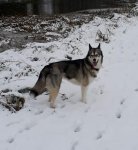
Out 9 year old malamute husky Cross had surgery last September at age 9. The aftercare isn't easy but we got through it. Unfortunately he reacted to the medication and was quite poorly which set his recovery back. We have decided that if his other knee goes we wont put him through surgery again but will keep him comfortable if possible until the time comes.
 
. Hes just had another turn, much worse than first one, he's been fine all day yesterday and all day today.
Its very frightening for me and he's scared . Vet was talking about an MRI if it goes on. Is is worth me having this done ?
I think perhaps she wants to rule out a brain tumour.
When I had an MRI done on a dogs back we had to wait for a mobile unit to come round which is not very often !

I can’t comment on the MRI because this isn’t something my vet has ever suggested but I would think a brain tumour is highly unlikely.

My vet has always treated my vestibular dogs the same way. Initial steroid injection to reduce any inflammation then sometimes another a couple of days later, depending on the severity of the attack. Always an anti-sickness drug as well.

Most of the time, that’s it but if the first attack is severe, like in Rufus’ case or they happen more regularly (like Button), they then start on Vivitonin. Not a cheap drug but has fantastic results.

The attacks are scary, for you and the dog but just leave them quiet, with minimal interference. The more they have their eyes open, the worse they will feel.
 
Top