
Gloi
Too little time, too much to read.
It is possible for two bays to have a chestnut foal.
But she didn't say that. She said how can two chestnuts have a bay foal.

It is possible for two bays to have a chestnut foal.

that's better
I'm pondering now because Enfys mare is a dunalino
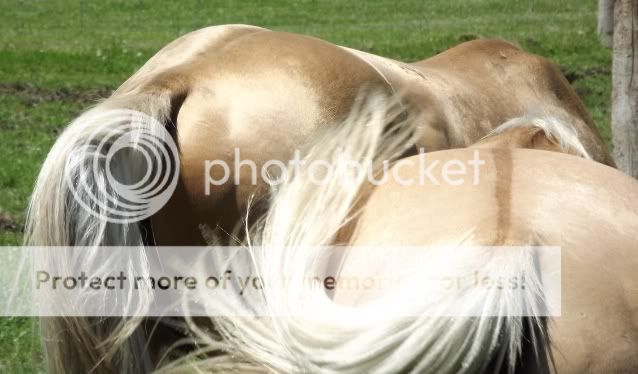
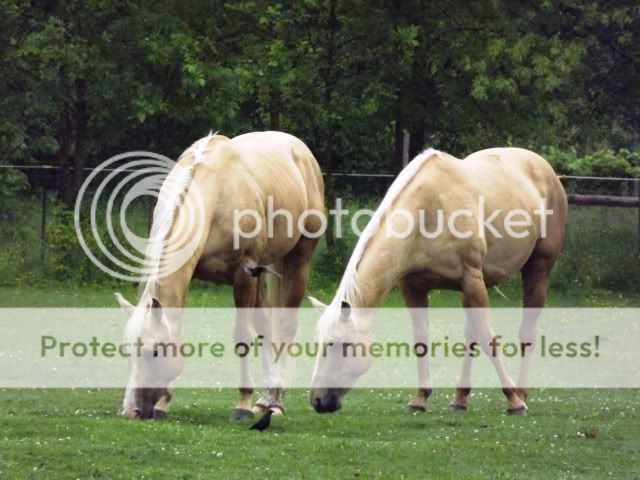
 ) a dunalino, she looked like a palomino though, her sire was red dun and many of her dam line were palomino, I am not sure what colour her dam actually was.


But she didn't say that. She said how can two chestnuts have a bay foal.


Finally how can it be that a bay can have both parents chestnut ? Not mine but a very well known stallion, I didn't think it was possible ?


Well that serves me right for posting when I'm half asleep.
Two genuine chestnuts can't have a bay foal.

The chestnut plus chestnut always equals chestnut presumably is what makes all Haflingers chestnut. Tho often mistaken for palomino due to the flaxen mane and tail?
Well then his Mum was a very naughty girl
Joking of course but where would the wpcs go with this one ? and all his progeny ?
http://www.rainhillwelshcobs.com/profile.php?name=Thorneyside the Terminator
And white? Where does the dominant white KIT gene come into the equation?

Would grey be a black dilution ?
I thought the creme gene could mask grey
this is fantastic and just answered a question i had in my head as i have a new horse who is brown in his passport but i said he was bay and he is bay
 ).
).

Very interesting!
So Shaylee my Sec A (who was born Dun) is: Black base colour with Dun dilution and a grey modifier I assume as she is now dapple grey!
Any idea what brings the dapples out in a bay coat ? as Roberto is quite heavily dappled.

It works on both base colours but can be 'hidden' by double dilutes or true white horses.
Thank you faracatSorry, but there is no such thing as "always" in genetics!
Except to say there is "always" the wild card of a mutation -- and genes not behaving as they are meant to do! It is a minefield. Just when you think you understand genetics, it will kick you in the backside!
If these things did not happen, all horses would be the same colour!
(And, yes, I learnt that the hard way -- after twenty years of breeding. Not all animals homozygous for a recessive will show up in the phenotype. I forget the name for it but one of the geneticist on here might be able to remind me!).


The most common colour mistake is confusing dun and buckskin. Neither Welshies or Connies carry the Dun gene but they do have Cream (so 'Duns' of these breeds are actually Buckskin). Highlands and Shetlands do have the Dun gene.
 A shame because a couple were really nice types. Are blue-eyed creams prone to genetic defects, like white cats with blue eyes being prone to deafness?
Grey also can add black pigment (often in the form of dapples), hence why chestnut born greys can go through a dapple grey stage as the grey out
I have a question. In the slide about cream dilution genes, the two base colours are shown as chestnut and bay. I know a bay is a black with an agouti gene, which on the slide it has then been shown the effects of an additional single or double cream gene. But what happens when the cream gene acts directly on a black base, ie a black horse (without the agouti gene) rather than a bay horse? Or does the cream gene only work in conjunction with the agouti gene when on a black base colour?
Enfys I didn't realise you'd lost Juno


Interestingly enough, the breed standard does not allow blue-eyed creams (although it does allow dark-eyed), I wonder why? When I was hunting for mine (years ago now), I was aware that they weren't allowed even though when I went to view I was told by couple of sellers that they didn't have blue eyes
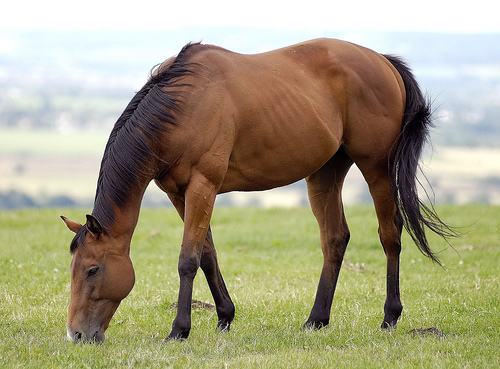
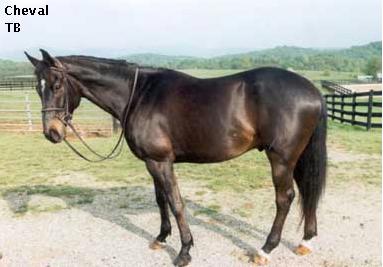
The main problem with double dilutes seems to be sunburn as they have pale skin. Being a double dilute with grey is bad as they are more even prone to melanomas.Another question, sorry! Faracat, why/how does the winter coat of that horse make it obvious its seal brown rather than bay? Perhaps its because I'm on my phone, but all I see is a brown body with black points? Though the extra brown bits by the flank and muzzle would make me suspect brown rather than bay. Unless I could see brown in the mane and tail though, I'd think the horse was bay. So what am I not understanding/seeing?

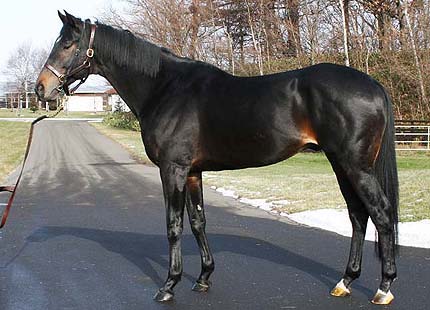
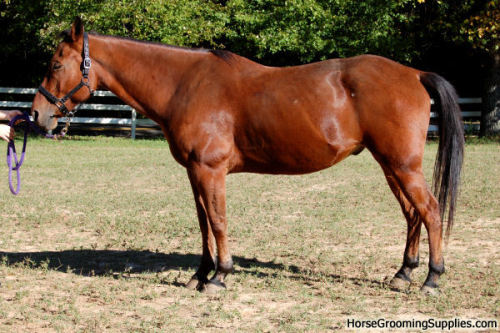
Interesting . . . so is it fair for me to assume that as Kal's fleabites are more chestnut than black and he has chestnut in his tail that he was born chestnut, went dapple grey and now is greying out/going fleabitten?
P
Her stifle had become so bad that prognosis was not good even with an op, so she went with a belly full of grass and the sun on her back before winter set in
This is really interesting! SO easy to understand in this form too
1 question though. If the grey gene makes the coat de-pigment, how come you get fleabitten greys, and how come they get more fleabites as they age? My fleabitten grey gets more and more fleabites as she ages, and they are dark grey rather than chestnut.
And another questions about a different horse. What colour is this horse?
We always referred to her as bay roan.


 hence I hoped this basic guide could help me understand. Other more normal colours I'm fine with understanding, just this one that (maybe I have a mind block) still confuses the life out of me.