Ossy2
Well-Known Member
I think she will compete again even at a high level but I think it will be very difficult for a selector to put her a team especially for the Olympics.


If she fulfils the selection criteria and has better scores than other riders they will have to select her. They will not be able to discriminate against her once she has served her suspension.I think she will compete again even at a high level but I think it will be very difficult for a selector to put her a team especially for the Olympics.
Which she is serving a ban for as well as other restrictions. Once she has done that she will be free to compete, if she is allowed to compete she will be eligible to be selected.Is it “discrimination” when it was clear animal abuse, which she admitted to?
I can't remember if this has already been suggested but if the animal in the video had been a dog what's the likelihood she'd have been prosecuted and banned from owning dogs for at least some years. I don't know why that's not an appropriate sanction here but I'm not sure if a prosecution was ever even mooted.Which she is serving a ban for as well as other restrictions. Once she has done that she will be free to compete, if she is allowed to compete she will be eligible to be selected.
She has not had a life time ban.I understand the logistics and rules, I’m saying I don’t agree with the principle of it
I know she hasn’tShe has not had a life time ban.
I have seen things in the ring,in front of judges and audience that I would have said that about.NOTHING was done .No bans,fines,reprimands,nothingI can't remember if this has already been suggested but if the animal in the video had been a dog what's the likelihood she'd have been prosecuted and banned from owning dogs for at least some years. I don't know why that's not an appropriate sanction here but I'm not sure if a prosecution was ever even mooted.

If she fulfils the selection criteria and has better scores than other riders they will have to select her. They will not be able to discriminate against her once she has served her suspension.

I agree, the main reason being the incident was made such massive news in the mainstream media with all the national and a lot of international press and media covering it…a large proportion of viewers with zero knowledge of dressage or anything equestrian at all. Which will make her almost impossible to “sell” as a potential UK competitor. Image is everything in the press.I can’t see her competing at the same level again to be honest. Not for a long time anyway.
 www.horseandhound.co.uk

The FEI are never going to make the changes necessary to ensure that sport horses are really comfortable and protected. They are there to protect horse sport, not horses.We can hope they do something, but the last paragraph seems they are still in denial.
I fear the FEI are not flexibly minded enough to accept they might not have got it right.
Agree sadly.The FEI are never going to make the changes necessary to ensure that sport horses are really comfortable and protected. They are there to protect horse sport, not horses.
 www.horseandhound.co.uk
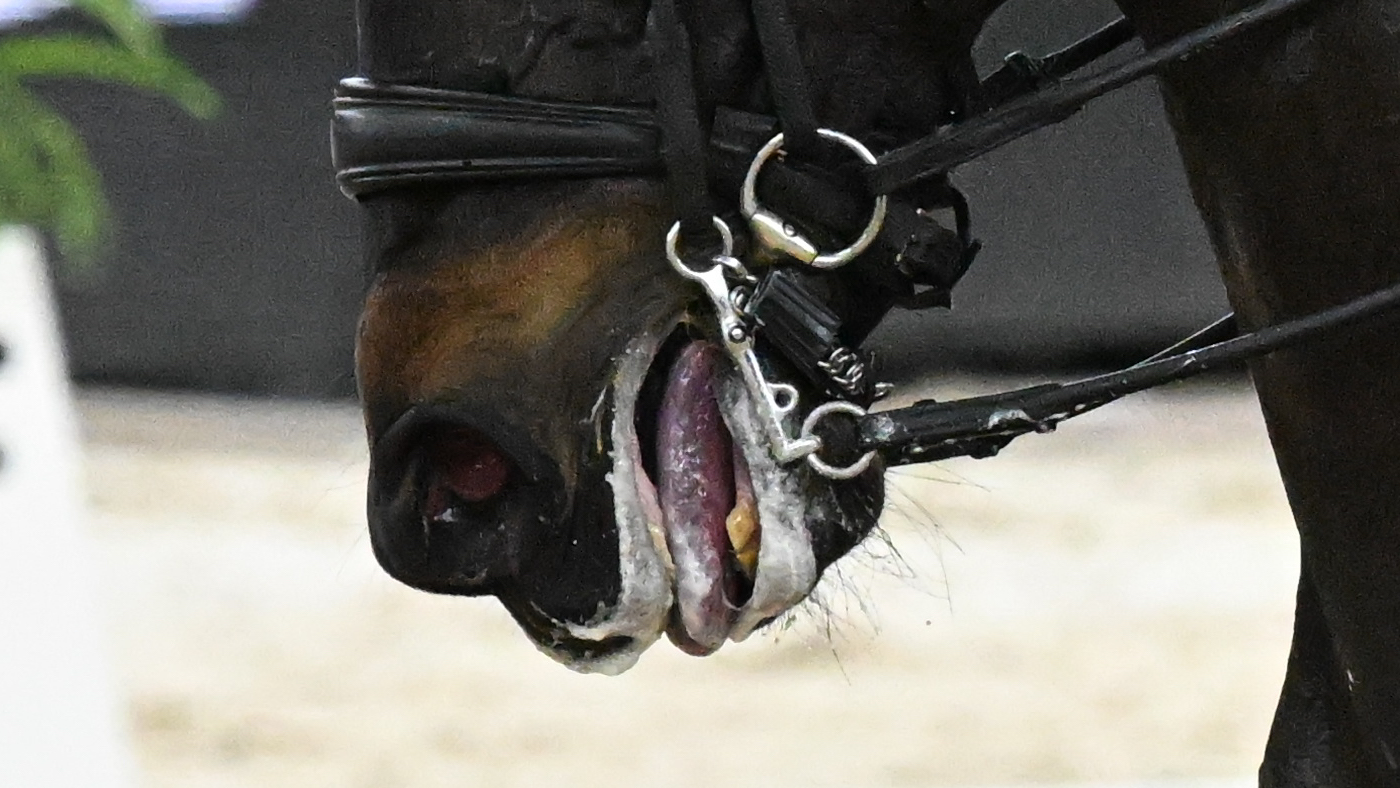
We are told that bitless is not allowed because the judges want to see relaxation of the jaw .Blue tongues hardly show relaxation of the jaw.People – not double bridles – are the issue, says study, as education for riders is key
Researchers have found that double bridles exert similar or less nasal pressure and rein tension than snaffles in elite horses
As I've said before on this thread - it's not the double bridle per se, it's the hands that hold the reins that is at fault.
Above is a follow on article from one last year which reported on a scientific study into the varying pressure of snaffle bits v double bridles and also various types of noseband.
As mentioned in the H&H the full scientific report is available free to read from the journal 'Animal' here:

I suppose the thing is like you say those hands are problematic. It makes me think of if you can't play nicely with your toys they need to be taken away!People – not double bridles – are the issue, says study, as education for riders is key
Researchers have found that double bridles exert similar or less nasal pressure and rein tension than snaffles in elite horses
As I've said before on this thread - it's not the double bridle per se, it's the hands that hold the reins that is at fault.
Above is a follow on article from one last year which reported on a scientific study into the varying pressure of snaffle bits v double bridles and also various types of noseband.
As mentioned in the H&H the full scientific report is available free to read from the journal 'Animal' here:
A couple of things. For some horses, possibly very many, the double really is a problem in of itself as they don't have the room for two mouthpieces. Indeed if you look at the work of Cristina Wilkins a lot of horses (most) don't have 'room' for any bit, as it always takes up space that would otherwise be occupied by the tongue.People – not double bridles – are the issue, says study, as education for riders is key
Researchers have found that double bridles exert similar or less nasal pressure and rein tension than snaffles in elite horses
As I've said before on this thread - it's not the double bridle per se, it's the hands that hold the reins that is at fault.
Above is a follow on article from one last year which reported on a scientific study into the varying pressure of snaffle bits v double bridles and also various types of noseband.
As mentioned in the H&H the full scientific report is available free to read from the journal 'Animal' here:

To a degree..There is a reason why so many are over tightened.Yeah... like I appreciate the study, any research is helpful for prompting more research, but is noseband pressure really what people are most concerned about?
I suppose it is a linked issue. You over tighten the noseband so they can't evade (or show discomfort because of) the pressure on the tongue and bars of the mouth. But the noseband pressure isn't the origin of the problem. It just seems like without also studying the mouth pressure the noseband study isn't that useful.To a degree..There is a reason why so many are over tightened.
Also a tightened noseband adds to poll pressure.With my old boy I once experimented.Put bridle on, put finger under the headband and then started to tighten the noseband.I was amazed to find out how much pressure I could achieve.I suppose it is a linked issue. You over tighten the noseband so they can't evade (or show discomfort because of) the pressure on the tongue and bars of the mouth. But the noseband pressure isn't the origin of the problem. It just seems like without also studying the mouth pressure the noseband study isn't that useful.
Yes but it’s also a much easier thing to measure/have a rule for in the field.I suppose it is a linked issue. You over tighten the noseband so they can't evade (or show discomfort because of) the pressure on the tongue and bars of the mouth. But the noseband pressure isn't the origin of the problem. It just seems like without also studying the mouth pressure the noseband study isn't that useful.
True. I'm not saying it's without all value, but I just don't see it as a "gotcha, the equipment isn't the problem at all!" study that the article (or the headline, anyway) is presenting it as.Yes but it’s also a much easier thing to measure/have a rule for in the field.