Check ligament rehab experience?

Bananyman

Active Member
Joined
18 October 2021
Messages
36
Visit site
Preface: Skip to the end for the jist of what I'm wondering!

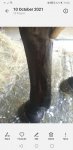
I noticed a swelling below the knee of one of my mare's front legs about 3 weeks ago. After cold hosing for a week and bute, the swelling came down a bit but she has had a fairly consist slight swelling since. She isn't lame, she isn't showing pain on palpation.

Vet came, diagnosed as check ligament injury. Cold bandaging and strict box rest for a week. Now on a further 6 weeks of strict box rest with DMSO and iodine applied over the swelling and bandaging over the lower leg.

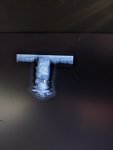
Ultrasound shows no tearing, only oedema/stretching if the fibres (see image attached), which I thought meant she could start being slowly brought back to work fairly soon, but the vet has suggested potentially giving her 9 months off work.

This seems very excessive based on rehab plans I've heard others using for more severe injuries/tears of the check ligament.

So my qs are: If you've had a horse with a check ligament injury:
1. what rehab plan/timeframe did you use?
2. Did the issue fully resolve long term?
3. Did the swelling fully resolve/how long did it take to go away?

Any other advice/experience much appreciated!
 

Attachments

  • IMG-20211020-WA0002.jpg
    IMG-20211020-WA0002.jpg
    81 KB · Views: 56
9 months off seems a long time.
My mare did a check ligament years ago (actually went lame, not just some swelling). I can’t remember details but we had around a month box rest then gradual walk work increasing by 5 minutes a week. Within a few months we were back working at the level we were before she was injured.
It never caused her any further problems (now retired for other reasons). I can’t really comment on the swelling as she’s a hairy girl so it’s difficult to spot lumps and bumps.
 
iodine applied over the swelling

What on earth is topical iodine for, on a tendon injury?

Your treatment plan sounds completely excessive to me. The worst one I've known was pretty much rested in one way or another for a year but he had torn the join to the suspensory ligament.

I've had two of my own which were very minor and rested for a month in the field and fine after that. I've known others off proper games for up to 4 months but fine from then on.

Is the horse insured?
.
 
My old mare had 2 tears in her near fore check ligament when she was 14. It was in the middle of summer and she was turned out in a pen.

she didn’t have time off though, we did 6 weeks walk work, then a re-scan, started introducing some trot work over 6 weeks and then a re-scan but sadly she went lane again. This wasn’t related to the check ligament injury as that had healed really well.
She fractured her collateral cartilage and was diagnosed with arthritis in her hocks and fetlocks.
Her check ligament healed fully and she never had a problem with it afterwards. She sadly suffered other issues and it was the low ringbone that (after treating and rehabbing SI disease and PSD) that resulted in her being retired and then shortly PTS.
 
Mine went 9/10ths lame and his whole leg blew up last year after hunting. The next day I couldn’t even get him out of the stable. Turns out he had whacked himself overreaching (bruising came out in a few days). It then rapidly went down and within 10 days was able to be scanned and was sound. The only odd thing on his leg was his check ligament being slightly swollen in one corner.

To be safe we treated it like a proper check ligament injury and I was advised three months box rest with controlled exercise (hacked in walk each day). I had him scanned at the end of the three months and it was fairly normal, still a little swollen. I would of then been able to bring him back into full work.

As it had it we were in lockdown 3.0 so I turned him away for 6 months and then very slowly built up fitness. I had him scanned here and no sign of original injury. 5 weeks walking, 5 weeks building up trotting then slowly building canter work over another 5. He’s now just about fully fit and seems to be standing up to the work and is back galloping and jumping hedges.

I hope I’m not jinxing myself with this post as have spent many hours rehabbing him this summer. But it looks positive.

ETA: I know his legs very well and IMO there is still a slight thickening to the check ligament on that side. It does not go up or down with work. I imagine it will always be like that. It’s a hard injury as they are normally very sound so tempting to bring back into work. I wanted longevity with my horse and had the time to wait almost a year before I wanted him back in full work.
 
My old mare did both her check ligaments(not at the same time ) in the 22 years I had her. Both times swelling but no lameness. 3 months box rest then 2 weeks walking in hand scanned again…then 3 months of light ridden work. Both times took around 6 months…9-12 months before all swelling disappeared. Came back into competitive work with 18 months after both injuries
 
What on earth is topical iodine for, on a tendon injury?

Your treatment plan sounds completely excessive to me. The worst one I've known was pretty much rested in one way or another for a year but he had torn the join to the suspensory ligament.

I've had two of my own which were very minor and rested for a month in the field and fine after that. I've known others off proper games for up to 4 months but fine from then on.

Is the horse insured?
.

So apparently the iodine causes mild irritation to the skin, drawing blood to the area to promote healing. I didn't love the sound of it but it has worked for others I know of with this vet and she isn't showing any skin sores under the bandage when it gets changed, so Im just gonna do what I'm told. However based on all the responses here I'm thinking after she finishes this 6 weeks (will be 8 weeks total box rest) I'll start walking her in hand and then slowly bringing her back under the saddle.
 
Vet came out agreed it was a check ligament, but we didn't bother scanning.

I didn't box rest (my preference), but did give time off. It was winter anyway and I think he had nearly nine months off in total. Bought him back in to work slowly.

He's returned to the level of work he was in before and has hunted again since. The ligament is still thickened, but it doesn't change now. He was sound quite quickly, but it did take a long time for the ligament to go hard and cold. He was 15 when he did his, and I did decide to give him longer than he perhaps needed to err on the side of caution. I had other horses in work anyway so that wasn't too much of an issue :)
 
A blister. My goodness that's old school these days, isn't it?
.
Yep he is very old school, nothing fancy or modern in his methods, but he is very well regarded locally so that's who my yard owner recommends. I think I'll get a second opinion though in a few weeks, she's my only horse and I can't afford her Livery and to pay to ride something else so if its not necessary to take 9 months I'd rather not
 
Yep he is very old school, nothing fancy or modern in his methods, but he is very well regarded locally so that's who my yard owner recommends. I think I'll get a second opinion though in a few weeks, she's my only horse and I can't afford her Livery and to pay to ride something else so if its not necessary to take 9 months I'd rather not

Perhaps the iodine works a bit like the Radiol we used to use ? ( a long time ago!)
 
Thanks everyone for the feedback, thought I'd upload an image of the lump in her leg (from a few weeks ago) for context / comparison to your own experiences. I'm going to stick with the two months box rest (total, I have about 4 weeks left). I checked again with my vet and he is definitely thinking of her going out to grass for 9 months but I'm looking for a vet for a second opinion because I really can't afford to do that if it's not necessary Screenshot_20211030_155218_com.android.gallery3d.jpg
 
My oldie properly mangled a check ligament (vet described as "very mushy") when she was mid-late teens, she did it in the Feb and I was allowed to start exercising her in the August. but that was one that took a very very long time to heal, we kept scanning about every 6 weeks and although she was sound, the scans showed she wasn't ready to do more than pen rest. I think because she was older it took longer than it would have done for a young horse.
What age is your horse OP?

otherwise I agree it feels like a bit of an OTT timeframe, based on my experiences with that horse and others I would always want to rescan before planning to commence exercise because sometimes things aren't how they seem, but I would anticipate being able to restart a lot sooner than you've been told.
 
Can anyone explain, if the horse is sound and the ligament is one which the horse can do without altogether if it snaps completely, what the purpose is of resting it?

In the days before mobile ultrasound nobody I know of rested this injury after the horse was sound, yet I never heard of a relapse. I had two myself.
.
 
@ycbm Technically they can do without but I've heard they are much more susceptible to then doing a DDFT because the check ligament isn't there to act as a fail safe for it, so it's better to have it.
 
Mine did hers middle of August- leg blew up, looked awful but no lameness. She had 1 week box rest and icing, and then scanned with a small amount of damage in her check ligament. Vet was happy for her to go in a small pen as she's normally on 24/7 turn out and I've gradually given her more and more space. I got back on her this week and will walk her under saddle out hacking for a month before introducing trot.
 
Mine did hers middle of August- leg blew up, looked awful but no lameness. She had 1 week box rest and icing, and then scanned with a small amount of damage in her check ligament. Vet was happy for her to go in a small pen as she's normally on 24/7 turn out and I've gradually given her more and more space. I got back on her this week and will walk her under saddle out hacking for a month before introducing trot.
Thanks for your story! Did you rescan her before walking? And has the swelling changed much?
 
@milliepops She's 12, so a bit younger.

When you say she was back in work in August, when did you start hand walking?

Also did the bump go away for you?
it's gone down to the point that only I know its there now. there is a bit of a lump there still, assume that's basically like scar tissue. but nothing like how filled it was when she first did it.
She did the other front leg about a year later playing in the field and that was a much less severe injury and you would never know it had happened. Neither reinjured. She's 25 now.

in answer to ycbm - if it was my ligament that i knew to be injured I'd rest it as much as possible until healed, so i pay my horses the same courtesy on principle really ;) as leisure animals i have that luxury, plus... we all know how stoical horses can be (i have one who was not lame with an SDFT injury) so I'd rather not risk causing discomfort with something I *know* to be injured.
 
Has anyone got stories of "the old days" before ultrasound, when the horse was just put back into work when sound? I had two, no further issues. I know of one that continued unsound and was pin fired, then fine (probably due to enforced rest from pin firing.) I don't know of any others that had further issues though I do know of other check ligament strains. Did it cause other horses that you know of continuing problems?
 
in answer to ycbm - if it was my ligament that i knew to be injured I'd rest it as much as possible until healed, so i pay my horses the same courtesy on principle really ;)


But that is contrary to medical advice for a human ligament strains, where the advice given to me has always been to use it as much as possible, within reason.
 
Within reason being the key. rest for a horse that is being turned out just means it ambles about where it can dictate what is comfortable, rather than getting ridden where they have no say in the level of activity. I've always rehabbed soft tissue injuries with quiet time in the field and that's been with vet blessing. I don't see the rush to get them working and I can't square the idea of knowingly working a horse with an injury but different strokes for different folks :)
 
I can't square the idea of knowingly working a horse with an injury


Ah well that was my point, really. In the past we didn't know because we didn't have mobile ultrasound scanning or many horse hospitals and yet the horses recovered well. Maybe the work was beneficial to a check ligament injury and what's happened since is vets who are understandably cautious of being sued?
.
 
The way I look at it is that knowledge is power ?‍♀️

For a horse that's intended to return to work I'd always rather know objectively how something is progressing given that the patient can't speak. The way I understand it is controlled stress is helpful for soft tissue injuries. but it sits better with me to know that the level of stress is appropriate for what's happening inside, rather than chance it and risk making it worse.

As check ligs often come sound really fast, soundness is not a good indication of the severity of the injury imo. In the grand scheme of horse ownership a couple hundred is worth the peace of mind for an overthinker like me, though I appreciate I'm someone who is prepared to throw £ at diagnostics.
 
Ligaments do best with movement but limited/controlled movement. Hence why I thought the hacking from the box in walk was fairly sensible.

As someone else mentioned, no check ligament means the DDFT is more at risk. I’ve already had one horse with a DDFT injury and it couldn’t come back into the work I wanted to do, the horse I had that did the check ligament I very much wanted back as he is one of a kind. Heal the check properly, hope the DDFT doesn’t go. Don’t heal the check properly and the DDFT is more likely to go, and that would be game over.
 
I just wish with all these things that someone would stump up the money to research outcomes of intervention vs non intervention.

I don't see better recovery from check ligament strains now than I did 30 years ago but I'd go for box rest and controlled exercise until scans were clear totally if I saw tested evidence.
.
 
Last edited:
Sugar did hers just as COVID first kicked off here. Vet scanned and recommended a couple of sessions of shock wave therapy, with walking. We did in hand for a few weeks as wasn’t allowed to ride at the barn, then once the barn re-opened we were under saddle for rehab.

The vet set out a rehab plan and regular check ups, she went lame in Feb and we were back in full work (jumping etc.) by August. Sugar was 17 at the time, the vet said movement was key and not stall rest.
 
Top