
EMS management support/solidarity thread?

FieldOrnaments

Well-Known Member
Joined
29 June 2022
Messages
2,593
Visit site
Dunno if this will get any responses but I know there's a few people dealing with this horrid disorder - gosh give me a poor doer anyday over it! - so wondered if anyone would be interested in a thread for collective brainstorming and just a bit of support.
I've got two with it, D is on week two of ertugiflozin and currently lost 17kg and now in work. New forest is unfortunately now unsound due to arthritis (ironically from being in to get her off grass) and only lost 7kg
Can you get caregiver burnout from endlessly soaking hay? 🤣🤣
 
I now feed 50% straw all the time, I think it takes longer to chew, and try anything to keep them moving. Put the water the furthest away to any food, and never make a paddock a square. I have so much grass this year, combined with the heat, its been harder to keep the weight down. They have summer coats, and are natives so I have trimmed their manes extra short(more like hacked), just to reduce insulation.
 
I’ve got one who had unusually (for him) high insulin levels this May. He’s been tested quite frequently over the past two years each time he’s had any joint medication as he was in and out of the vets with a lameness issue, so we know that his levels are usually low. He’d also had a year off work. Not usually good doer, but I suspect the spring combined with the lack of fitness probably brought it to light.

Mine lost 40kg in about six weeks on 6ml per day. He then went down to 2ml per day while we got him back into work slowly, but put on 2kg and insulin levels very slightly up. So he’s now back on a two month course (but using the human drug thanks to my vet - significantly cheaper) whilst we get the work upped some more. 30 days on 6ml, followed by 30 days on 3ml. Vet hopeful we can taper it off.

He’s out for 12+ hours and muzzled. Soaked hay, but I really think it’s the work that’s helping him.
 
My 6 yr old mare was diagnosed last October and put on Metformin. She's been off the grass ever since, either on my grass (but there's no grass on it) track at home or on a local track livery. She was off the Metformin for a while but now back on as her levels are still high. She's ridden or handwalked for about 1-1.5 hrs almost daily. She lives with my old retired gelding and a 3 yr old foster cob, who are both good weights, but are also off the grass with her, due to my set up. . I've started putting her in a large pen at night on soaked hay/timothy haylage, because there is no way I could manage soaked hay for all 3 even if I wanted to. In the day she gets normal hay wetted (old boy coughs on dry hay), which always runs out by early/mid afternoon. They do have hedges and bits to pick at round the edges. The whole thing seems like a big balancing act, and is very labour intensive as well as expensive.
I'm currently waiting for the latest blood results but most likely she's going to be starting on different meds to try to get some weight off her. She's not hugely overweight and doesn't have fat pads anywhere (feel but not see ribs) but the vet would like her skinnier.
Great idea to have a thread for EMS chat OP.
 
Have one with ems and Cushings. Being re tested in 4 weeks to see if any changes .was stripped grazed anyway as I am always on the side of caution. And only fed a tiny amount with hay in evening . Am now Soaking hay at night and giving blue bag haylage in morning. Worked most days . Not over weight, had a bit of a crest but no other symptoms. My gut feeling was to get tested even though my vet wasn’t that concerned . Seems I was right and has both. Just hoping results are better , 1prascend a day currently .
 
good idea for a thread FO, I don't think there will a shortage of people struggling :D:D

the link below does advertise a product but that doesn't affect the info it provides. Hopefully the link will work.


there is also the question of genetics and breeds. Last night I was playing on FB and a thread came up about EMS. Someone asked "my Rocky

Mountain has EMS does any one else's" there were about 50 identical replies all saying yes. Another series of breeds are those with Spanish origins which is a lot of S American breeds plus actual Spanish (as CI found out in her earlier thread)
 
good idea for a thread FO, I don't think there will a shortage of people struggling :D:D

the link below does advertise a product but that doesn't affect the info it provides. Hopefully the link will work.


there is also the question of genetics and breeds. Last night I was playing on FB and a thread came up about EMS. Someone asked "my Rocky

Mountain has EMS does any one else's" there were about 50 identical replies all saying yes. Another series of breeds are those with Spanish origins which is a lot of S American breeds plus actual Spanish (as CI found out in her earlier thread)
The breed link is definitely right: Natives, cobs, anything designed to rough it basically.
Throw mine out on a moor and the tb would be dead in a week but the girls would be fine. And probably quite fat. But modern grazing, with EDCs merrily hurled onto every field within an radius?? Absolutely f---ed. They're cheap to feed in winter though.... Every cloud I suppose
 
I lost Polly to it in June. I treat both my girls like they have it, though they have no signs of it yet (but both good doers)

Current routine which works well- out 8am-5pm on as bare paddock as we have (the lack of rain is heaven for me this year!)
In overnight with carefully weighed hay. The pony has hers soaked. I have been strict with what they get and used the Trickle Net calculator to assist me with this.
They get Dengie meadow Lite in a bucket for when they run out of hay. Both aren’t fussed, but will pick at it begrudgingly. They absolutely wouldn’t touch plain oat straw and would have rather starved to death.
Millie is the slimmest she’s been in years, but the lack of rain will be helping massively.
 
Hermosa is currently out from 9am to 2pm with a muzzle. That leaves me all afternoon to ride.

She gets an Eazigrazer of soaked timothy hay overnight, then a small haynet in the morning before she goes out. She gets another tiny haynet at some point in the afternoon. I hide every EMS supplement known to man in some Dengie Meadow Lite.

I wonder how she'd get on with some more of Meadow Lite in a bucket. I worry about being too stingy on hay, but she's bedded on straw, so she can nibble at that if she wants. Obviously don't want ulcers. She lost a lot of weight initially, but then it flatlined. I am hoping I can work off more now that I have more time in the afternoons.
 
Diagnosed with EMS in 2015.
2024 she had a condition where we needed to try steroids, vet put her on Invokana. Amazing drug, she now takes it 3 times a week and it had been a game changer for her hooves. Finally rock crunching. Just a shame the rest of her is falling apart.

Speak to your vet about it, it’s a cheap drug and whilst daily wasn’t feasible long term (her blood fat levels raised), 3 times a week seems to work for us.
 
Im so glad this was posted!

My 12.3 DHP has just been diagnosed with EMS and I've never had one with it before.

He had been 'off' on his right front for about 3 weeks and farrier couldn't find a cause and although he did seem to be improving I got vet out to check anyway. The vet initially couldn't even see any lameness but I know my pony and could see it and vet then saw it when trotting on a small circle but couldn't find any obvious reason.

As pony hadn't been exercised since he started looking lame he had put on a little weight and developed a bit of a crest but was on a bare paddock with just a handful of Hoofkind for his supplements so vet decided to run bloods just to rule out lami. Even the vet was shocked when the tests showed EMS with a count of 570!

Pony is now on even more restricted grazing with soaked hay twice a day in several nets as well as his chaff and having 4ml of ertugiflozin a day and vet has advised starting to exercise him again.

He's just started Week 2 and doesn't look any different in his crest and is weigh taping the same....vet did say overall his weight was good with his ribs palpable it was just his crest...so I don't know if it's working 😞 He's sharing his 'pen' with my New Forest who is retired and who has slimmed down on the more restrictive grazing even though he isn't on meds or being exercised!

I'm starting to worry that the meds aren't working, vet has advised 3 weeks on 4 ml then retest bloods a week later.
 
Mine was confirmed today so just starting the journey. She had her first tablets tonight human ones they are outside so can not remember what they are. She isn't a greedy horse and managed as though she was at risk anyway and ridden daily hacking, lessons, clinics so it was gutting that she has succumed to laminitis complete with some pedal bone movement in one foot. She is on total box rest at the moment hopefully she will come out the other side.
Oh this didn’t post yesterday!

Blimey Spirit my girl was 76 but vet thought considering her diet that is much higher than it should be. I believe 32 is the aim .
 
The gliflozins
Im so glad this was posted!

My 12.3 DHP has just been diagnosed with EMS and I've never had one with it before.

He had been 'off' on his right front for about 3 weeks and farrier couldn't find a cause and although he did seem to be improving I got vet out to check anyway. The vet initially couldn't even see any lameness but I know my pony and could see it and vet then saw it when trotting on a small circle but couldn't find any obvious reason.

As pony hadn't been exercised since he started looking lame he had put on a little weight and developed a bit of a crest but was on a bare paddock with just a handful of Hoofkind for his supplements so vet decided to run bloods just to rule out lami. Even the vet was shocked when the tests showed EMS with a count of 570!

Pony is now on even more restricted grazing with soaked hay twice a day in several nets as well as his chaff and having 4ml of ertugiflozin a day and vet has advised starting to exercise him again.

He's just started Week 2 and doesn't look any different in his crest and is weigh taping the same....vet did say overall his weight was good with his ribs palpable it was just his crest...so I don't know if it's working 😞 He's sharing his 'pen' with my New Forest who is retired and who has slimmed down on the more restrictive grazing even though he isn't on meds or being exercised!

I'm starting to worry that the meds aren't working, vet has advised 3 weeks on 4 ml then retest bloods a week later.
Insulin count of 570?
That gives me hope Divas last was 488
 
The gliflozins

Insulin count of 570?
That gives me hope Divas last was 488
Yes, the vet was shocked and so was I as although he's the right 'type'....little native who lives off fresh air...for ems I've always tried to manage him like he had it and even in the winter he doesn't have adlib hay as when we tried that route he spent 24 hrs attached to the bale!
 
My mother....always encouraging. And no filter. I messaged her a recent photo of Hermosa, and she went, "OMG, could she be pregant again!??" :rolleyes: I was like, "Well, no, not unless it's an immaculate conception." I know we've still got plenty of weight to lose. I am working on it. But Jesus, she doesn't look that bad.
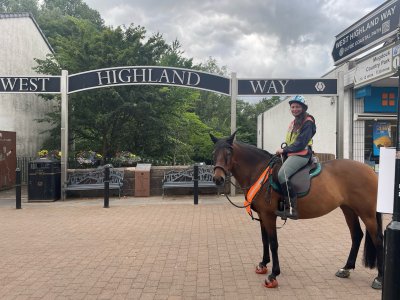
That photo was taken on a 13km hack. Working on it!! New turnout schedule gives me way more time to ride and do longer hacks, but we only changed on Wednesday!

In fairness to my mother, she is not at all horsey, and I think the only time she really looks at horses is when Kentucky Derby stuff pops up on the news. And I don't think there is anything I can do to make Hermosa look like a 3-yo race fit TB.


4cab5cdf-a70f-4311-90d3-7579902ebfab.JPG
 
Good afternoon,


Thank you to everyone who signed up to watch “it’s all about the insulin” on Tuesday evening, it was lovely to see so many of you on the live stream. For those that couldn’t make it, or would like to rewatch, please find the link to the recording below:


https://vimeo.com/1090858651/dc92d68170?share=copy


There were some questions at the end of the session that Andy has answered below:


Can I ask what is an acceptable insulin level on a horse 1 hour after grazing ?

I would like to see values well under 100, and preferably less than 60 mU/L. I must admit there is not much research into acceptable levels as yet though.


Would best practice be to do bloods after grazing, another after hay and another after feed and how often?

Yes that’s right. Ideally all dietary elements would be tested. Post-hay samples only need to be repeated when batch of hay is changed. Post-grazing cannot be done too often but should at least be every 2-3 months.

Image

I would like to ask for acceptable levels of insulin 1-2 hours after grazing in a horse (and donkey)

I would like to see values well under 100, and preferably less than 60 mU/L in horses and ponies. I must admit there is not much research into acceptable levels as yet though. Donkeys are different!! Sometimes they don’t seem to have as high values as we see in ponies but still get laminitis. Therefore ideally donkey peak insulin should be lower – no more than 40-50 mU/L.


Image

The stall side tests available...horses don't exactly have a finger to prick...so I assume an actual blood draw has to happen ?

Yes, a blood sample will always be required. We have done some research into salivary insulin levels but unfortunately they seem too variable to be useful.

Image

Is the use of Metformin still recommended?

No, not really. The SGLT2 inhibitors seem far more effective generally than metformin.


You said in the first presentation that sometimes you can also give paracetamol for the laminitis treatment. I know that it can affect the liver, therefore can’t it be bad for the patient?

As long as the dose is appropriate then we haven’t seen any liver issues with paracetamol in horses


Can bad insulin management or long term excessive insulin levels cause diabetes?

True diabetes (defined as persistently high blood glucose) is actually very rare in horses. We do see occasional diabetes cases but not very many.


My pony has ulcers - would it be ok to mix straw with his hay as it's quite spikey?

This wouldn’t be ideal for gastric ulcers, so they should be treated first before giving straw. It might be that a judgement needs to be made about which is the greatest concern – ulcers or laminitis?

Image

So if my horse is "tubby" but touch wood never had laminitis should I consider testing bloods. He's native and good do er wearing a muzzle

Yes, that would be advisable. Being a tubby native does make him higher risk of laminitis so it would be good to check insulin to define whether or not there is a genuine risk for him.

Image

Is there still debate on optimum hay soaking or is 8-16 hrs considered the most optimum now rather than say 60 minutes.

The longer the better in order to leach out the sugar, but it will start to ferment in warm water in the summer. So, in winter I would advise 8-16 hours but this may have to be limited to an hour in warm weather.


Which is the best type of straw to feed?

It doesn’t really matter – oat, barley, wheat.. It is just a “filler” really.


What do you consider the best low sugar/ low starch feed. I have an EMS boy who also now recently showed signs of cushings but only in the grey scale at present. He is a good doer (typical Irish Draft). He reacts well to treatment for EMS not so great on cushings meds.

There are many options available – primarily chaff-based. However, it is really important to try them out and check the insulin response in your horse as you can never be sure that even a very low sugar feed will be OK.


Have you seen the effectiveness of the 'Flozin" drugs decrease after 1st use ? i.e not working on 2nd time being given at reducing the insulin level

No, they seem pretty consistently effective. In cases whether they appear ineffective (high insulin despite treatment) this is pretty much always because the diet must be improved.

Image

Is there any data regarding long versus short grass from a safe grazing standpoint?

The same blade of grass can be massively variable in its sugar content depending on so many factors including stage of growth, light, temperature, grass species etc… Unfortunately there are too many variables ever to guarantee that, for example, long grass is better than short grass – you just cant tell. Always it needs a check of insulin after an hour or 2 grazing the grass.


Is PPID hereditary please? by Sandra Forrester

There is no evidence indicating that PPID is hereditary.


Also, The insulin levels are set out in guidance but could it be possible that a horse has a naturally higher resting insulin level ?

Yes, undoubtedly circulating insulin concentrations are very variable between individuals. It may well be the case that different horses may show different levels of tolerance to insulin.

Image

It would be amazing if we could do a prick test similar to a human diabetic to aid with the management, but also the cost of testing.

Yes sure. The problem is that in human diabetes it is most useful to measure glucose which is a very simple test and many cheap glucometers are available. In horses measuring glucose is not very helpful – we need to measure insulin which is more complicated to test for.


So are you recommending that horses who haven't had laminitis are routinely tested?

Only if there is reason to suspect a risk. So I wouldn’t bother with a fit lean eventer or TB, but I would with warmbloods and native types.


If you moved yards would you have to the grass test again?

Correct


And how do you factor in that most people's hay changes constantly, depending on what delivered?

If hay changes then you would have to retest. There are massive differences between different hays, even when they look and smell the same.


Is there a difference between rye and meadow grass in terms of insulin response?

Not in any guaranteed direction but they may well differ. Ryegrass is typically higher in sugar and causes higher insulin response, but not always.

Image

If insulin is still rising after bring in from grass for a couple of hours - should the horse be given hard feed and hay straight away when they come in or is that adding further to the situation, should they have a break before being given further food? Thank you for a very informative presentation!

Ideally nothing to eat for the hour they are waiting after coming in. However, if you have already shown that your hay has a low insulin response then it would be Ok to feed that.

Image

I have heard that there can be the side effect of liver damage in horses when SLGT2 is used. Can you comment on that? Thank you in advance

SGLT2 inhibitors pretty much always increase the triglyceride (fat) concentration in the blood. Usually this is only by a small and insignificant amount. However, in some horses this can be quite marked and can then lead to secondary liver problems. So it is always important to check blood triglycerides within a few days of starting these drugs and follow up with intermittent checks thereafter.


Many thanks! GLP-1 agonists have transformed human diabetes/obesity treatment in recent years. Are there any novel drugs coming through for our equine friends, other than the SGL2 inhibitors?

Many have been looked at but, even if they seem effective, they are frequently limited due to cost in such a large animal. SGLT2 inhibitors seem to have “hit the spot” in being remarkably effective and also relatively cheap.


I have heard that there can be the side effect of liver damage in horses when SLGT2 is used. Can you comment on that? Thank you in advance

Vet at our yard run liver function bloods before prescribing

SGLT2 inhibitors pretty much always increase the triglyceride (fat) concentration in the blood. Usually this is only by a small and insignificant amount. However, in some horses this can be quite marked and can then lead to secondary liver problems. So it is always important to check blood triglycerides within a few days of starting these drugs and follow up with intermittent checks thereafter.

Image

Is night time turnout best as I heard grass has lower sugar content and are the supplements beneficial lami pro etc

Yes, generally nighttime grass will have lower sugar and insulin responses than the same grass in the day.

A few supplements have been examined properly and shown to have some benefits but there are no supplements that I am aware of that are effective enough to control high insulin.


Best wishes,


Beth Richards BSc Equine Science

Marketing and Events Co-ordinator

Liphook Equine Hospital

Forest Mere

Liphook

Hampshire GU30 7JG

Tel: 01428 723594

www.theleh.co.uk

(My hours are 8.30 – 5:30pm, Monday to Friday)
 
wrt to my message above I had trouble getting it to accept any more comments.

After the last livestream from Liphook we got e mailed the above which gave answers to a few more questions.
I hope this makes sense


ETA that e mail was 6/6/25 and the livestream a couple of days earlier
 
Last edited:
That's really informative - thanks Paddy

My stressful one is my retired PSSM mare who rocked 166 on the insulin test mid January. She was fat but the grass was eaten down so I assume it must have been a bale of rocket fuel hay although the batch had tested at around 10%

We pump from a well so currently i can't soak because the water levels are too low. Plus its a PITA for 3 horses esp when 2 can have grass. I use a grass track with strip grazing but the Appy has been muzzled virtually 24.7 for months now. Also on drugs.

She's lame behind right now though (I thought tie up although not sure of the trigger but now wondering abscess under a load of retained sole) so less exercise. She's wandering around the track OK but usually I try and do a 2 mile in hand walk with her a few times a week. I swear she's getting fatter by the day.

I'm also using a supplement from Equibiome which is derived from fat hen. Back in winter when she tested really high it was the only thing I changed and her levels came down. It could have been coincidence but its cheap enough that I don't care!

Good thread OP - EMS is stressful 😫
 
My cob was diagnosed seven years ago. He now lives on restricted grazing with hay supplemation. Soaking hay is difficult due to water shortage at the yard so I mostly don't anymore.would but better if I could its locally grown meadow hay. It was tested coming out at 8.5 but it's not tested every year.. He's being strip grazed now as the paddock is essentially soil and the grass he's eating is long/standing hay. Initially he was given Metformin for two weeks. Vet said it doesn't work for much longer than that in horses. He lost lots of weight and has kept it off now he's not on adlib grazing.hes ribby but has fat pads higher up his body nearer top line and still has a smallish crest and fat pads over eyes. He isn't exercised due to me not riding nowadays .hes never had a blood test or medication since the initial exam. Don't know if I should be doing more . he's in his mid teens
 
@paddy555 that is really interesting and I’m sorry I missed it. The only thing I would question are the sugar levels in grass overnight. My understanding is that the sugar is completely depleted by 2am when grass growth stops and starts to rise at 10am building all day, it then drops progressively overnight as the sugar is used for re growth stopping again at 2am.

As it’s impractical for most of us to put our horses out at 2am when I’ve needed to control insulin in DP I have put him out between 6am and midday. I think it’s a balance between how much sugar they get in the time they are out and how much the grass has grown overnight so are they getting more.

Another thing I’ve noticed since we have had much warmer summers is that even with restricted grazing, 12 hour soaked hay nets and low sugar/starch feed his sheath swells far more in the very hot weather than when it’s cooler. I don’t know why it happens, it’s just an observation which may help others who have geldings. Either way summer is a complete nightmare and everyone with an EMS horse or pony has my full sympathy.
 
Gosh thank you so much for posting this!

Interesting re diabetes -- both mine have high blood glucose on very low sugar/starch diets (though we haven't done fully fasted bloods on either). 🤔 Divas was 7mmol/l last tested, Nf's 6.7. it would be interesting to see how the new forest responded to insulin injections given her insulin levels were ok.
The gliflozins are very useful drugs.
I did do some research into GLP-1 drugs in horses but unfortunately their plasma activity of the peptide isn't abnormal in EMS so doubt they would work.

Sorry I couldn't quote all of it the forum said it was too long 😅

Does anyone know if HOMO-IR is accurate in equines?
 
I started off with this in 1 horse last Dec and now I have got him and another probably similar down to a situation I am happy with. Learnt lots along the way.
He wasn't tested. Aged 20 I was pretty sure from his coat he had PPID and from LGL it could very well be EMS. He could have done with losing weight but was not that excessively fat.

Vet came, x rayed feet. He could be tested either ACTH or EMS. He is difficult to get into the vein not totally impossible but pretty difficult. I decided it could well skew both PPID and EMS results.
If I had pressed for it blood tests would have been done. Very good horse vet but looking back didn't really stress the importance of how the stress would affect the blood although I had already told him not to test. Mentioned the flozins but of course that would be tests to check they were not harming the horse and also to retest EMS.
Vet agreed to trial pergolide and I would diet him for 3 months and see what happened. Pergo worked and ATM he is moulting, this time last year his coat was getting thicker and thicker.

Another vet came for something else a while ago, very into EMS/BF and all the rest of it. I mentioned lack of testing and it was immediately how the results could be affected by difficulty in getting into vein.

The point I am making is the accuracy of testing. (EMS) I know from previous personal experience (not just internet warriors) of how inaccurate ACTH testing is. The horse tested at 18, I was unhappy so retested as week later and 11 in a horse with every cushings symptom he was not far of PTS for untreated and out of control cushings. Prascend trial
and he was a totally different horse.

I wonder how accurate the EMS testing is. I'm not for a minute suggesting anyone doesn't test just asking the question. Tried to google this. Nothing was saying this is the most accurate test. Seemed to be false results. It just makes me wonder. Also makes me wonder if a horse who accepts a needle in the vein appears happy (or at least not unhappy) but are they stressed underneath. Does that affect the results. How much is based on each particular horse. Liphook's comments above suggests there is not that much research into acceptable levels.


perhaps as in PPID are the test results you are getting related to what is happening to the horse. Like SEL's comment below for example.

My stressful one is my retired PSSM mare who rocked 166 on the insulin test mid January. She was fat but the grass was eaten down so I assume it must have been a bale of rocket fuel hay although the batch had tested at around 10%

The way I started to deal with it was that as I read somewhere (poss Liphook) getting weight off and exercising was great but it would take months to make an appreciable difference. One needed to do something now and that was to get s & s under 10%
I worked on looking at everything they ate and it had to be under 10%. Diet (having taken a very long time to sort) is the same every day and under 10%

My big test will be come Autumn and if we get any seasonal lami.
- EMS is stressful 😫
I'm totally exhausted :D:D:D:D but I have come out of it with a very different and far better horse so I am very pleased it happened. I never knew how much diet had affected him.
 
I will join you - have never had Lami related problems despite owning Criollos, Appies and other good doers, always smugly thought Lami was caused by stressed grass and not long grass... so...

18yo New Forest, been retired for a year, wonderful saintly companion pony. Bit of a perfect storm really, easy winter, a husband that likes to spoil the horses and the NF being used as a companion to an ill mare in March so he was getting haylage in the field etc. Has been pottery at times on stones so about eight weeks ago I blood tested him - no Cushings. EMS I think about 76? Started to restrict his grass and do a little work with him (lunging / long reining / 2 x 30 mins riding a week but I am border line too heavy for him) - going magnificently. Then I gave them more grass and went on holiday for a week and obviously judged it very badly wrong.

Now very pottery. Has been stabled and rubbed himself raw (I think he reacts to the swallow shit) so he is now back out in a small bald pen. Have put mats out, water and hay, he's on Bute and we are about to order him Cloud hoof boots. Like Sanversera I don't know if I am doing enough. He is the nicest pony but I won't keep him going if he can't be a pony on a decent size of field / grass at some point.

Of course my riding horse is also not quite right and entirely neurotic if he doesn't have the NF in sight...
 
I started off with this in 1 horse last Dec and now I have got him and another probably similar down to a situation I am happy with. Learnt lots along the way.
He wasn't tested. Aged 20 I was pretty sure from his coat he had PPID and from LGL it could very well be EMS. He could have done with losing weight but was not that excessively fat.

Vet came, x rayed feet. He could be tested either ACTH or EMS. He is difficult to get into the vein not totally impossible but pretty difficult. I decided it could well skew both PPID and EMS results.
If I had pressed for it blood tests would have been done. Very good horse vet but looking back didn't really stress the importance of how the stress would affect the blood although I had already told him not to test. Mentioned the flozins but of course that would be tests to check they were not harming the horse and also to retest EMS.
Vet agreed to trial pergolide and I would diet him for 3 months and see what happened. Pergo worked and ATM he is moulting, this time last year his coat was getting thicker and thicker.

Another vet came for something else a while ago, very into EMS/BF and all the rest of it. I mentioned lack of testing and it was immediately how the results could be affected by difficulty in getting into vein.

The point I am making is the accuracy of testing. (EMS) I know from previous personal experience (not just internet warriors) of how inaccurate ACTH testing is. The horse tested at 18, I was unhappy so retested as week later and 11 in a horse with every cushings symptom he was not far of PTS for untreated and out of control cushings. Prascend trial
and he was a totally different horse.

I wonder how accurate the EMS testing is. I'm not for a minute suggesting anyone doesn't test just asking the question. Tried to google this. Nothing was saying this is the most accurate test. Seemed to be false results. It just makes me wonder. Also makes me wonder if a horse who accepts a needle in the vein appears happy (or at least not unhappy) but are they stressed underneath. Does that affect the results. How much is based on each particular horse. Liphook's comments above suggests there is not that much research into acceptable levels.


perhaps as in PPID are the test results you are getting related to what is happening to the horse. Like SEL's comment below for example.


The way I started to deal with it was that as I read somewhere (poss Liphook) getting weight off and exercising was great but it would take months to make an appreciable difference. One needed to do something now and that was to get s & s under 10%
I worked on looking at everything they ate and it had to be under 10%. Diet (having taken a very long time to sort) is the same every day and under 10%

My big test will be come Autumn and if we get any seasonal lami.

I'm totally exhausted :D:D:D:D but I have come out of it with a very different and far better horse so I am very pleased it happened. I never knew how much diet had affected him.
For EMS there are different tests they can do, the basic is just serum insulin on the animal's every day diet. A more accurate one is a fasted animal's insulin and blood glucose, then give dextrose tablets (dosed for its weight) and retest after I think it's 10min then 30min & an hour if wanted. You can also measure blood glucose response to injected insulin to get a gauge for just how sensitive (or not!) the horse is to insulin.
 
Good afternoon,


Thank you to everyone who signed up to watch “it’s all about the insulin” on Tuesday evening, it was lovely to see so many of you on the live stream. For those that couldn’t make it, or would like to rewatch, please find the link to the recording below:


https://vimeo.com/1090858651/dc92d68170?share=copy


There were some questions at the end of the session that Andy has answered below:


Can I ask what is an acceptable insulin level on a horse 1 hour after grazing ?

I would like to see values well under 100, and preferably less than 60 mU/L. I must admit there is not much research into acceptable levels as yet though.


Would best practice be to do bloods after grazing, another after hay and another after feed and how often?

Yes that’s right. Ideally all dietary elements would be tested. Post-hay samples only need to be repeated when batch of hay is changed. Post-grazing cannot be done too often but should at least be every 2-3 months.

View attachment 164641

I would like to ask for acceptable levels of insulin 1-2 hours after grazing in a horse (and donkey)

I would like to see values well under 100, and preferably less than 60 mU/L in horses and ponies. I must admit there is not much research into acceptable levels as yet though. Donkeys are different!! Sometimes they don’t seem to have as high values as we see in ponies but still get laminitis. Therefore ideally donkey peak insulin should be lower – no more than 40-50 mU/L.


View attachment 164642

The stall side tests available...horses don't exactly have a finger to prick...so I assume an actual blood draw has to happen ?

Yes, a blood sample will always be required. We have done some research into salivary insulin levels but unfortunately they seem too variable to be useful.

View attachment 164639

Is the use of Metformin still recommended?

No, not really. The SGLT2 inhibitors seem far more effective generally than metformin.


You said in the first presentation that sometimes you can also give paracetamol for the laminitis treatment. I know that it can affect the liver, therefore can’t it be bad for the patient?

As long as the dose is appropriate then we haven’t seen any liver issues with paracetamol in horses


Can bad insulin management or long term excessive insulin levels cause diabetes?

True diabetes (defined as persistently high blood glucose) is actually very rare in horses. We do see occasional diabetes cases but not very many.


My pony has ulcers - would it be ok to mix straw with his hay as it's quite spikey?

This wouldn’t be ideal for gastric ulcers, so they should be treated first before giving straw. It might be that a judgement needs to be made about which is the greatest concern – ulcers or laminitis?

View attachment 164637

So if my horse is "tubby" but touch wood never had laminitis should I consider testing bloods. He's native and good do er wearing a muzzle

Yes, that would be advisable. Being a tubby native does make him higher risk of laminitis so it would be good to check insulin to define whether or not there is a genuine risk for him.

View attachment 164640

Is there still debate on optimum hay soaking or is 8-16 hrs considered the most optimum now rather than say 60 minutes.

The longer the better in order to leach out the sugar, but it will start to ferment in warm water in the summer. So, in winter I would advise 8-16 hours but this may have to be limited to an hour in warm weather.


Which is the best type of straw to feed?

It doesn’t really matter – oat, barley, wheat.. It is just a “filler” really.


What do you consider the best low sugar/ low starch feed. I have an EMS boy who also now recently showed signs of cushings but only in the grey scale at present. He is a good doer (typical Irish Draft). He reacts well to treatment for EMS not so great on cushings meds.

There are many options available – primarily chaff-based. However, it is really important to try them out and check the insulin response in your horse as you can never be sure that even a very low sugar feed will be OK.


Have you seen the effectiveness of the 'Flozin" drugs decrease after 1st use ? i.e not working on 2nd time being given at reducing the insulin level

No, they seem pretty consistently effective. In cases whether they appear ineffective (high insulin despite treatment) this is pretty much always because the diet must be improved.

View attachment 164635

Is there any data regarding long versus short grass from a safe grazing standpoint?

The same blade of grass can be massively variable in its sugar content depending on so many factors including stage of growth, light, temperature, grass species etc… Unfortunately there are too many variables ever to guarantee that, for example, long grass is better than short grass – you just cant tell. Always it needs a check of insulin after an hour or 2 grazing the grass.


Is PPID hereditary please? by Sandra Forrester

There is no evidence indicating that PPID is hereditary.


Also, The insulin levels are set out in guidance but could it be possible that a horse has a naturally higher resting insulin level ?

Yes, undoubtedly circulating insulin concentrations are very variable between individuals. It may well be the case that different horses may show different levels of tolerance to insulin.

View attachment 164636

It would be amazing if we could do a prick test similar to a human diabetic to aid with the management, but also the cost of testing.

Yes sure. The problem is that in human diabetes it is most useful to measure glucose which is a very simple test and many cheap glucometers are available. In horses measuring glucose is not very helpful – we need to measure insulin which is more complicated to test for.


So are you recommending that horses who haven't had laminitis are routinely tested?

Only if there is reason to suspect a risk. So I wouldn’t bother with a fit lean eventer or TB, but I would with warmbloods and native types.


If you moved yards would you have to the grass test again?

Correct


And how do you factor in that most people's hay changes constantly, depending on what delivered?

If hay changes then you would have to retest. There are massive differences between different hays, even when they look and smell the same.


Is there a difference between rye and meadow grass in terms of insulin response?

Not in any guaranteed direction but they may well differ. Ryegrass is typically higher in sugar and causes higher insulin response, but not always.

View attachment 164638

If insulin is still rising after bring in from grass for a couple of hours - should the horse be given hard feed and hay straight away when they come in or is that adding further to the situation, should they have a break before being given further food? Thank you for a very informative presentation!

Ideally nothing to eat for the hour they are waiting after coming in. However, if you have already shown that your hay has a low insulin response then it would be Ok to feed that.

View attachment 164644

I have heard that there can be the side effect of liver damage in horses when SLGT2 is used. Can you comment on that? Thank you in advance

SGLT2 inhibitors pretty much always increase the triglyceride (fat) concentration in the blood. Usually this is only by a small and insignificant amount. However, in some horses this can be quite marked and can then lead to secondary liver problems. So it is always important to check blood triglycerides within a few days of starting these drugs and follow up with intermittent checks thereafter.


Many thanks! GLP-1 agonists have transformed human diabetes/obesity treatment in recent years. Are there any novel drugs coming through for our equine friends, other than the SGL2 inhibitors?

Many have been looked at but, even if they seem effective, they are frequently limited due to cost in such a large animal. SGLT2 inhibitors seem to have “hit the spot” in being remarkably effective and also relatively cheap.


I have heard that there can be the side effect of liver damage in horses when SLGT2 is used. Can you comment on that? Thank you in advance

Vet at our yard run liver function bloods before prescribing

SGLT2 inhibitors pretty much always increase the triglyceride (fat) concentration in the blood. Usually this is only by a small and insignificant amount. However, in some horses this can be quite marked and can then lead to secondary liver problems. So it is always important to check blood triglycerides within a few days of starting these drugs and follow up with intermittent checks thereafter.

View attachment 164643

Is night time turnout best as I heard grass has lower sugar content and are the supplements beneficial lami pro etc

Yes, generally nighttime grass will have lower sugar and insulin responses than the same grass in the day.

A few supplements have been examined properly and shown to have some benefits but there are no supplements that I am aware of that are effective enough to control high insulin.


Best wishes,


Beth Richards BSc Equine Science

Marketing and Events Co-ordinator

Liphook Equine Hospital

Forest Mere

Liphook

Hampshire GU30 7JG

Tel: 01428 723594

www.theleh.co.uk

(My hours are 8.30 – 5:30pm, Monday to Friday)
 
Top