french link snaffles

You only have to hold a FL the way it sits in the mouth to see that it cant lie flat on the tongue. I think this is one of those falsehoods that lingers around like a hanging cheek putting pressure on the poll.

Oh f*, M was changed into a french link over the summer by YO who was riding her for me (no problem with that, she's always been fussy in the contact and YO thought it would help) and I've left her in it. I'm now wondering if this is why she's been getting progressively more difficult since then. I was told the link would lie flat so never thought to test it :(.
 
Oh f*, M was changed into a french link over the summer by YO who was riding her for me (no problem with that, she's always been fussy in the contact and YO thought it would help) and I've left her in it. I'm now wondering if this is why she's been getting progressively more difficult since then. I was told the link would lie flat so never thought to test it :(.
Have a look in her mouth next time :)

Kira gets in with it better than any lozenge so I do think its horses for courses. I tried all kinds of expensive bits before finally trying an old FL from the cupboard and she made it plain that it was the best of the bunch!
 
Oh f*, M was changed into a french link over the summer by YO who was riding her for me (no problem with that, she's always been fussy in the contact and YO thought it would help) and I've left her in it. I'm now wondering if this is why she's been getting progressively more difficult since then. I was told the link would lie flat so never thought to test it :(.

Read this which I have just found.
It explains the misconceptions about which I and, I think, Milliepops, have been posting


https://www.horse-care.co.uk/french-link-v-dr-bristol/
 
I was at a bitting clinic last year when this and he travel in the horses mouth was discussed the Neue chule bits travel a long way up towards the horse's back teeth and the bit with the least travel is the myler. It is very hard to find a neat bit to fit a small mouth with short bars as the travel of the new design expensive bit is the porblem with the exception of myler which has the lowest level of travel inthe mouth. The bitting expert was not linked to either of the aforemetioned companies but an independant
 
I was taught that a DB could be harsher than a french link but the main reason to be wary of them was that if someone put it in the wrong way the straight edge would cut straight down on the tongue and that a dentist had seen a tongue almost completely severed by such an action. I think for that reason it was deemed if using a bit with a link that a french link was better as although the arms on some would curve slightly it would not cause as much damage if attached the wrong way.
 
Horses don’t always read the textbooks or latest research.

My saint of a cob who got to medium was only a saint if he did flatwork in a french link and jumping in a Pelham with roundings and a single rein. That was before the days of neue schule etc., so I didn’t have the opportunity to try any fancy lozenge bits on him.

I have though now got a bucket full of fancy lozenge bits in my armoury, and the current IDx despises them all and loves her single jointed fulmer snaffle :cool:.
 
Have a look in her mouth next time :)

Kira gets in with it better than any lozenge so I do think its horses for courses. I tried all kinds of expensive bits before finally trying an old FL from the cupboard and she made it plain that it was the best of the bunch!

I wonder if the "old FL" in that para is the reason. Mass produced bits at the cheaper end these days can be horrors, and are nothing like they were meant to be. Mind you, I have plenty of antique horrors in my shed which should only ever have been put on a pub wall for decoration. But some of them have been extremely useful over the years.

I have never been a fan of FLs because I find a lot of horses lean on them, but some don't and go very well in them, and if the horse likes it, well I'm not going to argue. But I'd never use a DB on anything, pure nasty things.

There's a lot of science to bitting but there's a lot of feel involved too, and a real appreciation of every individual horse's mouth and tongue conformation. And a need to not fixate just on the mouthpiece but on the cheeks as well, which can make a huge difference to the whole outcome.

This change to the rule though needs some review and clarification I think (and possibly some common sense added in).
 
Thanks.
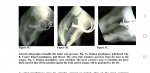
If I understand the pictures correctly the plate in a DB stays flat on the tongue because of the angle of the bit on the bit rings.
The angle on the FL therefore turns the plate so the edge of the plate digs into the tongue.
I was taught that the DB was more harsh than a FL
I read somewhere that Dr Bristol’s thinking was ahead of it’s time.
Looking at pictures of both bits it is often unclear what the angle the hole in the arm of the bit is set.

This is what prompted my question.


Thanks a lot for posting the video.

Charmae Bell does a really good job of showing the bits and explaining the action.

Such a good job, in fact, that I've watched a couple of her other videos for Bit Bank Australia.
 
Just catching up - some very interesting links and food for thought. Actually a bit of a minefield seeking out the definitive answer. But I am thinking there probably isn't one at this stage. And as someone else said what bit suits one horse very well, another horse might hate it completely.

I have to say thinking back over the past decade, the most well liked bit in my own personal armoury here is the central barrel Myler style bits. Even the most difficult to mouth horses have settled very well in different styles of them. And in many cases the barrel bit has been a far milder bit than the one they arrive with. I am a great believer in bitting down first before you go anywhere else.
 
Well that's blown my brain as I always use a french link thinking they are a fairly gentle bit :(
My youngest is due to be started and we were planning on using a full cheek french link but now I don't know. Would a lozenge be better..????
 
If your horse is happy in a Fl SatansLittleHelper then why change it? Unless you are seeing signs of obvious pain I would just stick with what works best for him. I will still be selling FL and recommending them and if necessary using them myself regardless....but I will never, ever use a DB no matter what I am told ;)
 
If your horse is happy in a Fl SatansLittleHelper then why change it? Unless you are seeing signs of obvious pain I would just stick with what works best for him. I will still be selling FL and recommending them and if necessary using them myself regardless....but I will never, ever use a DB no matter what I am told ;)

He hasn't been started yet so he doesn't know what he likes yet lol
 
Well that's blown my brain as I always use a french link thinking they are a fairly gentle bit :(
My youngest is due to be started and we were planning on using a full cheek french link but now I don't know. Would a lozenge be better..????

If you are not going to do competitions with specific rules about FL bits I think it would be your choice which bit to use to start. It may be he doesn’t work well in a FL and you would need to think again.
The only proviso being if in the future his ‘career path’ changed and you may have to introduce a new bit.
 
You might even find he doesnt like them my youngster was dreadful in a steel French link she is happier in a slight lozenge shaped and a warm alloy but she has a tiny mouth and it took a lot of finding a suitable bit. Hence starting with a tiny FL she is now in a bridoon
 
I go with lozenges or a Cambridge snaffle for youngsters, depending on tongue conformation. A lot of IDs have thick but narrow tongues so the slight port works well for them. Like I said above, I find lots of horses lean on a FL, and leaning is often a sign that the horse is uncomfortable in the mouth and trying to do something about it. Giving them more tongue space often resolves that immediately.
 
I go with lozenges or a Cambridge snaffle for youngsters, depending on tongue conformation. A lot of IDs have thick but narrow tongues so the slight port works well for them. Like I said above, I find lots of horses lean on a FL, and leaning is often a sign that the horse is uncomfortable in the mouth and trying to do something about it. Giving them more tongue space often resolves that immediately.
I'd never heard of a Cambridge snaffle before so I had a google, they look quite nice. I'd never have thought of using a port.
 
Looking at Millipops’ diagram - worth thinking about different effects of bits at different head carriages. Working on the bit, more vertical tongue, less of the edge digging in. Working above, more edge... and so on.
 
Looking at Millipops’ diagram - worth thinking about different effects of bits at different head carriages. Working on the bit, more vertical tongue, less of the edge digging in. Working above, more edge... and so on.
Perhaps that's the point of its design. Maybe it comes back to using pressure to get the horse to carry itself in a way that humans find desirable.
Like when a horse carries itself, it no longer leans on the bit. That can happen by way of training or using a bit that results in discomfort if the horse leans on it, or perhaps both.
 
Perhaps that's the point of its design. Maybe it comes back to using pressure to get the horse to carry itself in a way that humans find desirable.
Like when a horse carries itself, it no longer leans on the bit. That can happen by way of training or using a bit that results in discomfort if the horse leans on it, or perhaps both.
I think that the action is likely to be different, depending on the cheeks of the bit tbh. But even a loose ring would have to be sitting in a really odd way for the plate to be flat on the tongue I think. The full study with Hilary Clayton that I linked an article from earlier shows some x rays of the horses with the contact taken up as well as with the reins loose. Can download it here https://www.researchgate.net/public...f_bit_position_within_the_horse's_oral_cavity

The page numbered 199 shows horses with the contact taken up, head position on or approaching the vertical and you can see how the mouthpiece on a loose ring snaffle sits, the one in their study was a KK ultra but all the same if you imagine that it was a FL I still think the link would be sitting more or less edge on the tongue. In order for the plate to be flat on the tonge, the cannons of the bit would have to be lying across the tongue pointing in a different direction to how they lie when the contact is taken up.

I think the way they would sit would also be different with the hanging cheek, for instance, as that holds the mouthpiece in one position and doesn't allow any rotation either by the horse or just by gravity. There's a bit of a relevant discussion in that study as they compare a loose ring single joint with a hanging cheek single joint.

complicated!
 
I had my horse in a french link, it came with it and I tried a couple of other bits but she tossed her head. I got a bit consultant out who explained, for her, it wasn’t ideal as when you picked up the contact it acted on part of her mouth it shouldn’t. Changed to a losenge eggbut and she doesn’t go overbent and her paces have improved. Bit consultant said french link was fine if horses mouth conformation suited it
 
Bit consultant said french link was fine if horses mouth conformation suited it

I think that would apply to almost any bit to be honest. Its back to the point that if one horses goes very well and happily in a certain bit it doesn't mean the horse standing next to him will and vice versa.

I love this quote here and think it is probably more true today with the myriad of choice we now have, than it was back in 1883. Not so sure only one 'key' will fit - but certainly a limited number depending on so many factors in the horses mouth and his temperament.
the horse's mouth and temper may be compared to a lock, so made that only one key will fit it..." Benjamin Latchford 1883
 
Top