BBP2
Well-Known Member
This isn't really looking for advice, more of an informational post for others with weird and wonderful horses who drive them stir crazy as they search for a cause.
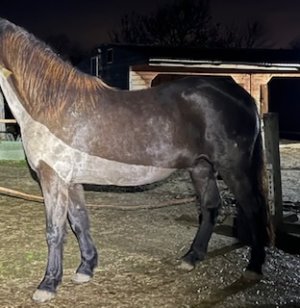
I've posted a few times about my weird now-not-so-little Connemara - moves weirdly behind, flinches when touched, completely intolerant of training, won't move forwards, gets incredibly worried or explodes a bit then gets angry when he is moving, always a bit feral, but a lovely sweet kind honest horse and moves beautifully when he does move. 5 years old and barely any education due to the above. We have been tackling liver issues linked to liver fluke and elevated iron, plus copper deficiency, and although GGT has dropped from 1000 to just over 100, his symptoms all still remain. I also posted a lot about my last horse, the stunning bonkers black pony (BBP) who had a world of weird issues and who I devastatingly lost in 2024. Turns out they both have more in common than being weird black ponies. Before he died, BBP had a few blood tests showing him to be vitamin E deficient, despite significant supplementation with natural vitamin E. I did a few posts about it back in the day. Now blood serum vitamin E results are back for my big lad, and he is extremely deficient. I deliberately stopped his bonus supplemented Vitamin E 2 weeks before the blood was taken, to see where we were at on Pro-Earth Hay Boost balancer and strip grazed grazing in the day (with a muzzle) and hay/straw at night and to see if extra supplementation was actually necessary. These are the reference ranges I found proposed online.
I'm a bit shocked at how low his Vit E levels are. He is well below 1 ug/mL. Into the range that can lead to equine motor neurone disease. We think he must have an issue absorbing it, same as BBP, so will be gaining nutritionist advice on how to increase absorption (suspected possible gut issues due to redworm and liver fluke running riot before he came to me). The Pro-Earth hay boost balancer only contains 1,500iu but until 2 weeks ago he was probably on 5000iu a day. I have also just ordered the whole gamut of 'PSSM' testing, to see if there is a link, although I'm not a huge Equiseq fan.
As my sister says, this is now the next layer in the onion to unpeel in the journey to helping him feel better. So I have officially (in my head) renamed him Onion, and my many layered arab mare Charlotte (shallot, geddit?!). I'll get her vitamin E done next time vets are out to check if its just him or an issue across the board, but she gets more grass than him.
Here's to making some progress with Onion and Charlotte in 2026!
I've posted a few times about my weird now-not-so-little Connemara - moves weirdly behind, flinches when touched, completely intolerant of training, won't move forwards, gets incredibly worried or explodes a bit then gets angry when he is moving, always a bit feral, but a lovely sweet kind honest horse and moves beautifully when he does move. 5 years old and barely any education due to the above. We have been tackling liver issues linked to liver fluke and elevated iron, plus copper deficiency, and although GGT has dropped from 1000 to just over 100, his symptoms all still remain. I also posted a lot about my last horse, the stunning bonkers black pony (BBP) who had a world of weird issues and who I devastatingly lost in 2024. Turns out they both have more in common than being weird black ponies. Before he died, BBP had a few blood tests showing him to be vitamin E deficient, despite significant supplementation with natural vitamin E. I did a few posts about it back in the day. Now blood serum vitamin E results are back for my big lad, and he is extremely deficient. I deliberately stopped his bonus supplemented Vitamin E 2 weeks before the blood was taken, to see where we were at on Pro-Earth Hay Boost balancer and strip grazed grazing in the day (with a muzzle) and hay/straw at night and to see if extra supplementation was actually necessary. These are the reference ranges I found proposed online.
- Normal is considered above 2 ug/mL (200 ug/dL).
- Marginally deficient is 1.5 ug/mL (150 ug/dL).
- Severely deficient is 1 ug/mL (100 ug/dL) or below.
- Recommended range for the average performance horse is 3 ug/mL to 5 ug/mL (300 ug/dL to 500 ug/dL).
I'm a bit shocked at how low his Vit E levels are. He is well below 1 ug/mL. Into the range that can lead to equine motor neurone disease. We think he must have an issue absorbing it, same as BBP, so will be gaining nutritionist advice on how to increase absorption (suspected possible gut issues due to redworm and liver fluke running riot before he came to me). The Pro-Earth hay boost balancer only contains 1,500iu but until 2 weeks ago he was probably on 5000iu a day. I have also just ordered the whole gamut of 'PSSM' testing, to see if there is a link, although I'm not a huge Equiseq fan.
As my sister says, this is now the next layer in the onion to unpeel in the journey to helping him feel better. So I have officially (in my head) renamed him Onion, and my many layered arab mare Charlotte (shallot, geddit?!). I'll get her vitamin E done next time vets are out to check if its just him or an issue across the board, but she gets more grass than him.
Here's to making some progress with Onion and Charlotte in 2026!