Heat Kills Australian Horses

It was 2003 when I worked in the Northern Territory and I was surprised by how much water there was. They had lots of bore water and we done regular rounds of the troughs to make sure the animals had water. Out mustering we'd often find (smell first!) carcases of stock that had jumped/broken into dry paddocks (no troughs) and not been able to get back out. That was heartbreaking…

We had a good supply of big bales of alfa/Lucerne and when the horses were brought into work they were fed Lucerne chaff and copra/coolstance in nosebags.

The stock done surprisingly well on the arid land. During the wet it went green but prior to that it was all red dust and brown twigs yet most of the stock was in good condition. At that time the station as owned by the Sultan of Brunei so they'd fatten up bullocks and hand pick the best to go to the feedlots in Darwin to be intensively fattened and then be 6wks on a ship to Indonesia (all things I was ignorant to at the time). We had a creek (complete with crocs!) at the back of the station and it never ran dry that I know of.

I can't put into words how vast Australia is and I don't think it can be appreciated unless you do go to the outback. Different parts of the country are better for different types of stock. Greener areas have sheep and in the north it was mainly Bramham cattle because they are hardy and meant for those climates. Like most developed countries they can't farm in the fertile areas because that is where they built cities and developed the towns.

The main station I worked on was Scott Creek Station, if you google it there used to be a lot of images because it was put up for sale. It was 1 million acres and running 40,000 head (plus all the ferals and cross breeds) so it gives you an idea of the sizes.
 
It was 2003 when I worked in the Northern Territory and I was surprised by how much water there was. They had lots of bore water and we done regular rounds of the troughs to make sure the animals had water. Out mustering we'd often find (smell first!) carcases of stock that had jumped/broken into dry paddocks (no troughs) and not been able to get back out. That was heartbreaking…

We had a good supply of big bales of alfa/Lucerne and when the horses were brought into work they were fed Lucerne chaff and copra/coolstance in nosebags.

The stock done surprisingly well on the arid land. During the wet it went green but prior to that it was all red dust and brown twigs yet most of the stock was in good condition. At that time the station as owned by the Sultan of Brunei so they'd fatten up bullocks and hand pick the best to go to the feedlots in Darwin to be intensively fattened and then be 6wks on a ship to Indonesia (all things I was ignorant to at the time). We had a creek (complete with crocs!) at the back of the station and it never ran dry that I know of.

I can't put into words how vast Australia is and I don't think it can be appreciated unless you do go to the outback. Different parts of the country are better for different types of stock. Greener areas have sheep and in the north it was mainly Bramham cattle because they are hardy and meant for those climates. Like most developed countries they can't farm in the fertile areas because that is where they built cities and developed the towns.

The main station I worked on was Scott Creek Station, if you google it there used to be a lot of images because it was put up for sale. It was 1 million acres and running 40,000 head (plus all the ferals and cross breeds) so it gives you an idea of the sizes.
I don't understand why people like the sultan of Brunei or the Chinese government are buying so much Australian farmland. Surely the increasing drought doesn't bode well for the future. Will farms with 40,000 cattle on them be sustainable in the future?
Are the foreign buyers all using the land for farming or have they other plans?
 
China has also bought up large parts of Africa-for agriculture and/or minerals-something that Australia also has so maybe thats it? I've not been to Australia for 20 years, I loved the place it really is something else but it looks like its changed massively economically at least.
 
I don't understand why people like the sultan of Brunei or the Chinese government are buying so much Australian farmland. Surely the increasing drought doesn't bode well for the future. Will farms with 40,000 cattle on them be sustainable in the future?
Are the foreign buyers all using the land for farming or have they other plans?

lol, there is a limit to what you can do with vast tracts of land in the Northern Territory. The main purpose is income from farming, do the place up, and sell eventually for more than you paid for it. Doesn't always work that way of course, but quite a few foreign-owned stations have now come back into Australian hands. The one TPO worked on was one of several Gina Rinehart's Hancock Prospecting scooped up just in the last few years. And no - I don't think she brought them for mining - she controls massive land leases in Western Australia too. Cattle are bred in these far off places and then come to properties in easier land for finishing. Of course some of their properties have mining operations too - that's where the big money is - but you can't mine a couple of hundred thousand acres all at the same time. Cattle graze part, mines in other parts, and I guess they just then move around - finish mining 1,000 acres, rejuvenate it, and 2 years later it's grazing cattle.
 
It was 2003 when I worked in the Northern Territory and I was surprised by how much water there was. They had lots of bore water and we done regular rounds of the troughs to make sure the animals had water. Out mustering we'd often find (smell first!) carcases of stock that had jumped/broken into dry paddocks (no troughs) and not been able to get back out. That was heartbreaking…

We had a good supply of big bales of alfa/Lucerne and when the horses were brought into work they were fed Lucerne chaff and copra/coolstance in nosebags.

The stock done surprisingly well on the arid land. During the wet it went green but prior to that it was all red dust and brown twigs yet most of the stock was in good condition. At that time the station as owned by the Sultan of Brunei so they'd fatten up bullocks and hand pick the best to go to the feedlots in Darwin to be intensively fattened and then be 6wks on a ship to Indonesia (all things I was ignorant to at the time). We had a creek (complete with crocs!) at the back of the station and it never ran dry that I know of.

I can't put into words how vast Australia is and I don't think it can be appreciated unless you do go to the outback. Different parts of the country are better for different types of stock. Greener areas have sheep and in the north it was mainly Bramham cattle because they are hardy and meant for those climates. Like most developed countries they can't farm in the fertile areas because that is where they built cities and developed the towns.

The main station I worked on was Scott Creek Station, if you google it there used to be a lot of images because it was put up for sale. It was 1 million acres and running 40,000 head (plus all the ferals and cross breeds) so it gives you an idea of the sizes.

The NT has a fairly reliable wet season, they are well prepared for that and store water when it does rain (in saying that, it has been unusually dry this year up there). The wet season up there is absolutely stunning, as is the contrast of the dry outback. An amazing place! Horsekeeping up there isn't like England, they live quite happily on red dirt and hay and in huge paddocks. The stations owned by foreigners generally do very well because they usually have a lot of outside money coming in to pay for stock feed and water, whatever the cost! Added to that, the breed of cattle (usually Brahman crosses) have been selectively bred to withstand the harsh conditions with as much condition on as possible. They would probably not thrive as well on good pasture.

I don't understand why people like the sultan of Brunei or the Chinese government are buying so much Australian farmland. Surely the increasing drought doesn't bode well for the future. Will farms with 40,000 cattle on them be sustainable in the future?
Are the foreign buyers all using the land for farming or have they other plans?

Foreign buyers (mostly the Chinese at the moment) are buying into Australias vast tracts of land to ensure a food supply for their own countries. China has no room to raise cattle for billions of people, so they buy in other countries and Australian interests happen to be quite willing to sell to the highest bidder which in most cases is China, this is something that has been largely ignored/not controlled by the government. They raise the cattle and export to China, big business! There isn't much else you can do with this land, its basically useless for everything else (unless you happen to find a mineral deposit somewhere).

In good years, the stations have much more than 40k cattle, if you keep in mind how vast the areas are, there is usually sufficient room per animal to sustain them quite well. The longer and harsher droughts of today are challenging this unfortunately. But as I said above, the foreign owned stations have the monetary backing to get them through .

China has also bought up large parts of Africa-for agriculture and/or minerals-something that Australia also has so maybe thats it? I've not been to Australia for 20 years, I loved the place it really is something else but it looks like its changed massively economically at least.

Minerals probably less so now, the big mines are exhausting known stocks. Fortunately it seems Australia has woken up to the fact that foreign ownership is largely detrimental and people like Gina Rinehart with the financial means to buy are snapping the properties up again to ensure local ownership. Just need to find the local billionaires to buy more up :P
 
IMG_3549_small.JPG
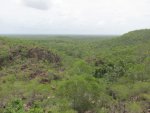
Dug out some pictures! Above is the Western edge of Litchfield National Park (NT) in January during the wet season. All that nothingness beyond are part of cattle stations to the West. You can drive through a few thousands kms of nothing until you eventually get to the West Coast at some point.

IMG_3611_small.JPG
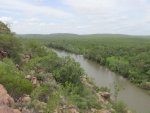
^This is Katherine Gorge in the Nitmiluk National Park, a few hours of driving South Inland in the NT. Same deal as above, most of what you see is cattle country. This river has mainly freshwater crocodiles (harmless really) but in really wet seasons the big saltwater giants can come this far down.
 
View attachment 29367
Dug out some pictures! Above is the Western edge of Litchfield National Park (NT) in January during the wet season. All that nothingness beyond are part of cattle stations to the West. You can drive through a few thousands kms of nothing until you eventually get to the West Coast at some point.

View attachment 29368
^This is Katherine Gorge in the Nitmiluk National Park, a few hours of driving South Inland in the NT. Same deal as above, most of what you see is cattle country. This river has mainly freshwater crocodiles (harmless really) but in really wet seasons the big saltwater giants can come this far down.
I get why people want to buy the land now. My imagination had run away with me. I was imagining hundreds and thousands of miles of barren wasteland (in a sci fi apocalyptic way) :oops:

I like the idea of being able to drive through thousands of km of nothingness. There's something special about that degree of isolation.
 
I get why people want to buy the land now. My imagination had run away with me. I was imagining hundreds and thousands of miles of barren wasteland (in a sci fi apocalyptic way) :oops:

I like the idea of being able to drive through thousands of km of nothingness. There's something special about that degree of isolation.

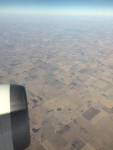
Your imagination is not wrong at the moment! Further South of those photos and the seasons change and rain is rare. This is a photo I took on my way home a few weeks ago, of South Australia near the Bight (South of the continent). Things are desperately dry and dusty down there. Further inland is even worse, barren with a few shrubs clinging to life. Our Bureau of Meteorology have just released their climate summary for January, it has been the hottest January on record and the most places where heat records have fallen. Don't think it'll get cooler in the next few years either :/

1549069254269.png
 
  • Like
Reactions: TPO
Your imagination is not wrong at the moment! Further South of those photos and the seasons change and rain is rare. This is a photo I took on my way home a few weeks ago, of South Australia near the Bight (South of the continent). Things are desperately dry and dusty down there. Further inland is even worse, barren with a few shrubs clinging to life. Our Bureau of Meteorology have just released their climate summary for January, it has been the hottest January on record and the most places where heat records have fallen. Don't think it'll get cooler in the next few years either :/

View attachment 29369
It does look parched . I can't get over the idea of all the empty space you mentioned earlier. That really appeals to me.
 
We had a couple days of 50. With 35 min overnight temp. Horrendous.
40 is the new 30 apparently.
I was in 40 degrees in Egypt on holiday years ago. I though I was going to pass out. Back then the only part of Cairo museum that was air-conditioned was the mummy room so I spend hours in there. I think the museum security must have thought I was a bit odd :p
40 is bad enough but 50 degrees is insane.
 
It does look parched . I can't get over the idea of all the empty space you mentioned earlier. That really appeals to me.

It's quite hard to get your head around. Beautiful, harsh and dangerous landscapes all at the same time. If you ever have the opportunity to visit the outback, I highly recommend! Yes the days are very hot, but the nights tend to cool off nicely and it is stunning :D
 
Its forecast to get up to 30 and windy here in Tassie and everyone once again looking suspiciously at the uncontrolled fire in the next valley... Wind has been favourable for our area so far, I hope it stays that way!
 
Just to bump this one back up, we have now had record rainfalls in Far North Queensland. To give an idea of scale, in 10 days some areas received over 2000mm of rain, which for other places in Australia is total rainfall expected over a 15 year period... Crazy weather! It rained here finally last night, big help towards dousing the four major bushfires still burning.

This is just a picture I found which shows 4-5 major river systems converging into a huge inland sea.
1549501713023.png
 
  • Like
Reactions: Aru
Just to bump this one back up, we have now had record rainfalls in Far North Queensland. To give an idea of scale, in 10 days some areas received over 2000mm of rain, which for other places in Australia is total rainfall expected over a 15 year period... Crazy weather! It rained here finally last night, big help towards dousing the four major bushfires still burning.

This is just a picture I found which shows 4-5 major river systems converging into a huge inland sea.
View attachment 29466
I saw that picture on FB. I've got friend's in Emerald, where it's still bone dry, but one of my friend's has posted the pics and vids of the Townsville floods. It's crazy isn't it? I hope all people and animals stay safe. I know I'd be terrified about the crocs and snakes washing into town <eek>
 
I saw that picture on FB. I've got friend's in Emerald, where it's still bone dry, but one of my friend's has posted the pics and vids of the Townsville floods. It's crazy isn't it? I hope all people and animals stay safe. I know I'd be terrified about the crocs and snakes washing into town <eek>

I saw a photo of a big croc in a street :oops:
 
Its dreadful, friend outside Perth has posted photos of huge fires locally, her daughter and family has had to evacuate this morning, really feel for them! Friend has large acreage for retirement agistment, been offering place of safety to other equine owners.
 
  • Like
Reactions: TPO
Its dreadful, friend outside Perth has posted photos of huge fires locally, her daughter and family has had to evacuate this morning, really feel for them! Friend has large acreage for retirement agistment, been offering place of safety to other equine owners.

TFF I hope your friend will be ok and as much saved as possible. The start of this year just seems to be weather extremes, I am not looking forward to the future in regards to that...
 
Its dreadful, friend outside Perth has posted photos of huge fires locally, her daughter and family has had to evacuate this morning, really feel for them! Friend has large acreage for retirement agistment, been offering place of safety to other equine owners.


Thankfully that fire has been contained, I am glad your friend is ok! Very scary for lots of horse owners, and very close to the built up areas.
 
And we finally got some rain down here, has helped the massive fires here too :D Still will take a while to extinguish fully, but well on their way to OUT!

There was tiny bit of rain in Adelaide a couple of days ago but other than that it is still bone dry! Didn't think I would miss UK rain but a bit of me kind of does.....
 
Boy, did we get rain here last night. Extreme thunderstorm. 40mm in 30mins. The power went out, the wind blew a roof tile off, the roof cavity filled with rainwater and a big chunk of ceiling collapsed with a big wet whoosh. Still, urban dwellers, we’ll be fine.

A lot of my clients are country people dealing with drought, fire and flood at the moment. The stories I’m hearing are heartbreaking. Calves having to be shot because they can’t feed, because their mother’s udders are underwater, they’ve been stuck in the same spot for days and there isn’t higher ground to move to. Others have no water, no grazing, can’t get feed in, no money left to buy it anyway. We’ve always been a place of extremes but it seems particularly crazy at the moment.
 
The lead story in The Guardian was the discovery that the majority of insect life is on the verge of extinction.

Subsequently birds, snakes and other animals will starve and the vital part of the chain of nature which insects provides will be broken., with consequences that no one can foresee.

We are on the edge of dramatic changes in life on this planet and that the foreseeable future is going to include more climatic trouble, more loss of human life and the suffering of countless animals.
 
Top