
TPO
Fly paper for freaks 🍀
It was 2003 when I worked in the Northern Territory and I was surprised by how much water there was. They had lots of bore water and we done regular rounds of the troughs to make sure the animals had water. Out mustering we'd often find (smell first!) carcases of stock that had jumped/broken into dry paddocks (no troughs) and not been able to get back out. That was heartbreaking…
We had a good supply of big bales of alfa/Lucerne and when the horses were brought into work they were fed Lucerne chaff and copra/coolstance in nosebags.
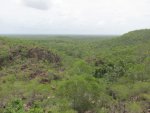
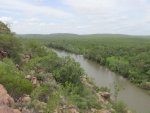
The stock done surprisingly well on the arid land. During the wet it went green but prior to that it was all red dust and brown twigs yet most of the stock was in good condition. At that time the station as owned by the Sultan of Brunei so they'd fatten up bullocks and hand pick the best to go to the feedlots in Darwin to be intensively fattened and then be 6wks on a ship to Indonesia (all things I was ignorant to at the time). We had a creek (complete with crocs!) at the back of the station and it never ran dry that I know of.
I can't put into words how vast Australia is and I don't think it can be appreciated unless you do go to the outback. Different parts of the country are better for different types of stock. Greener areas have sheep and in the north it was mainly Bramham cattle because they are hardy and meant for those climates. Like most developed countries they can't farm in the fertile areas because that is where they built cities and developed the towns.
The main station I worked on was Scott Creek Station, if you google it there used to be a lot of images because it was put up for sale. It was 1 million acres and running 40,000 head (plus all the ferals and cross breeds) so it gives you an idea of the sizes.
We had a good supply of big bales of alfa/Lucerne and when the horses were brought into work they were fed Lucerne chaff and copra/coolstance in nosebags.
The stock done surprisingly well on the arid land. During the wet it went green but prior to that it was all red dust and brown twigs yet most of the stock was in good condition. At that time the station as owned by the Sultan of Brunei so they'd fatten up bullocks and hand pick the best to go to the feedlots in Darwin to be intensively fattened and then be 6wks on a ship to Indonesia (all things I was ignorant to at the time). We had a creek (complete with crocs!) at the back of the station and it never ran dry that I know of.
I can't put into words how vast Australia is and I don't think it can be appreciated unless you do go to the outback. Different parts of the country are better for different types of stock. Greener areas have sheep and in the north it was mainly Bramham cattle because they are hardy and meant for those climates. Like most developed countries they can't farm in the fertile areas because that is where they built cities and developed the towns.
The main station I worked on was Scott Creek Station, if you google it there used to be a lot of images because it was put up for sale. It was 1 million acres and running 40,000 head (plus all the ferals and cross breeds) so it gives you an idea of the sizes.






 Her daughter has lost her house 15k away tho, but fires have turned now.

