How to find Mr Bean?!

ThreeWBs

Well-Known Member
Joined
31 August 2016
Messages
183
Visit site
My horse has a bean that needs to be removed. It’s fairly large and must be uncomfortable.

If I even glance at his manhood, it’s tucked away before I can even get close. I’ve cleaned all of his sheath with no dramas, but I can’t get to the bean.

Has anyone got any tips or tricks?

Thanks!
 
What do you clean it with? I find fiddling about up in there with baby oil or Vaseline gives them a tickly sensation that they erm enjoy and it all flops out. :oops::oops:

I then usually just grab the end pop the bean out and give treats in the form of an apology lol has worked for the vast majority of geldings I’ve cleaned.
 
Get the bean lady out! (which reminds me our boys need doing)

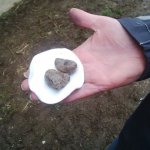
View attachment 47091

Found last time she came!

The 'bean lady' has nails? :eek:

I usually do it myself, they do mostly tuck it all away, but you only have to go elbow deep, even with a 17.2. There was a good write up of this somewhere, I will try to find it...
 
I'm a semi-professional willy washer... here's a wee willy guide I wrote...

A Beginner's Guide to Willy Washing
Katherine Royce
Clean As A Whistle

Why clean the sheath?

The membranes of the penis and sheath produce a lubricating substance called smegma. This, combined with dead skin and dirt, can build up in the sheath, as crusty scab-like lumps, thick grease, or leathery layers, which can be irritating and uncomfortable to the horse.

The sheath is a bacterial environment (like a vagina) and if the bacterial flora become imbalanced, an excessive build-up of foul-smelling greasy material can coat the inside of the sheath, and even leak out to stain the hind legs.

The highly extendable/retractable nature of the horse's penis creates a lot of folds, nooks and crannies that matter can accumulate in. Smegma and other secretions can lodge in pockets around the urethra, at the head of the penis, where they form lumps called "beans." These can be of a waxy consistency, or as hard as gravel, and if not removed, continue to increase in size. The "average" bean is between the size of an almond and a Brazil nut - but I've removed beans the size of golf balls.
Beans are, at best, uncomfortable for the horse, and at worst, very painful. They can potentially block the flow of urine, and may cause behavioural issues or compromised movement in the horse's back end.

It is advisable to at least check your horse's sheath at least once a year, and to clean if necessary, to remove these accumulations of material. Some horses will go a lifetime without ever needing a clean. Others will need a clean every few months for their health and comfort.

Some horses (especially greys) can also develop cancerous growths such as melanomas in the sheath, so regular checks can also detect and monitor these growths.


How to clean the sheath

*Safety Warning* Most horses are fairly agreeable to having their sheath cleaned, or will at least tolerate it without too much fuss. Only very few will have serious objections. Your safety is more important that success, so be careful and patient, and if you feel the situation is becoming dangerous, please stop! Some horses will require sedation and expert help - there is no shame in admitting this.

You will need:
- a bucket of water (warm if you're nice)
- a soft cloth (Chux or similar)
- surgical-type gloves
- water-based lubricant (Wetstuff, KY Jelly etc)

Be aware that most horses will not drop their willy out for a clean - you're going to need to go up after it. This can be a little disconcerting for the horse, so your calmness and confidence is important for them to relax and allow you to proceed. Fake it if necessary!

To assess a horse's probable reaction, stand at their shoulder facing backwards, and with one hand on the horse's back, calmly and firmly run your other hand along the stomach towards the sheath, and feel all around and over the sheath. Don't lean too far forward, or your head is in range of angry hind legs. If the horse stands relaxedly, continue. If they swish their tail, stamp their feet, or try to kick, desensitisation is advised before continuing with the clean.

Wearing a glove, repeat this procedure, gently running your fingers into the sheath. If the horse remains calm, wet your hand and squirt on some lubricant. Insert your fingers into the sheath (a pouch about the size of a fist) and work your fingers around, removing any chunks, grit or greasy material that you find. Once you've picked out all you can, wet your cloth and wipe out the sheath - this will remove any greasy smegma you missed.

Relube your hand, and get ready to go deeper. At the back of that fist-shaped pouch is an opening to a smaller cavity - this is where the willy is probably lurking. This area also accumulates matter, so you need to clear that out too. At this point, expect to be in up to your wrist. Once the second chamber is clean, it's time for the willy itself. You're fumbling around for something that feels a bit like a squishy tennis ball. Grab it (gently!).

*Please note, even horses that have been calm up to this point may react to this intrusion, so stay alert and safe*

Feel around the surface of the willy. Flakes and chunks of dead skin are often stuck to the skin - carefully remove them, remembering that this skin is very sensitive! Be thorough - work your way from head to root, and all around - there are a few nooks and crannies back here!

Finally, we'll look for beans. Grasp the head of the willy and squeeze gently. You may feel a hard lump. Work a finger (again, gently!) into the opening at the head of the willy, and rotate it around, hooking out any hard lumps or waxy deposits you find. If the bean is very large, you might need to try to squeeze it out, or break it into smaller chunks.

This procedure is the most challenging for the horse - it is very uncomfortable or painful, if the bean is large. You want to be as quick and painless as possible, but it's ok to give the horse a break if he starts to get stressed, and just give him a pat and let him breathe.

Once all beans are removed, check you haven't missed anything in the sheath. You can hose the sheath out, if the horse doesn't object, but this isn't necessary - water-based lubricant is designed to be left on sensitive skin without causing irritation.
Congratulations! You and your horse now deserve a glass of wine!

Found this one, but it was not the funny one I was looking for.
 
[IMG]https://forums.horseandhound.co.uk/data/avatars/m/41/41903.jpg?1538043848[/IMG]
ruscara
Well-Known Member
JoinedOct 10, 2005Messages8,299Locationhampshire
Explanation of the Bean:

MR. Hand

1.Check to make sure there are no prospective boyfriends, elderly neighbors, or brownie troops with a line of sight to the proceedings. Though of course, they're going to show up unexpectedly ANYWAY once you're in the middle of things. Prepare a good explanation.

2. Trim your fingernails short. Assemble horse, hose, and your sense of humor (plus, ideally, Excalibur cleanser and perhaps thin rubber gloves).

3. Use hose (or damp sponge) to get the sheath and its inhabitant wet. Uh, that is, do this in a *civilized* fashion with due warning to the horse; he is apt to take offense if an icy-cold hose blasts unexpectedly into his personal regions.

4. Now introduce your horse to Mr. Hand. What I find safest is to stand facing the horse's head, with my shoulder and hip snugly against the horse's thigh and hip so that if he makes any suspicious move such as raising his leg, I can feel it right away and am in any case pressed so close that all he can do is shove, not really kick. The horse should be held by an assistant or by your free hand, not tied fast to a post or in crossties. He may shift around a good bit if he's not happy with Mr. Hand's antics, but don't be put off by that; as long as you are patient and gradual, and stick close to his side, he'll get over it.Remember it would be most unlady like of you to simply make a direct grab for your horse's part. Give the horse a clue about what's on the program. Rest your hand against his belly, and then slide it back till you are entering the Home of the Actual Private Part. When you reach this first region of your destination, lube him up good with Excalibur or whatever you are using.

5. If the outer part of his sheath is really grungy you will feel little clods and nubblies of smegma peeling off as you grope around in there. Patiently and gently expedite their removal. thus far, you have probably only been in the outer part of the sheath. The Part itself, you'll notice, is strangely absent. That's because it has shyly retired to its inner chambers. Roll up your sleeves and follow in after it.

6. As you and Mr. Hand wend your way deeper into the sheath, you will encounter what feels like a small portal that opens up into a chamber beyond. Being attentive to your horse's reaction, invite yourself in. You are now in the Inner Sanctum of the Actual Private Part. It's hiding in there, towards the back, trying to pretend it isn't there. Say hi, and wave to it. No, really, work your finger back and forth around the sides of it. If the horse won't drop, this is your only shot at removing whatever dried smegma is clinging to the surface of the Part itself. So, gently explore around it, pulling out whatever crusty topsoil you find there. Use more water and more Excalibur if necessary to loosen attached gunk.

7. When Mr. Hand and the Actual Private Part have gotten to know each other pretty well, and the Part feels squeaky clean all around, there remains only one task: checking for and removing the bean. The bean is a pale, kidney-shaped accumulation of smegma in a small pouch just inside the urethra. Not all horses accumulate a bean, but IME the majority do, even if they have no visible external smegma.
So: the equine urethra is fairly large diameter, and will indeed permit you to very gently insinuate one of your slimmer fingers inside the urethral opening. Do so, and explore upwards for what will feel like a lump or *pea* buried no more than, I dunno, perhaps 3/4" in from the opening. If you do encounter a bean, gently and sympathetically persuade it out with your finger. This may require a little patience from both Mr. Hand AND the horse, but the horse will be happier and healthier once it's accomplished. In the rare event that the bean is too enormous for your finger to coax out, you might try what I did (in desperation) last month on the orange horse. Wrap thumb and index finger around the end of the Part and squeeze firmly to extrude the bean. Much to my surprise it worked and orange horse did NOT kill me for doing it and he does not seem to have suffered any permanent damage as a result. I have never in my life seen another bean that enormous, though.

8. Now all that's left to do is make a graceful exit and rinse the area very thoroughly in apology for the liberties you've taken. A hose will be MUCH easier to use here than a bucket and sponge, IME. Make sure to direct the water into the Part's inner retreat too, not merely the outer part of the sheath.
This may require you to enfold the end of the hose in your hand and guide it up there personally.

9. Ta-Da, you are done! say *good horsey* and feed him lots of carrots. Watch him make lots of funny faces at the way your hands smell. HHhhmmm. Well, perhaps there is ONE more step......

10. The only thing I know of that is at all effective in removing the lovely fragrance of smegma from your hands (fingernails, arms, elbows and wherever else it has gotten) is Excalibur. Even then, if you didn't use gloves you may find you have an unusual personal perfume for awhile. So, word to the wise, do NOT clean your horse's sheath just before an important job interview or first date.
And of course, there is the FINAL step....

11. Figure out how to explain all this to your mother (or the kid next door, or the meter reader, or whoever else you've just realized has been standing in the barn doorway speechlessly watching the whole process.)
Now, thou go forth and clean the Part."
 
[IMG]https://forums.horseandhound.co.uk/data/avatars/m/41/41903.jpg?1538043848[/IMG]
ruscara
Well-Known Member

JoinedOct 10, 2005Messages8,299Locationhampshire
Explanation of the Bean:

MR. Hand

1.Check to make sure there are no prospective boyfriends, elderly neighbors, or brownie troops with a line of sight to the proceedings. Though of course, they're going to show up unexpectedly ANYWAY once you're in the middle of things. Prepare a good explanation.

2. Trim your fingernails short. Assemble horse, hose, and your sense of humor (plus, ideally, Excalibur cleanser and perhaps thin rubber gloves).

3. Use hose (or damp sponge) to get the sheath and its inhabitant wet. Uh, that is, do this in a *civilized* fashion with due warning to the horse; he is apt to take offense if an icy-cold hose blasts unexpectedly into his personal regions.

4. Now introduce your horse to Mr. Hand. What I find safest is to stand facing the horse's head, with my shoulder and hip snugly against the horse's thigh and hip so that if he makes any suspicious move such as raising his leg, I can feel it right away and am in any case pressed so close that all he can do is shove, not really kick. The horse should be held by an assistant or by your free hand, not tied fast to a post or in crossties. He may shift around a good bit if he's not happy with Mr. Hand's antics, but don't be put off by that; as long as you are patient and gradual, and stick close to his side, he'll get over it.Remember it would be most unlady like of you to simply make a direct grab for your horse's part. Give the horse a clue about what's on the program. Rest your hand against his belly, and then slide it back till you are entering the Home of the Actual Private Part. When you reach this first region of your destination, lube him up good with Excalibur or whatever you are using.

5. If the outer part of his sheath is really grungy you will feel little clods and nubblies of smegma peeling off as you grope around in there. Patiently and gently expedite their removal. thus far, you have probably only been in the outer part of the sheath. The Part itself, you'll notice, is strangely absent. That's because it has shyly retired to its inner chambers. Roll up your sleeves and follow in after it.

6. As you and Mr. Hand wend your way deeper into the sheath, you will encounter what feels like a small portal that opens up into a chamber beyond. Being attentive to your horse's reaction, invite yourself in. You are now in the Inner Sanctum of the Actual Private Part. It's hiding in there, towards the back, trying to pretend it isn't there. Say hi, and wave to it. No, really, work your finger back and forth around the sides of it. If the horse won't drop, this is your only shot at removing whatever dried smegma is clinging to the surface of the Part itself. So, gently explore around it, pulling out whatever crusty topsoil you find there. Use more water and more Excalibur if necessary to loosen attached gunk.

7. When Mr. Hand and the Actual Private Part have gotten to know each other pretty well, and the Part feels squeaky clean all around, there remains only one task: checking for and removing the bean. The bean is a pale, kidney-shaped accumulation of smegma in a small pouch just inside the urethra. Not all horses accumulate a bean, but IME the majority do, even if they have no visible external smegma.
So: the equine urethra is fairly large diameter, and will indeed permit you to very gently insinuate one of your slimmer fingers inside the urethral opening. Do so, and explore upwards for what will feel like a lump or *pea* buried no more than, I dunno, perhaps 3/4" in from the opening. If you do encounter a bean, gently and sympathetically persuade it out with your finger. This may require a little patience from both Mr. Hand AND the horse, but the horse will be happier and healthier once it's accomplished. In the rare event that the bean is too enormous for your finger to coax out, you might try what I did (in desperation) last month on the orange horse. Wrap thumb and index finger around the end of the Part and squeeze firmly to extrude the bean. Much to my surprise it worked and orange horse did NOT kill me for doing it and he does not seem to have suffered any permanent damage as a result. I have never in my life seen another bean that enormous, though.

8. Now all that's left to do is make a graceful exit and rinse the area very thoroughly in apology for the liberties you've taken. A hose will be MUCH easier to use here than a bucket and sponge, IME. Make sure to direct the water into the Part's inner retreat too, not merely the outer part of the sheath.
This may require you to enfold the end of the hose in your hand and guide it up there personally.

9. Ta-Da, you are done! say *good horsey* and feed him lots of carrots. Watch him make lots of funny faces at the way your hands smell. HHhhmmm. Well, perhaps there is ONE more step......

10. The only thing I know of that is at all effective in removing the lovely fragrance of smegma from your hands (fingernails, arms, elbows and wherever else it has gotten) is Excalibur. Even then, if you didn't use gloves you may find you have an unusual personal perfume for awhile. So, word to the wise, do NOT clean your horse's sheath just before an important job interview or first date.
And of course, there is the FINAL step....

11. Figure out how to explain all this to your mother (or the kid next door, or the meter reader, or whoever else you've just realized has been standing in the barn doorway speechlessly watching the whole process.)
Now, thou go forth and clean the Part."
That's hilarious ?
 
goddammit I will have to attempt this at some point, there are some definite plus points to having just mares! a bit of boob crud is easily dealt with :D why did I have to get a gelding?!

I am going to permit myself to wait until after my mare foals, because I have a bottle of lube in the foaling kit so can repurpose that after it is no longer needed :p thanks Red, great post you dug up there!
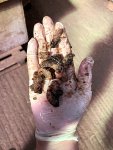
 
Wow, that's a lot of gunk!! Did you notice he was sore or uncomfortable pre-cleaning?

Nothing like that no just smelly. Im frequently pulling hay and straw strands out of it. I think it all hangs out when he’s sleeping and he pulls it all up in There when he wakes :cool: I try not to get all up in there too often as I don’t want him sore. Wee bit of baby oil and it was done in ten mins
 
Arch won't let me anywhere near his bits but I have to clean them regularly due to his melanomas. Sedalin is brilliant as not only does it knock him out, it acts as a muscle relaxant and makes everything hang out.
 
Here's a useful tip that I've never forgotten for getting your hands immaculately clean .
When I was younger and working with horses I asked one of my fellow grooms how she managed to get her hands and nails so beautifully clean , whilst mine always looked so grimy with ingrained dirt that no amount of soaking or scrubbing could shift .
" Oh it's dead easy " she said . " When you get home do some baking . After you've kneaded a load of dough your hands will be lovely and clean ."
 
Last edited:
Top