Cortez
Tough but Fair
The Sarmation civilisation was well before the stirrup., Iron Age.Isn't the stirrup related to archery ..? the Parthian shot .. invented by the Sarmatians.

The Sarmation civilisation was well before the stirrup., Iron Age.Isn't the stirrup related to archery ..? the Parthian shot .. invented by the Sarmatians.


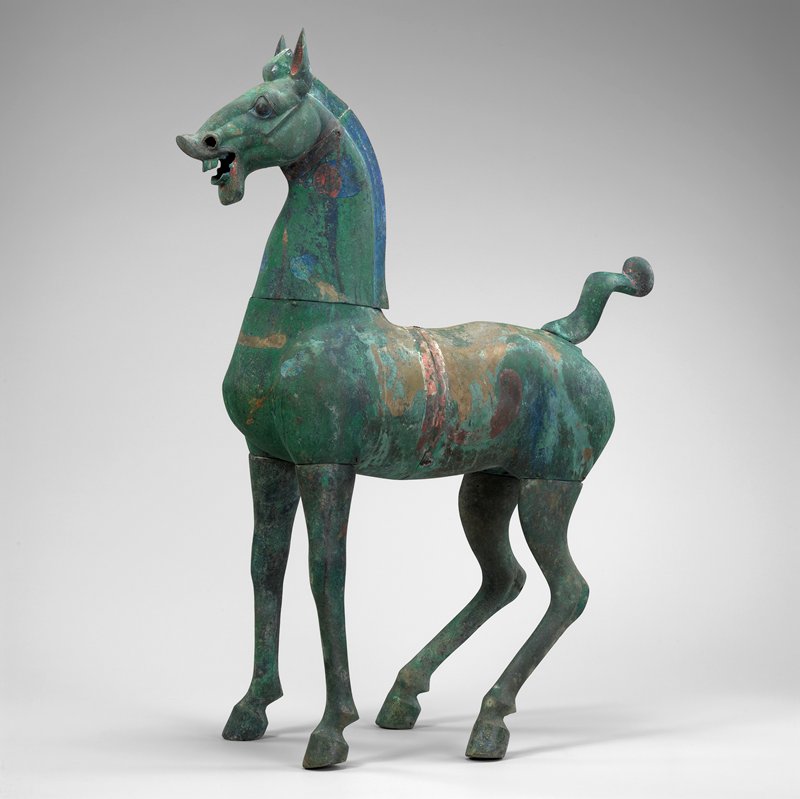
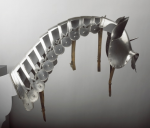
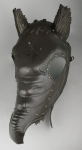
The thing I find puzzling is the images for the Celestial horses all seem to have quite high set on necks.. whereas all the horses / ponies I've seen from central asia seem to have quite different conformation .. also the tail appears to be much higher set on
The real-life counterparts of dragons being..?Representations of lions and dragons in old Chinese art very often do not look much like their real-life counterparts


My mare on a bad day.The real-life counterparts of dragons being..?

The Scythians had stirrups, and were closely related to the Samaritans. They were a nomadic martial civilisation, using mounted archery (men and women) in battle. They are thought to have spread from Siberia to Scandinavia, so I would suggest that was where the Vikings got their stirrups from.The Sarmation civilisation was well before the stirrup., Iron Age.
Current thinking is the Vikings took up stirrups through trade with the east, which could have been....well, anywhere/anyone in that direction, really.The Scythians had stirrups, and were closely related to the Samaritans. They were a nomadic martial civilisation, using mounted archery (men and women) in battle. They are thought to have spread from Siberia to Scandinavia, so I would suggest that was where the Vikings got their stirrups from.
Dinosaurs.The real-life counterparts of dragons being..?
Ah Tim, he was our neighbour in West Cork in the 70's - 80's and I remember him setting off on that trip. The horse didn't last long, and he ended up on an arab, I think? There are better, more scholarly books if you're really interested, but Tim always writes a good adventure.If you're interested in horses in medieval times you might enjoy this book.
View attachment 85694
Was that the guy who tried to do it on an Ardennes? Then realised a horse built for pulling didn't make the best horse for riding.If you're interested in horses in medieval times you might enjoy this book.
View attachment 85694
Ah just cross posted - I remember the story on a heavy horse siteYou are right Cortez, the Ardennes got as far as Istanbul (I think) and had to be sent back to cooler climes.
I wonder if he chose that breed because at the time it was assumed that the crusaders rode big, heavy horses into battle.Was that the guy who tried to do it on an Ardennes? Then realised a horse built for pulling didn't make the best horse for riding.


He did indeed, and my dad tried to talk him out of it.I wonder if he chose that breed because at the time it was assumed that the crusaders rode big, heavy horses into battle.

If you're interested in horses in medieval times you might enjoy this book.
View attachment 85694
He did indeed, and my dad tried to talk him out of it.
I'm so glad you liked this book, I know the author (indeed, my OH and I are included in the dedication) and had many a long talk with him about the history and his adventures in Turkey.Another good "adventure" - I enjoyed The Byerly Turk by Jeremy James. Possible wanderings into the realms of fantasy but none the less fascinating reading about the archery and battle training, and of course, as it says in the intro, this horse lives on in his progeny.
Horses and Saddlery by Major G.Tylden (one of my very favourite books in my collection).