land maintenance - cattle or sheep? Or neither?

samlf

Well-Known Member
Joined
8 August 2011
Messages
749
Location
Kent
Visit site
I'm a little confused. I was under the impression that sheep and cattle do just as much damage on wet ground as (unshod) horses do.

The reason I ask is that a farmer has advised my land owner that my two horses have 'ruined' a field and he is 'very concerned' that it wont recover. But has also advised that highland cattle or sheep would be much more suitable.

I am thinking that having maybe 20 sheep would be just as detrimental to the land as two unshod horses? And as for cattle I thought they were even worse as cloven hooved plus just as heavy as a horse!

Can someone set me straight on this?

This farmer has also said that it's pointless getting the land harrowed to help it recover, which again in my experience I have found it really helpful.

The land isn't really ruined, just very very wet and muddy round the gate. I think he is massively over-reacting as I have seen much worse fields recover easily.

I don't know if there's an ulterior motive but it would be useful to have opinions from those who have experience with livestock vs horses on a field.
 
Well cattle have the same poaching affect (hence ousr are kept in the barns over winter), but sheep don't. And theye at different grasses to horses e.g. soured grass the horseswon't touch. Also horses will eat right down to the roots of grass reducing grow back.

We alternate our horses with cattle to a) manage the grasses ie. reduce soured grass etc. and allow horse-favoured grasses to regrow b) worms- cattle and sheep can digest the worms that affect horses and vice versa.

However, seriously overgrazed land just needs time off to recuperate.

I can see why you might worry about an ulterior motive ie. he wants that land for himself and you don't want the boot..but you and your horses could benefit. :)

Edited to add: the cloven hooves of cattle cause less damage than a shod horse because the pressure is spread out over a greater surface area and the gait of cattle has less impact than horses. (these are observations)
 
Last edited:
IME cattle do just as much damage except that most are kept in during the winter and don't get the chance to! I am in cattle country and those cattle that are out have knackered the grounds although most are on kale/neeps. if its wet enough, sheep will also damage it-depends on size of field and number of sheep. Horses do tend to overgraze though.

some farmers really dislike horses on principle-can't see the point of them. I am now 'trusted' by two local farmers to look after the fields I rent but I have to rotate very regularly to keep them happy and let the ground recover-its wet over here!
 
Sheep are brilliant at rescuing a poached field. They tread down the lumps and bumps and leave a level surface. We have non paying sheep guests every year for this purpose.

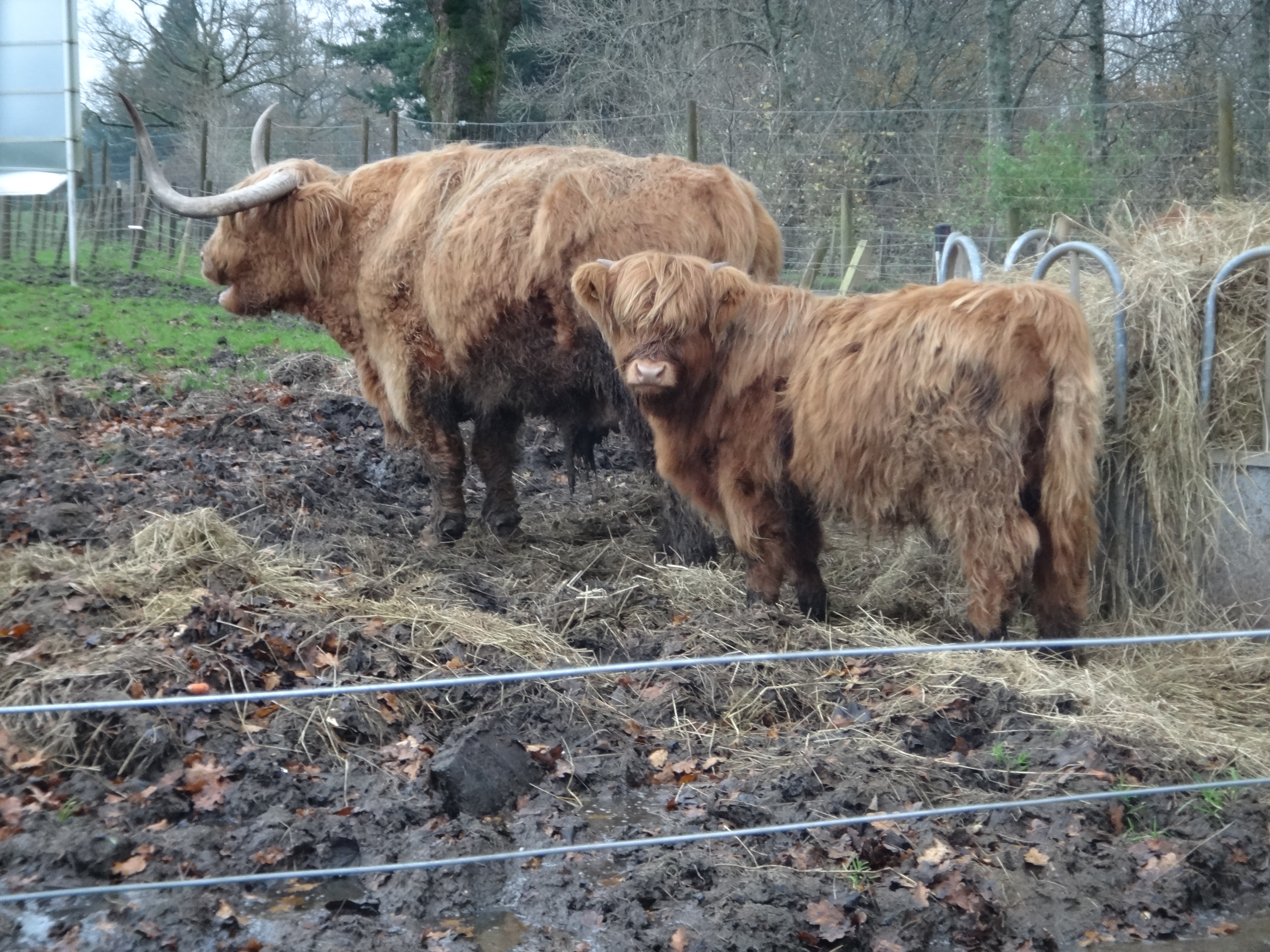
Cattle, IME, are worse at poaching ground than horses. Not sure whether highland cattle are the exception to the rule, but maybe the farmer has some and fancies putting them on your grazing ;).
 
No animal does as much damage as a shod horse unshod horses and cows are I think about the same sheep do less .
Horses are bad grazers though in farmers eyes they establish lawns and roughs which farmers hate .
 
My field that has sheep on looks perfect over 99% of the area - like a bowling green. The only poor areas are where I have fed them hay and haven't rotated where the hay bin feeders are sited and this is bare but not poached. In the summer I use this field to lunge on its so level and nice, the sheep are very light footed, even the huge ram

I would imagine by their sheer weight that cattle would do more damage
 
Cattle poach land terribly, that is why most are kept in yards during the winter - of course farmers have many cattle, it isn't like a couple of horses - or rather multiply the damage a couple of horses do x yard full of cattle.

Sheep do less damage, but they can get pretty muddy on heavy ground.

I am always astonished at how well the fields recover from being trashed by my horses in the winter. A harrow in the spring, and they look like new.
 
a question for those who graze sheep and horses together. what fencing do you use as I dont like having sheep fencing for horses in case they put their feet in it but equally I dont think sheep would stay in the field for long with electric horse fences?
 
a question for those who graze sheep and horses together. what fencing do you use as I dont like having sheep fencing for horses in case they put their feet in it but equally I dont think sheep would stay in the field for long with electric horse fences?

stock fencing but with a line of hot tape around the inside. Sheep will not stay in electric tape fencing and will trash it. All the fields I use are stock fenced, there is no alternative except some fields gave 5/6 lines of plain wire instead (which lambs like to get out of!). Mine aren't shod. I did once 'rescue' a cast Highland stallion who had his hoof stuck in it though.
 
Thanks for all the replies - so sheep would help it recover then? I can easily arrange some sheep to graze it.

Hmm landowner seems to be under the impression that highland cattle would be ideal for the land and I assume highland cattle stay out over winter? And I guess it would be a herd too which would just demolish the land.

To clarify - the horses are definitely unshod, I know shod horses would just destroy the land completely.

Can anyone explain why he is saying harrowing wouldn't be any good? It's not particularly rutted just grazed down. They have been on this field since the week before xmas (approx. 6 acres) but it's just been really wet.
 
Thanks for all the replies - so sheep would help it recover then? I can easily arrange some sheep to graze it.

Hmm landowner seems to be under the impression that highland cattle would be ideal for the land and I assume highland cattle stay out over winter? And I guess it would be a herd too which would just demolish the land.

To clarify - the horses are definitely unshod, I know shod horses would just destroy the land completely.

Can anyone explain why he is saying harrowing wouldn't be any good? It's not particularly rutted just grazed down. They have been on this field since the week before xmas (approx. 6 acres) but it's just been really wet.

Does this farmer have either sheep or Highland cattle?
 
Thanks for all the replies - so sheep would help it recover then? I can easily arrange some sheep to graze it.

Hmm landowner seems to be under the impression that highland cattle would be ideal for the land and I assume highland cattle stay out over winter? And I guess it would be a herd too which would just demolish the land.

To clarify - the horses are definitely unshod, I know shod horses would just destroy the land completely.

Can anyone explain why he is saying harrowing wouldn't be any good? It's not particularly rutted just grazed down. They have been on this field since the week before xmas (approx. 6 acres) but it's just been really wet.

OP, IME farmer is saying harrowing won't be any good (it will be) because he is a farmer who does not like horses, also maybe has no experience of horses, and believes all horses chase stock through and over walls/fences and end up stamping on his lambs/calves/sheep or kicking them to death.Also maybe note to your field owner that more than one or two highland cattle will be a real demolition squad in a confined area of 6 acres in winter, they get so itchy and love rubbing, (we had to put fingerposts and passing place signs into huge concrete vats to stop them continually being uprooted) - but highlands are quite fashionable and currently promoted as environmentally sound grazers, which they are on large areas. Is the farmer after your grazing by any chance?
 
dsc02646.jpg
 
Sheep are just as bad, having to battle through the mud caused by the sheep congregating at the yard gate, I slip and slide my way to the horses twice a day with hay, a lot easier with an empty wheelbarrow on the return journey
 
This is my sheep's field, this was last October but it looks more or less the same now

The fencing in the background has sheep wire at the bottom. When the ponies go in there I use electric fencing inside this. the fence in the foreground is 8 strands of electric wire and this keeps them in just fine provided the battery is working properly (they know the minute it runs down) but I wouldn't rely on it as a main boundary fence

1a3cb65e-50eb-4031-980a-0193eb69809c_zpsdcf69170.jpg
 
OP, IME farmer is saying harrowing won't be any good (it will be) because he is a farmer who does not like horses, also maybe has no experience of horses, and believes all horses chase stock through and over walls/fences and end up stamping on his lambs/calves/sheep or kicking them to death.Also maybe note to your field owner that more than one or two highland cattle will be a real demolition squad in a confined area of 6 acres in winter, they get so itchy and love rubbing, (we had to put fingerposts and passing place signs into huge concrete vats to stop them continually being uprooted) - but highlands are quite fashionable and currently promoted as environmentally sound grazers, which they are on large areas. Is the farmer after your grazing by any chance?

This is a farmer! who also has several horses so will give you my unbiased thoughts Horses ,cattle ,sheep all cause major poaching problem and are responsible in that order so horses are by far the worse mainly because of the speed they hoon around at. It is impossible to keep cattle out in the winter on most soils as they are so numerous and there is a saying that when its wet every cow has five mouths as far as grass usage goes. Some of my horses stay out all winter as I can leave between 10 and 15 running on 250 acres of grass they dont even need hay as to give it to them would damage the grass.Sheep can cause just as much damage as ground pressure wise they are about the same as a cow.
The farmer is in some ways correct about the harrowing you will very rarely catch livestock farmers having to harrow their fields as they know how to manage them. The only time harrowing has any benefit is when there is old tussocky grass that needs pulling up but thats due to bad grazing management we do not even posses a harrow ,let alone want to waste diesel using one. Grass is a great recovery crop and the animals feet will invariably level everything again as it dries up all the harrow does is damage its root system further.
 
Thanks for all the replies, really useful.

Feeling much more positive about it today, landowner has sought advice from a man very experienced with managing our type of land and he feels it is quite easily corrected. He advises to roll rather than harrow, and to seed wild flowers around the gateway where it is a bit bare.

They've moved back to their usual field now, and we are going to sort out some hardstanding for gateways for next winter.

I think sheep might help it recover once it has been rolled and rested a little, but all in all its really not as bad as was made out!
 
We have six acres, it is clay, flat and wet- our sheep (all 7 of them-in lamb ewes) currently have the run of most of it. It has got a bit muddy in a couple of gateways but not much at all. The horses have yard turnout during the winter, if they were on it-it would be a muddy lake!- Same also applies to cattle (Highland or otherwise), their weight would just poach it really badly!
 
Top