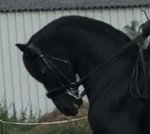
Overbent horses

LegOn

Well-Known Member
Joined
14 September 2010
Messages
772
Visit site
Just reading the thread on fat horses and the last 2 showing shows I've been to, I've been placed down the line up - not to fat horses - but overbent horses!!

I was really surprised in one class to get pulled in behind a horse that was so overbent, the judge spent a good 2 mins discussing better biting options for the horse as I was stood beside it with my non-overbent horse!!! I was happy to be placed dont get me wrong but just a little surprised considering how bad it was.

In a championship recently aswell, with a lovely bunch of horses and there was a 4 year that was very overbent in its own class, then into the championship & it was still overbent & got pulled in Reserve Champion! (over some very nice other horses, I knew we wouldnt place so I'm not saying I should have been!)

I was always told in showing (I'm only new to showing in the last 5 or so years but have had lessons etc) that hunters should be in a nice frame but always look like they are covering ground and ready for the hunting field! So to me an overbent hunter would just fall over itself on the field, in addition to the obvious fact its incorrect and SO bad for our horses, especially young horses.

I know its something dressage struggles with but in my time in showring I've never really seen it & now to see it rewarded, is very strange!
 
Just reading the thread on fat horses and the last 2 showing shows I've been to, I've been placed down the line up - not to fat horses - but overbent horses!!

I was really surprised in one class to get pulled in behind a horse that was so overbent, the judge spent a good 2 mins discussing better biting options for the horse as I was stood beside it with my non-overbent horse!!! I was happy to be placed dont get me wrong but just a little surprised considering how bad it was.

In a championship recently aswell, with a lovely bunch of horses and there was a 4 year that was very overbent in its own class, then into the championship & it was still overbent & got pulled in Reserve Champion! (over some very nice other horses, I knew we wouldnt place so I'm not saying I should have been!)

I was always told in showing (I'm only new to showing in the last 5 or so years but have had lessons etc) that hunters should be in a nice frame but always look like they are covering ground and ready for the hunting field! So to me an overbent hunter would just fall over itself on the field, in addition to the obvious fact its incorrect and SO bad for our horses, especially young horses.

I know its something dressage struggles with but in my time in showring I've never really seen it & now to see it rewarded, is very strange!
It definitely wouldn't be practical out hunting
 
I don't know about how showing is scored. how much does the correctness of the way of going count in the scoring criteria?

In dressage it is only one small part of a way of going. It is one part that pretty much anyone can look at and make a judgement about, but it is still one small part nonetheless so other factors can mitigate it in competition. plus you also have the human aspect of some judges "minding" one thing over another more, e.g one judge might hammer a short neck, but another might see someone else's lack of straightness as a greater fault, and so on.
 
I've recently been looking at sales ads with videos and am quietly shocked at how much behind the vertical some of the horses are, plus a lot have that slight side to side head wiggle that I think comes from the rider constantly fiddling with the bit. I am in no position to criticise anyone's riding skills, but am just finding it surprising in so many sales videos.
 
The below is a photo I took of the horse that won the championship at a show I went to last year. Many of the horses were slightly BTV in the ridden classes, but there were several horses with a good frame in this horse's class. And yet somehow the judge chose the below - blatant abuse - over them.

IMG_1464.jpg
 
The below is a photo I took of the horse that won the championship at a show I went to last year. Many of the horses were slightly BTV in the ridden classes, but there were several horses with a good frame in this horse's class. And yet somehow the judge chose the below - blatant abuse - over them.

View attachment 92014
Crazy, bio-mechanics and ethical treatment aside, it doesn't even look nice ?
 
The below is a photo I took of the horse that won the championship at a show I went to last year. Many of the horses were slightly BTV in the ridden classes, but there were several horses with a good frame in this horse's class. And yet somehow the judge chose the below - blatant abuse - over them.

View attachment 92014
That is shocking but it doesnt surprise me now after what I saw aswell. When I was looking at the photos from my class its very evident aswell, at one point the horse looks about to fall over... Not fun or comfortable for all concerned!
 
Would just want to add a health warning about not taking still photos as representative of how a horse is going over a period of time. I don't like overbent horses any more than the next person but as a general principle i do think it's important to be aware of that as a potential issue.
 
There are more which are 'underbent',,, neither are correct but finding the vertical is difficult and more people get it wrong than get it right one way or the other. I have a cob that curls up behind the vertical as an evasion... he literally does it when excited or nappy on a totally loose rein... Its a helluva lot harder to correct than a horse that is shoving its nose out like a camel.
 
Would just want to add a health warning about not taking still photos as representative of how a horse is going over a period of time. I don't like overbent horses any more than the next person but as a general principle i do think it's important to be aware of that as a potential issue.
I have a video too, just don't know how I'd post it. The horse's nose never moved any further from its chest than is shown in that picture. I agree with you that still photos can be misleading, but the rider's visibly strong contact and how the muscles of that horse have developed demonstrate that it's not just a brief tucking in of the head.
 
Would just want to add a health warning about not taking still photos as representative of how a horse is going over a period of time. I don't like overbent horses any more than the next person but as a general principle i do think it's important to be aware of that as a potential issue.

I 100% agree - the ones I mentioned were ones I witnessed as I was in the class with them, so the one that got placed above me, I could see her in the go-around but then we all had to do a show piece so I saw her whole show piece up close & it was very uncomfortable to watch. The young horse in the championship, I saw her class because it was last class before the championship & then I was able to see her while riding in it myself.

Of course I've seen photos of myself riding and I'm like what in the name of all that is good am I doing with my right hand or leg or whatever so it is only a moment in time but these horses were consistently going in this position and getting placed!
 
i'm not doubting what you saw, it's just a general principle as it is commonplace that a photo gets dissected online and really people get massively invested in something that may or may not be representative, and may or may not be directly caused by the rider. i have ridden a fair few horses that tend towards curling up and you do need to maintain a contact in order to develop a better "frame", like i would look at your still Stangs and think the arms of the weymouth don't seem to have been pulled back dramatically, so unless the curb chain is excessively tight... i might have a different interpretation of what's happening. Just an example of why photos are not that helpful in assessing a moving picture.
 
I do not think having to show in a double bridle when many of these horses and riders have no idea about self carriage is helping.
Yes it does annoy me that if you dont show in a double your horse is down the line —- even if it floats in a snaffle. I had a big hunter that would go like a dream in a snaffle but hated any curb and curled up…
 
I do not think having to show in a double bridle when many of these horses and riders have no idea about self carriage is helping.

You don't have to show in a double bridle. In fact many horses don't have 2 bits in but an appropriate Pelham which gives the extra leatherwork. If you watch proper producers you will see they more often than not ride up to the frame on the snaffle rein. Many amatuers or wannabes ride off of the curb rein which in turn pulls the head in because of the curbs action. And then you see all these little kids lead rein and first ridden ponies being locked into position by wilkie "snaffles", knotted reins and grab handles.
 
I've recently been looking at sales ads with videos and am quietly shocked at how much behind the vertical some of the horses are, plus a lot have that slight side to side head wiggle that I think comes from the rider constantly fiddling with the bit. I am in no position to criticise anyone's riding skills, but am just finding it surprising in so many sales videos.

I agree that it is rider initiated much of the time but mine would wiggle, it was him not me (though it would look like it was me if you didn’t know) he did it when he wasn’t going forwards properly.

it was interesting that a few years after we’d got past that stage that when my sharer took him in the school (they always hacked) he started doing it again (and no he wasn’t going forwards ?)
 
I don't know about how showing is scored. how much does the correctness of the way of going count in the scoring criteria?

In dressage it is only one small part of a way of going. It is one part that pretty much anyone can look at and make a judgement about, but it is still one small part nonetheless so other factors can mitigate it in competition. plus you also have the human aspect of some judges "minding" one thing over another more, e.g one judge might hammer a short neck, but another might see someone else's lack of straightness as a greater fault, and so on.

The way of schooling in showing can mean everything in showing - and rightly show. I was once pulled in 3rd in a Hunter class on my cob simply for the fact that he was better schooled than a lot of the hunters in the class. I’d entered the wrong class and I don’t think it went down great with some of the other competitors that I was placed above them but I am glad in this instance it was judged on the schooling and not to just the type.
 
Overbent is a relative thing so it is hard to comment on a particular case without seeing a full video of the overall picture. Still photos show just one moment in time and often are not representative of the overall way of going. I would say however that being overbent is not necessarily a sign of "blatant abuse". Some horses have a tendency to tuck up behind the bit, even where ridden with a sympathetic elastic contact and in plain, generally regarded as not severe, bits. I can only assume that it is in fact for them the more comfortable place to be at that time and given their state of training and development and balance. That is not abuse even if we think it is a bit ugly by current norms. I don't like the conflation of "overbent" with strong and abusive practices. They are not one and the same. Training faults are not all caused by abuse!
 
The way of schooling in showing can mean everything in showing - and rightly show. I was once pulled in 3rd in a Hunter class on my cob simply for the fact that he was better schooled than a lot of the hunters in the class. I’d entered the wrong class and I don’t think it went down great with some of the other competitors that I was placed above them but I am glad in this instance it was judged on the schooling and not to just the type.
i can understand that it is important, and i agree that it should be, but my question was really about relative weighting. if the schooling carries more weighting than the actual horse as an example of it's type then all the practices brought up on this thread and others (excessive use of training aids to fix an outline, interesting bitting choices etc) seem at odds with that, because it sounds like you are actually describing effectively a dressage competition with a small element of beauty pageant attached. which is not how it seems from the outside, i've only done a complete numpty level amount of showing and it seemed much more about looking at the type then. hence the question :)
 
Some societies have how they score set out and many pony classes have a mark system and for affiliated horse classes type is important. A show hack must be elegant and light and move with floaty paces and give a nice obedient ride. A spook would be taken far more seriously than with a hunter for example.
 
Top