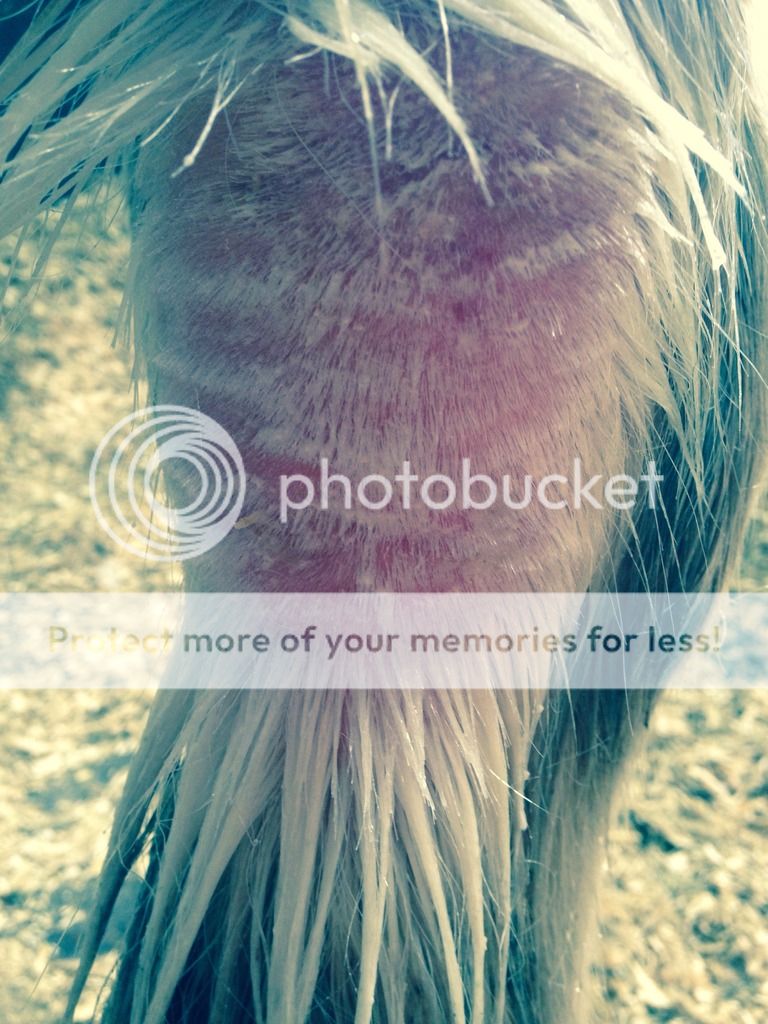
Scabby knees- wits end!

saddlesore

Well-Known Member
Joined
13 April 2008
Messages
4,792
Location
Wonderland!!
Visit site
Total long shot but thought I'd ask. The issues with his knees have been ongoing and have failed to make progress. Sometimes they improve after a dectomax injection but it only lasts for 2 weeks :-/ He is under the care of equine vets and has received 3 courses of dectomax, have tried lime sulphur, an oil based topical dectomax, wormer etc. He has been tested for cushings and for liver function- both are fine. Skin scrapings have shown nothing ( including mites!) he is currently on a course of antibiotics that aren't working (photos taken yesterday). Vet back out again tomorrow and think the next plan is to try steroids. Can anyone shed some light on what might be going on?
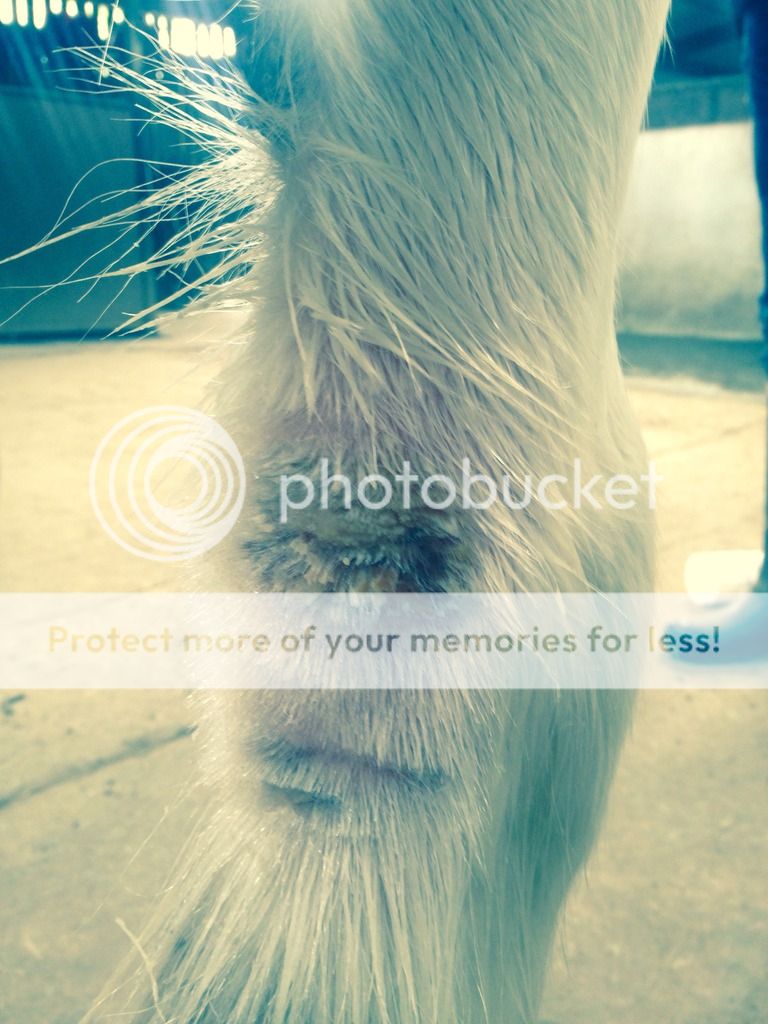
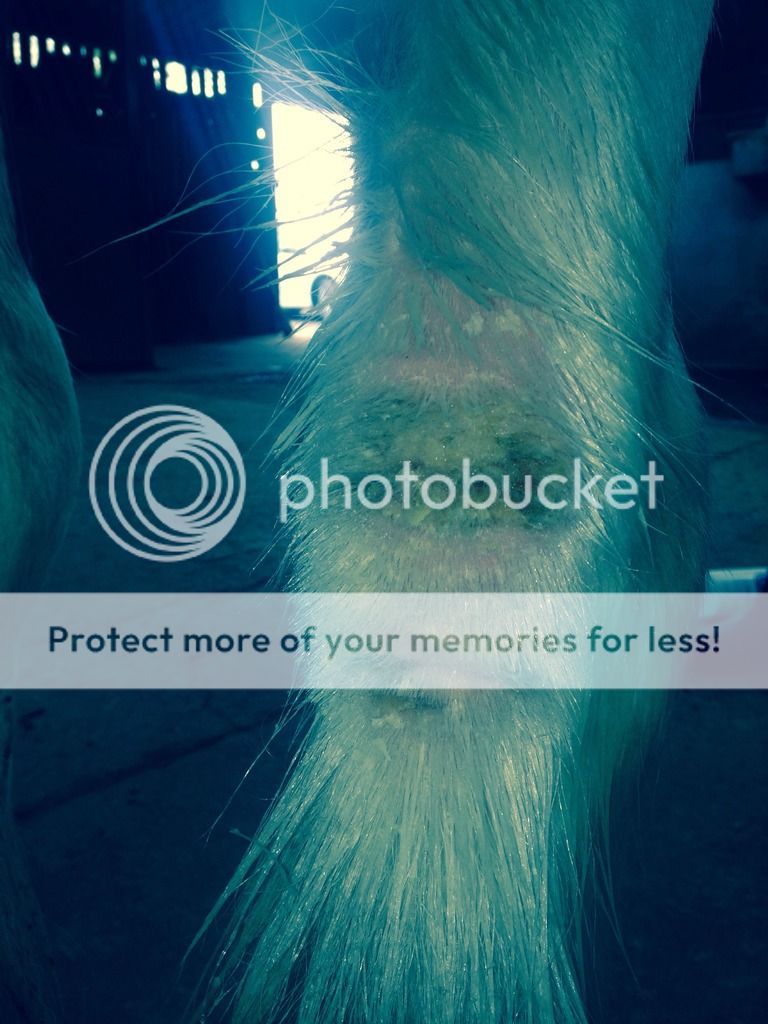
image_7.jpg


image_8.jpg
 
A long shot, try washing with Nizoral Shampoo, then rub in Zinc and Castor Oil ointment.

Unless in a topical cream, try and avoid steroids as they can cause irreversible damage to the Pancreas.
 
Has the vet mentioned Mallenders?

Edit: As above, my vet recommended Zinc and Castor cream. My cob has mallenders pretty much all up and down her fronts, I've had success in using light baby oil spray to soften the scabs making them easy to brush out, and I've used E45 cream when it's gotten very sore.
 
I'm terrified of steroids as he's s heavy weight cob. He's also just coming 4 so his metabolism is slowing too :-( I had wondered about mallanders but it seems to 'ooze' a yellow fluid. I'm beyond shocked that the lab tests showed nothing! I'm so frustrated for him, he's getting so annoyed having his legs cleaned and fussed over.

ETA I've been using the E45 to keep the scabs soft so I can clean the legs, but they are just such a mess :-(
 
These look pretty chronic wounds. If the thickens scabs don't slough off once oiled and wrapped in clingfilm with bandages on top, I would consider surgical debridement of the affected areas.
If its not mites then it is more of a chronic skin condition which will require an application of steroids to get it under control. Topically applied steroids should be well tolerated if only used sparingly (betnovate, dermovate ointment etc.) for a short term.
Have they been swabbed??
 
Last edited:
I'd suspect mallanders too but another possibility is an intolerance to something in his feed. My share horse is sugar intolerant and gets rash on his back legs when he has too much. I think the chances are slim, but try cutting out all feed and if it improves, re-introduce feeds one at a time a fortnight apart so you can identify if one of them is causing a problem.

Filtabac is a great cream on broken skin.
 
My traditional feathered cob mare has this condition. She has had the dectomax injections, skin scrapings, E45 cream. pig oil and sulphur to no avail. What seems to have improved the condition is feeding micronized linseed. I wasn't keen to feed it to her as she certainly doesn't need the extra calories (always muzzled even when on limited grazing). I wonder if the oil in the linseed improves the skin. She now has flaky skin rather than nasty cob cuts.
 
I can clean it back to this under sedation- can't even work out where all the 'stuff' is coming from! Yeah scrapes/swabs have been done. Vet says if steroids don't work then they will start skin patch allergy testing. All so odd :-(

image_9.jpg
 
It really does look like a reaction to possibly Mudfever type organisms. I find Nizoral works brilliantly if there is any fungal or bacterial infection, swabs can sometimes come back clean.

Please give Nizoral a try - you can buy it at the chemist - its a human dandruff shampoo that contains ketaconisol.

My Clydesdale gets a patch like yours around her ergot and its usually gone after a couple of washes with Nizoral. It does come back eventually but the Nizoral seems to break down all the scabby stuff with no pain and I can then comb them out - I don't clip out her feather as she is shown and so needs them there.
 
Our cob has/had this though maybe a bit different- we're keeping it at bay with sulphur ointment daily to stop the hyperkeratosis, he can't cope when it goes down to every other day. He does seem prone to other skin infections on other parts of his legs too sadly. Joys of cob skin :( Something like Isaderm is well tolerated- Im not sure it reaches the pancreas?
 
Tried isoderm with no success :-( I think it looks fungal too but was negative in the lab tests. I've been cleaning it with maloseb just incase but it obviously hasnt helped either :-( happy to give the nizoral a shot. It's got the vets stumped so all help welcome!
 
He's on a course of anti biotics atm, vet said the swabs grew streptococcus and something else but both are naturally occurring anyway so no way of knowing if they're being produced in excess.
 
have you tried keratex mud shield powder ? It's the only thing that has worked on my horses mudfever type symptoms. Although it wasn't on his knees but on his heels/pastern and canons.

http://www.keratex.com/products/keratex+mud+shield+powder+

it's dried everything up really well as he started to suffer last summer despite fields being dry as a bone. I feel for you this kind of problem is a nightmare, I spent literally hundreds on lotions and potions before the powder.

Edited to add my horse also had antibiotics, lots of open wet sores.
 
My cob suffers with Mallenders on the back of both front legs. It looks a bit like this, but admittedly less raw. He has been (& could be without careful management) a chronic mite sufferer. However, I think the two conditions are sometimes related and sometimes not!

We're currently mite free (through regular clipping, Selsun shampooing and frontline 12/14 days apart 2-3 times a year). However, the Mallenders persists and is worse I the Winter. I find it best to keep the hair clipped/cut as close to the skin as possible, wash regularly with Selsun (from Boots - selenium sulphide based) - Nozoral comes recommended too as above ��

1% hydrocortisone cream rubbed in once a day helped too. When clear I ived used E45 or similar quite successful. It seems that after massaging in cream any scabs come a way.
 
I think this is "malanders" which is a very common condition on traditional types. My cob has this from time to time and I have used sudocrem for a few days which stop the thickened skin from cracking and becoming sore. When the area heals the dead skin will slough off although it stays in the long feather so this can be gently combed out ( a metal dog flea comb is good for this). I NEVER pick off or try and remove any skin or scabs still healing as this definately makes things worse. It will also become very sore and you will end up with a very unhappy horse that will not let you near his legs. I think the yellow secretion may just be grease, another characteristic of hairy horses legs. I would recomend this product http://www.horsehealth.co.uk/groomi...apleys-original-m-t-g-plus?cPath=122_356_514& which has replaced the sudocrem and has really helped to keep my cobs legs in good condition. I dont think you will ever eradicate this condition completly as its just somthing that cobs have. Feed wise cut out any mollasses which can cause itchy skin. I hope this helps.
 
Mallanders typically affects the back of the knees in excess folds of skin. An overproduction of either strep or staph causing infection will require anti-bs. Unfortunately there is increasing MRSA in horses as there is with humans.
 
It looks and sounds like mallenders to me too. With my mare we fed her linseed and applied emulsifying cream to her legs every day to keep the skin supple.
 
I'm afraid this is going to be trial and error to see what works for your horse. After spending a small fortune at the vets and many years of experimenting, I found that Head and Shoulders to clear the skin and Boots Dermacare to keep it moist works for my horse. Both cheap too! Good luck. It is very frustrating.
 
My coloured horse had very poorly legs for years (he had a mild form of Chronic Progressive Lymphoedema) and we eventually had success with a potion mixed by the vet consisting of Flamazine (a burns cream with silver in it), a steroid and Synulox antibiotic. It was expensive but did the trick. Most vets who have regular contact with draft or heavy horses are now familiar with CPL and the potion, but it's one of those diseases that's flown under the radar for years and is often mistaken for mite infestation or mud fever.

At one point the flies got to my boy's scabs and he looked like he'd lost an argument with a machete. It took a couple of weeks of using the ointment to see a generous improvement, but it did the trick. Once his legs were relatively healed, I only used the 'potion' on little sore spots, but moisturised his legs every other day with Eucerin 10% lotion (it's an over the counter product for eczema/psoriasis/dermatitis). I found that the build up of scar tissue on my boy's legs made his skin vulnerable to cracking, but regular moisturising helped prevent this.
 
If you are on facebook have a look at the Turmeric user group. It may help if fed to help his system from the inside aswell. I recently used it mixed with sudocream on a flystruck sheep . Interesting look but sorted out the skin damage and kept the flies away / Hope you can find an answer .
 
I can indeed shed some light on your problem!

My 22 yr old Draft mare appears to have had a similar problem for most of her life, she has dreadful scarring all round her knees and fetlocks. She had just had a course of Dectomax when I bought her a little over 4 yrs ago and we have been struggling with the itching ever since. I have clipped the feather, left it alone, washed her legs, applied Coopers Fly Repellent Plus, Sudocrem, Teatree spray/anything else I could think of. There was short-term improvement with most things but nothing gave her permanent relief.
However, having decided that it is a form of eczema which gets worse with wet or sweat and after a complete disaster with Brewer's yeast which inflamed her skin dreadfully, I have cut all wheat-based ingredients out of her diet. This means no biotin/wheatgerm, no bran, no treats with wheat as an ingredient and definitely no hard feed containing wheat (not that she has had hard feed with us). I have been applying Leovet Silver ointment to the sores and this regime is working. It is now 5 days since I stopped wheat-based treats (the other things were cut out longer ago) and her skin has almost fully healed, with just a few scabs left, which are obviously not irritating her as they were.
I would look at your horse's diet for the answer to your problem.
 
Something else to consider that might help is to ensure he's not getting any Lucerne (Alfalfa) products to eat as this can make the skin photosensitive.

Find a supplement with a higher level of Copper and Zinc in it as these two minerals assist with strong healthy skin formation. Also good for those prone to Mudfever.
 
Thanks guys- oddly he gets dengie healthy hooves molasses free with added biotin! Just bought a new bag too *roll eyes* Would you be able to recommend some wheat/alfalfa free feeds?
 
Top