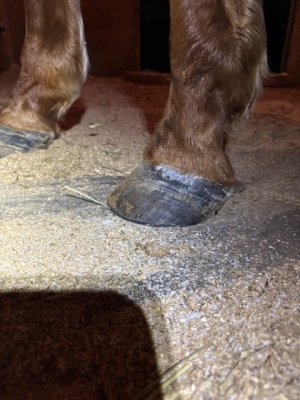
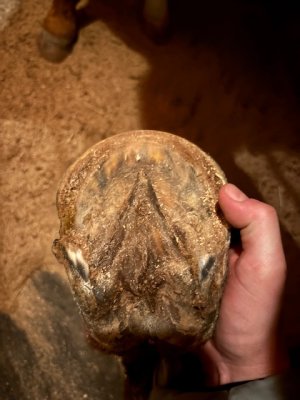
Calling Barefoot experts

I’m going to take a step back for a little while. I feel like I’ve been messing with it too much - the last thing I need to do is mess something up.
I rasped more tonight and lightly carved out a little sole just so I had a little concavity. I think if anything I touch it every couple of weeks with the guidance of what to do from my farrier.

Thanks for the help everyone!
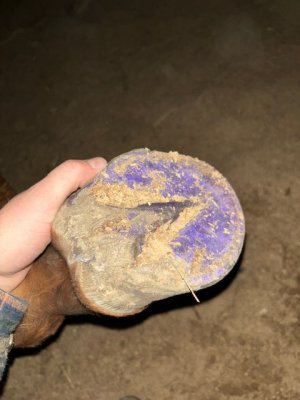
 

Attachments

  • IMG_4571.jpeg
    IMG_4571.jpeg
    101.1 KB · Views: 104
  • IMG_4568.jpeg
    IMG_4568.jpeg
    108.9 KB · Views: 76
I’m going to take a step back for a little while. I feel like I’ve been messing with it too much - the last thing I need to do is mess something up.
I rasped more tonight and lightly carved out a little sole just so I had a little concavity. I think if anything I touch it every couple of weeks with the guidance of what to do from my farrier.

Thanks for the help everyone!
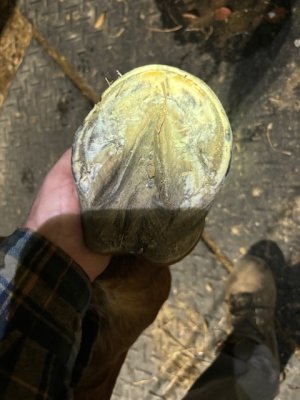
Concavity comes from within, not from carving out the sole. Carving the sole will likely make them lame. Not that I'm saying that the bit you have done has lamed your horse, I am advising caution and to definitely get advice from your farrier.

Genuinely, just bevelling the walls more (particularly at the toe), walking on the road starting where he is comfortable (mine do 100yds to start), correct nutrition (including good quality vitamins with no added iron), keeping the frog clean and regular help from a hoofcare professional will make all the difference. The hoof will change itself.

It is fascinating to watch the hoof change. You will get a nicer job by just by tidying the walls.

If you are not experienced, I would let your professional do the balancing and guide you as to what you should do between times.
 
Last edited:
  • Like
Reactions: TPO
All good - thank you.
I mainly just removed the flaking stuff from the sole. I didn’t get down into the soft stuff at all.
Good to know though.
Luckily it’s been very dry here so we haven’t had to clean his feet much at all.
Thanks!
 
You are right to step back. Your original post flagged up that you were pulling the shoes for rehab purposes, and given that you are rounding off the chipped edges and treating thrush, I would not be in a rush to do anything else other than take a couple of swipes off each heel once a month. Expect a six to twelve month cycle for new hooves to grow and remodel. You cannot trim into balance until the internal structure is strong and working properly.
 
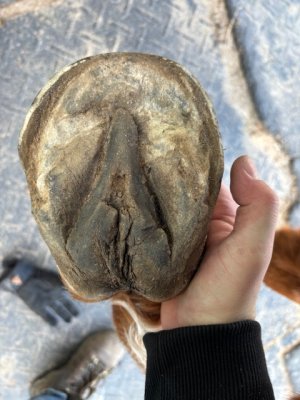
Hi All, wanted to provide an update.
I’ve had a barefoot trimmer come out to take a look at him at the 4 week mark from pulling shoes. She gave him a light trim and pointed out some things that can be changed over time.

I am waiting for a new set of boots to come in - but after putting him in a pair of Cavallos with cloud pads - he is already landing flat footed compared to toe first on both fronts.
When my Cloud sneakers come in - they will be the full time turnout boot.

Today I very lightly rasped to the water line and took a very tiny amount of length. I also trimmed the wall down slightly so all the weight wasn’t on the walls and the frog made shared contact with surfaces.

One thing I noticed -
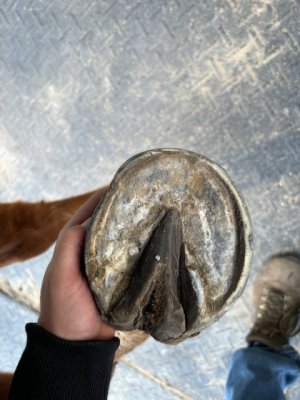
1. Collateral grooves on front right hoof were fairly shallow compared to front right.
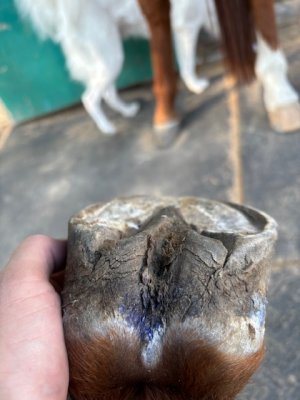
The front right has more of a longer toe, sunken heel structure. I think ideally we would want to stand this foot up more over time and improve the palmar angle?

I felt much more comfortable today just taking a little off. Just a few swipes honestly. I know Dr. Bowker is a big proponent of weekly light trims instead of trims at the 4-6 week mark.

Let me know what you think of what you see.
 

Attachments

  • IMG_4636.jpeg
    IMG_4636.jpeg
    129.4 KB · Views: 57
  • IMG_4635.jpeg
    IMG_4635.jpeg
    99 KB · Views: 47
  • IMG_4632.jpeg
    IMG_4632.jpeg
    116.9 KB · Views: 50
Last edited:
Hi All, wanted to provide an update.
I’ve had a barefoot trimmer come out to take a look at him at the 4 week mark from pulling shoes. She gave him a light trim and pointed out some things that can be changed over time.

I am waiting for a new set of boots to come in - but after putting him in a pair of Cavallos with cloud pads - he is already landing flat footed compared to toe first on both fronts.
When my Cloud sneakers come in - they will be the full time turnout boot.

Today I very lightly rasped to the water line and took a very tiny amount of length. I also trimmed the wall down slightly so all the weight wasn’t on the walls and the frog made shared contact with surfaces.

One thing I noticed -
1. Collateral grooves on front right hoof were fairly shallow compared to front right.
The front right has more of a longer toe, sunken heel structure. I think ideally we would want to stand this foot up more over time and improve the palmar angle?

I felt much more comfortable today just taking a little off. Just a few swipes honestly. I know Dr. Bowker is a big proponent of weekly light trims instead of trims at the 4-6 week mark.

Let me know what you think of what you see.
Still heading in the right direction, and the frogs are looking cleaner. You are doing the right thing by making small adjustments, and allowing the foot to grow into it's new shape rather than cut it back to fit the perfect model. Can you turn out barefoot? And just use boots for gentle exercise? The heels are beginning to widen and drop, which indicates weight is now being born, and you will start to see the heel bulbs developing, which in turn will increase the strength of the foot and encourage the horse to slam the foot down and get it working as it should. Well done, text book recovery so far!
 
Great, happy to hear that.
Currently turned out for about 10 hours a day with ample walking time on wood chips, hard sand (frozen cause of the weather), short grass, and a little dirt.
He has an in out stall with wood chips and some mats as well so he has plenty of space to walk around at night.
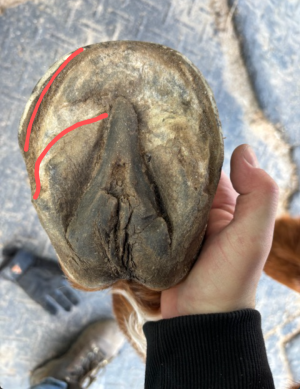
You can see on the front left that his lateral wall vertically is longer compared to the medial wall.
Why is that and should that be addressed in anyway?
 
My cob has a front foot like that, and we have never managed to correct it. He is a chunky, barrel chested cob, and my personal view is that it is caused by the way he walks. The inside edges of the hoof wall are longer, and he pushes weight over to the outside edge when he places the hoof. Just keep it rolled back enough for the frog and heels to bear most of the weight and prevent the wall breaking off. Is your horse more comfortable now he is landing better?
 
You can see on the front left that his lateral wall vertically is longer compared to the medial wall.
Why is that and should that be addressed in anyway?
I'd trim the wall to sole level because a long wall means leverage, means a stretched lamina, means thrush, all of which weakens the hoof. Apart from that the hoof looks much better than before and is currently the on a good way.

Collateral grooves on front right hoof were fairly shallow compared to front right.
They will become deeper when the sole gets thicker.

The right hoof has changed for the worse, unfortunately.

Screenshot_20241203-091923~4.png
The far too long bars now lay over the sole. That can cause bruises underneath, even abscesses or other problems. Walking with such a hoof on hard surfaces is about as comfortable as walking with a pebble in your shoe.

The bars are part of the wall. They support and stabilise the heels. But they can only do this if they're kept short and strong, i.e. at sole level or slightly above as some horses prefer.
The front right has more of a longer toe, sunken heel structure. I think ideally we would want to stand this foot up more over time and improve the palmar angle?
Correct. Unlikely to happen though without a proper trim of bars and heels. How long has it been since the last professional trim?
 
I'd trim the wall to sole level because a long wall means leverage, means a stretched lamina, means thrush, all of which weakens the hoof. Apart from that the hoof looks much better than before and is currently the on a good way.


They will become deeper when the sole gets thicker.

The right hoof has changed for the worse, unfortunately.

View attachment 151184
The far too long bars now lay over the sole. That can cause bruises underneath, even abscesses or other problems. Walking with such a hoof on hard surfaces is about as comfortable as walking with a pebble in your shoe.

The bars are part of the wall. They support and stabilise the heels. But they can only do this if they're kept short and strong, i.e. at sole level or slightly above as some horses prefer.

Correct. Unlikely to happen though without a proper trim of bars and heels. How long has it been since the last professional trim?
Agreed everything still looks too long.
 
He was trimmed 8 days ago by a CHP/certified farrier that specializes in barefoot. I don't the bars were that long at the time. I don't think she touched the heels at all either.

His Cloud sneakers just came in today. He is much more comfortable in boots and has a flat foot landing at the walk.

I will take off some of the extra length on the wall and take the bars down to sole depth, or nearly sole depth.
The bars are look longer on the front left (one pictured).
With the front right, the whole back half of the hoof looks contracted and squeezed together compared to the FL.
 
Went in today and cleaned up the bars a little bit and rasped took more off around the wall.
I did not take off as much as was recommended due to fear of taking too much off.
 

Attachments

  • IMG_4654.jpeg
    IMG_4654.jpeg
    74.3 KB · Views: 37
  • IMG_4653.jpeg
    IMG_4653.jpeg
    67.2 KB · Views: 36
  • IMG_4650.jpeg
    IMG_4650.jpeg
    83.7 KB · Views: 45
Something I’ve noticed after having Cloud sneakers with pads on for the past couple of weeks :
1. He does walk better in the boots.
2. Hoof growth has seemed to have slowed down. Not sure if it is something due to the weather (we are now in winter).

He has been wearing the boots about 3 days at a time - then takes a night off, then they go back on in the morning.

Should the boots stay on until he is landing heel first or at least on the middle?

Please excuse the blurriness!
 

Attachments

  • IMG_4698.jpeg
    IMG_4698.jpeg
    87.1 KB · Views: 32
  • IMG_4694.jpeg
    IMG_4694.jpeg
    112.1 KB · Views: 27
  • IMG_4697.jpeg
    IMG_4697.jpeg
    93.6 KB · Views: 38
The growth does slow in winter.
Look out for thrush, it's such a tricky balance in boots. I use Muddy Buddy powder in the boots (because it's drying and also antibacterial), and make sure to remove boots every day, give the soles a good wire brushing, and address any deeper holes in the frog with something like Red Horse. You basically need them on until the horse is landing comfortably which will vary as to surface.
 
Picture 1 and 3 suggest that the horse might benefit from a triangular pad over the frog in order to apply some pressure and kick start circulation and growth. Easy Boot do a gel pad with a built in frog support, but you could manage a DIY version from foam mats or men's' flip flops. Is this the foot that was the worst on the initial diagnosis?
 
These are better photos.
His hooves look so damn small now!

He has cloud pads in now.
His worse looking hoof is his non navicular one - that’s his low hoof with a more negative palmar angle.

Pics 1 and 2 are FL
2 and 3 are FR
 

Attachments

  • IMG_4714.jpeg
    IMG_4714.jpeg
    164.2 KB · Views: 38
  • IMG_4708.jpeg
    IMG_4708.jpeg
    165.9 KB · Views: 28
  • IMG_4715.jpeg
    IMG_4715.jpeg
    148.4 KB · Views: 26
  • IMG_4717.jpeg
    IMG_4717.jpeg
    171 KB · Views: 28
Looking good. My next move would be to take some height off the bars and stop the overlap. Ask your trimmer about taking a whisker off each heel once every three or four weeks, and don't trim the frog any more than absolutely necessary - no slicing it off to make it look pretty! Carry on with the thrush treatment. You are doing a good job and the heels are opening up and beginning to grow down. The deep clefts that you can see should start to fill out from the base and grow the infection out. If your horse is comfortable, I would start to reduce the time spent in boots, so that a little more pressure is being applied to the foot as he moves around. The trim looks about right - I personally wouldn't want to take the walls down to the point where he has to weight the sole. Cavallo have an on line video of a barefoot trim, if you want to make comparisons.
 
My farrier came out yesterday. Noticed a little bit of red on the white line /laminae. He said he needed more vertical growth of the hoof and he may have just been talking on his toe sole a little too much causing the bruising.

Talked with me a lot about how I can manage his feet on weekly basis if needed in between trims.

He was a little ouchy today but it was likely due to pulling his rear shoes.

He had. Little rubbing on his bulbs on his front right which is his low hoof. I added a sock to help with the rubbing.
He’s been in boots for a few weeks now and only started rubbing a couple days ago.
 

Attachments

  • IMG_4732.jpeg
    IMG_4732.jpeg
    160.8 KB · Views: 29
  • IMG_4734.jpeg
    IMG_4734.jpeg
    134.7 KB · Views: 31
  • IMG_4735.jpeg
    IMG_4735.jpeg
    138.3 KB · Views: 32
  • IMG_4737.jpeg
    IMG_4737.jpeg
    116.1 KB · Views: 42
Just go back over the photographs you have posted, and look at the progress so far! The heels are opening up, the frog is beginning to move into its correct place, the deep thrush cracks are starting to fill out. and the horse is starting to move weight back instead of only weighting the toe. Keep on keeping on, you are heading in the right direction, and should be able to give some time out of boots now, to start building sole thickness.
 
Hey All,
Wanted to do a little progress report and ask a question. So he’s been in cloud boots with a cloud pad since about early mid December.

He showed signs of rubbing - but a sock, and some special equine anti rub powder does a good job of getting it nice and dry and it’s helped a lot with the rubs.

He definitely gets more footy without his boots on, on a frozen day.

Today I was doing some snow clearing near his turnout. Him and his pasture mate both were trotting around on edge a little bit. The good news was that he had no noticeable head bob at the trot (and he was barefoot in the snow). It’s a small win for me but does show progress from October when he was head bobbing lame.

Hoof thoughts:
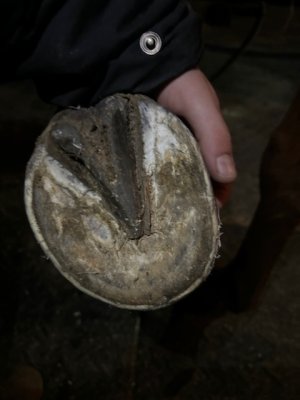
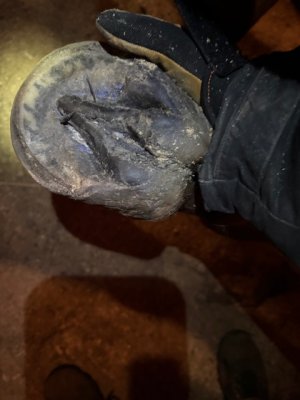
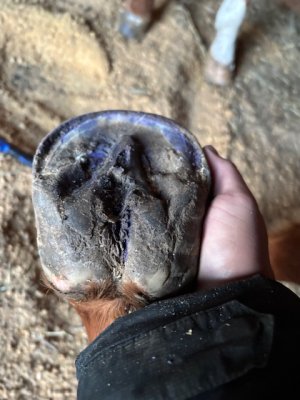
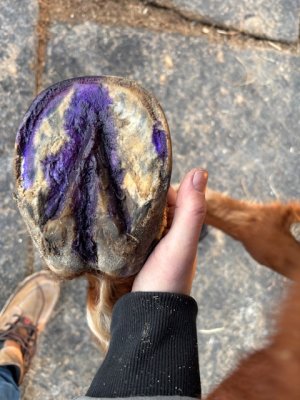
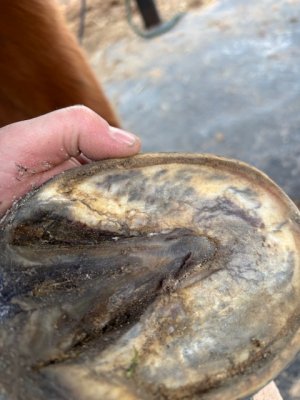
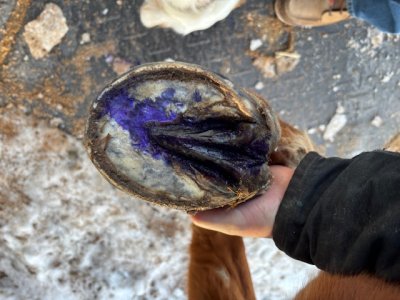
On his navicular hoof - front left - his frog hasn’t widened like I really want it to (first photo with durasol on hoof).

I’m wondering if this process may be slowed by the cold winter months, and also not having as much frog stimulation from being in pads and boots. Due to the snow in the past 24 hours, I kept his boots off for some soft footing and extra stimulation.

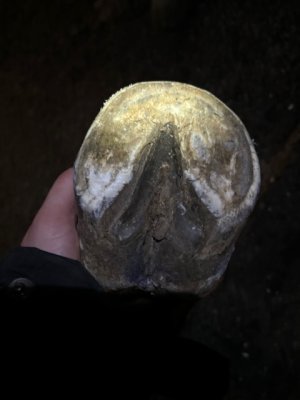
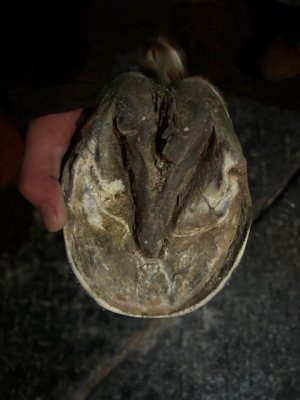
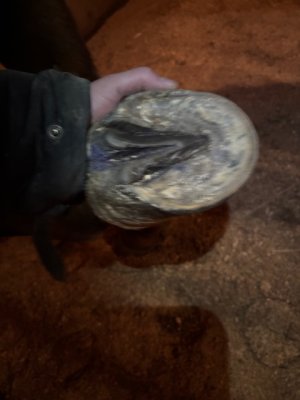
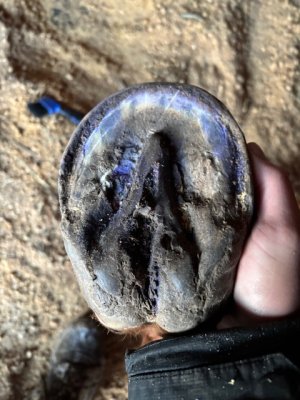
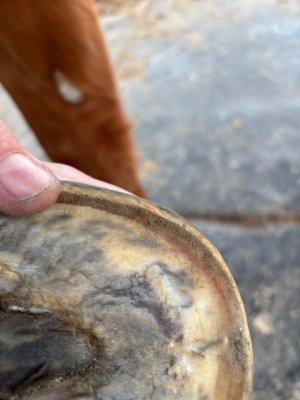
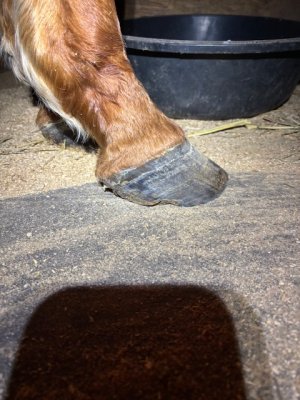
Second, his front right is (and always has been) pretty under run.
I’ve been lightly rasping the toe every 7 days. Today I gave the heels a few swipes.
What can I do to try and bring those heels back under?
I’ve read to only work on the front 2/3rds of the hoof and leave the back 1/3 alone, but I’ve also seen to bring the heels back to get more hoof under them.

What do you think based on what you see?
 

Attachments

  • IMG_4836.jpeg
    IMG_4836.jpeg
    154 KB · Views: 29
  • IMG_4877.jpeg
    IMG_4877.jpeg
    178.3 KB · Views: 27
  • IMG_4879.jpeg
    IMG_4879.jpeg
    173.2 KB · Views: 24
  • IMG_4878.jpeg
    IMG_4878.jpeg
    142.2 KB · Views: 29
They're moving in the right direction. Can you get him some work on smooth tarmac without boots? That would help his feet toughen up, begin to build a sole callous, and the wear should encourage growth and move the heels back under him.
.
 
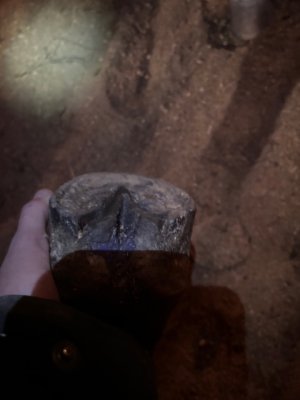
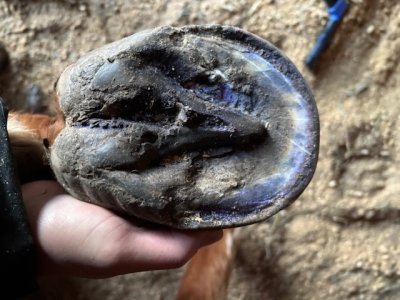
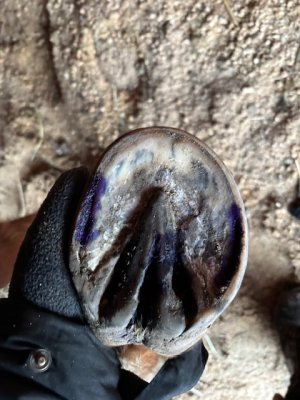
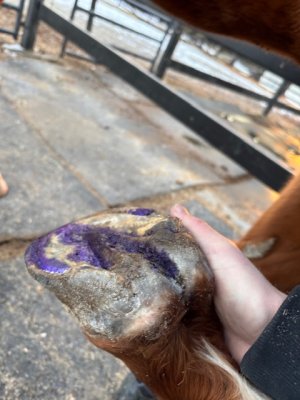
The last photo shows quite a lot of growth around the bars, and I would be inclined to start taking this back to relieve pressure around that area. Compared to photo 1, the heel area is not bearing as much weight, and there is a false sole that has developed. However, you have been dealing with a painful foot, and hopefully, this is now resolving. Agree with ycbm that more time out of boots would be beneficial. Once he starts to use the feet and walk naturally, faster changes will happen. Maybe ask your trimmer if shorter toes would help his movement. There is good growth coming in from the coronet, and the angles look good.
 
Good to know.
Yeah, I am seeing a lot of conflicting information with schools of thought.
In one ear I hear to keep them in boots until they have a heel first landing (which he doesn't have that yet fully or consistently) - But from another standpoint I also want to encourage growth and stimulation to his foot and get him moving more naturally.
He has been in boots for almost 2 months now.
Photo 1 is his Navicular hoof, which has been more of his been his toe first landing hoof. That hoof is actually more stood up and has a better angle compared to his healthier FR hoof which has the better heel first landings.
I would have thought they'd be reversed!

Would you say the angle on the FR (second picture) is worse than the FL (third picture)?

I do have access to blacktop. I also have access to a frozen sand arena which he walks through now as part of his turnout area.
 
In one ear I hear to keep them in boots until they have a heel first landing


My only rule was to stay off their backs until they had a flat landing. None of my rehabs ever had boots for their early work led on tarmac. They soon became heel first landing. I do think there is a danger that boots are becoming over used these days, they prevent the foot from hardening up, thickening up and shaping themselves.
.
 
My only rule was to stay off their backs until they had a flat landing. None of my rehabs ever had boots for their early work led on tarmac. They soon became heel first landing. I do think there is a danger that boots are becoming over used these days, they prevent the foot from hardening up, thickening up and shaping themselves.
.
I think this probably true, altho the extent of wet weather and soggy feet in this country, can see why.
 
Boots are very useful to make the horse comfortable and get him moving around. As change starts to happen (heel first/flat foot landing, heel development, better frogs) then start to increase the time without them. The ground contact will scour the false sole away, help the heels to build, and will put wear on the soles so that you can see where he is unbalanced and try to work out why. The angles are slightly different, but one has a more upright pastern. Is he laminitic?
 
I think this probably true, altho the extent of wet weather and soggy feet in this country, can see why.

And the increasing danger of riding on roads! It's pretty difficult to go for a nice steady walk out on the road - you're in and out of the gutter, trotting to get out of the way of vehicles, scrambling up verges and through potholes......
 
Top