Highmileagecob
Well-Known Member
Laminitis is usually diet and metabolic induced, unless Cushings is involved. Whole different ball game, for Cushings, but if you consider people packing too much food away, and not exercising, then type 2 diabetes is on the horizon. People with diabetic issues often have lower limb circulation problems - I have wondered whether this is human laminitis?
Horses that have been badly shod, so that the tubules are pulled out of shape and the heels are everywhere bar where they should be will struggle to have strong laminae.
Navicular changes can successfully be reversed with enough time and patience. The entire inner workings of the hoof have to remodel, the pedal bones have to realign in some cases, and the heels and frogs have to start working again, and there will be stress on the laminae as the horse starts to bear weight on areas that have not worked properly for ages. If you rush this stage, then you risk tendon injury.
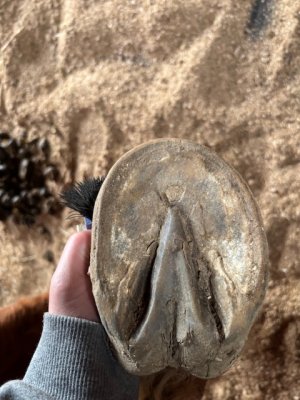
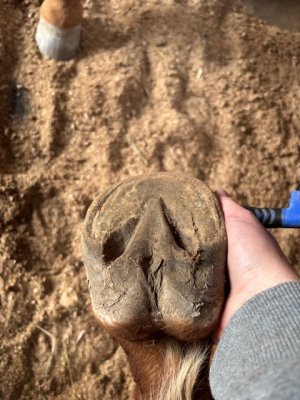
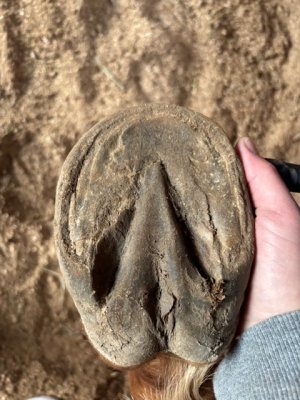
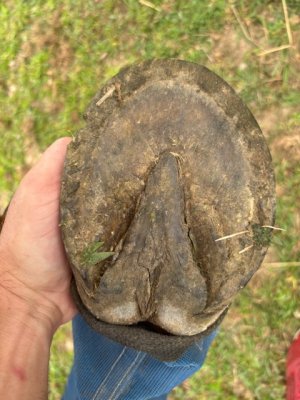
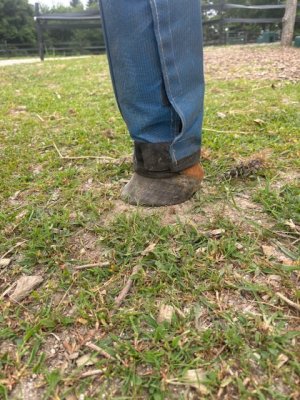
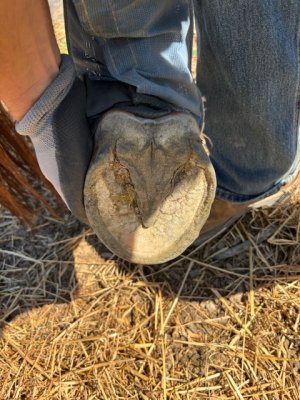
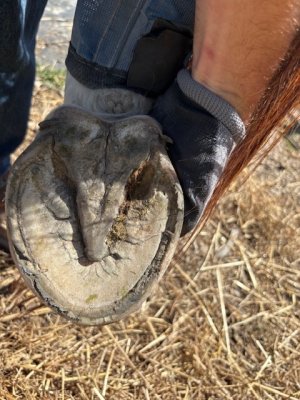
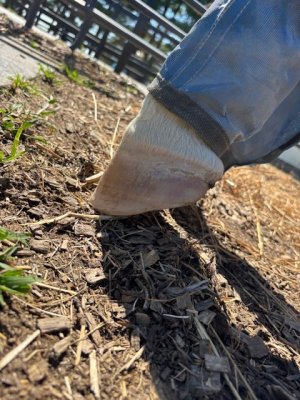
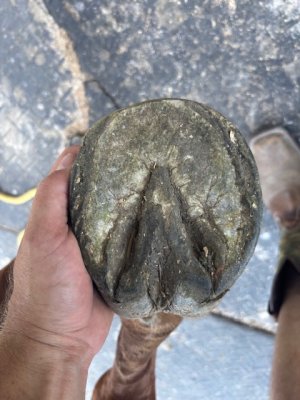
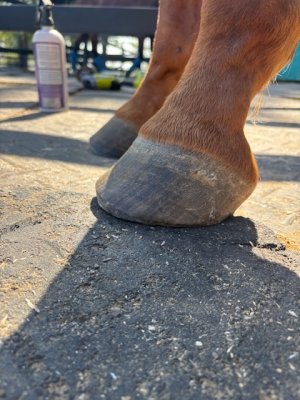
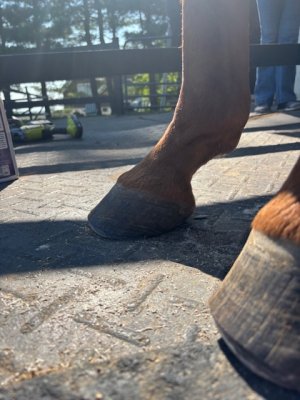
The photographs being posted by OP show good new growth coming in from the coronet band, and once that reaches the ground, a better assessment of future soundness can be made. It's a slow job,
Horses that have been badly shod, so that the tubules are pulled out of shape and the heels are everywhere bar where they should be will struggle to have strong laminae.
Navicular changes can successfully be reversed with enough time and patience. The entire inner workings of the hoof have to remodel, the pedal bones have to realign in some cases, and the heels and frogs have to start working again, and there will be stress on the laminae as the horse starts to bear weight on areas that have not worked properly for ages. If you rush this stage, then you risk tendon injury.
The photographs being posted by OP show good new growth coming in from the coronet band, and once that reaches the ground, a better assessment of future soundness can be made. It's a slow job,
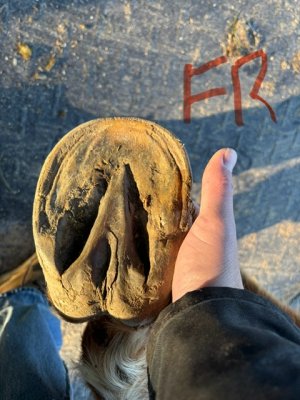
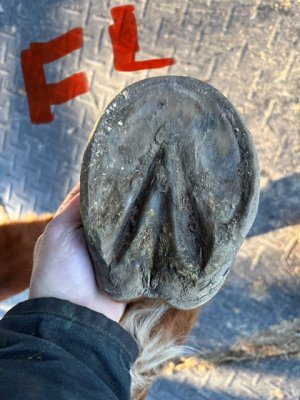
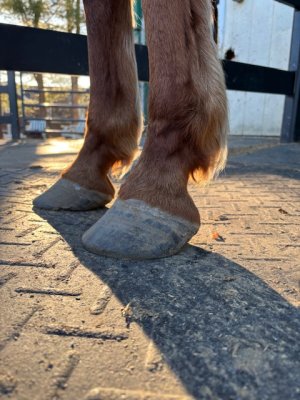


 Have a look online for pics. of bevelled toes. I'm sure there are lots on Pete's site.