Can you turn a hot horse into a calm one?

the best way I've found of dealing with any unwanted behaviour is to have control (which is a work in progress!), to be able to put the horse's head/neck where I want it, to be able to control the pace within the pace etc. I am still on a steep learning curve with Rose as she doesn't always listen to my leg so I don't necessarily have control of her body or sometimes forward motion but I learned with Mr B and Rose that although they are so different, the answer is pretty much the same. I must be able to put my leg on and get the right response and they must listen to me rather than do their own thing. Sorry that this is so waffly

Not waffly at all! I agree - my RI keeps saying that being on the aids does not mean moving off your leg but means responding to whatever you are asking for with your legs, seat, body and hands. I just don't know how to get there.
 
Interesting question. I think that there is a difference between a "fast" horse and a stressed horse, and they are both called hot horses. Horses, like children, need to know their place in the world. Generally a stressed horse want to take control as they have no confidence in what they are being asked, so feel that they need to take control. A fast horse, will go flat out when asked, but comes back when asked.

This sounds like I am slanting your riding, but I am not. You have changed a mare who wants to take control 100% of the time to 50% of the time. She is trusting your judgement more, but not yet completely. You will get there. From previous posts, I understand that under some circumstances you get nervous (hacking) which means that as she is sensitive she picks upon this, so consequently her trust is a little lost, other circumstances you are confident, so therefore she is, and trust is regained. The more you trust her, the more she will trust you, and the calmer she will get.
EllenJay, this is a very insightful reply. You've made many good points. Hopefully, this will put perspective in place for OP - it certainly did for me. Thank you.
 
Not waffly at all! I agree - my RI keeps saying that being on the aids does not mean moving off your leg but means responding to whatever you are asking for with your legs, seat, body and hands. I just don't know how to get there.
TBH I spent years having lessons with knowledgeable trainers but not once was the issue of control ever mentioned until I was having a lesson with MP's trainer who told me very bluntly that I should stop trying to control everything around me and concentrate on controlling my horse. Up to that time, I thought I was! At least your trainer has identified this although I think you are a long way ahead of where I was at the time. My current trainer (at the same place) focuses on control in every lesson I have with her, all the time I have to keep Rose round enough, soft enough and on my aids, if we do lateral work, I have to try to keep that going whilst I keep the rhythm and pace the same with correct bend, crossing of legs etc. It's very disciplined and I often struggle but it has changed the way I ride for the better and has done a lot for my confidence. No-one has ever really trained me like this before.
 
It's an interesting question, because I'm on the other end of the scale - none of my lot are "hot" by most definitions, and are all pretty chilled out generally. However, Fergus can be hot - by some definitions - to hack alone, although I would generally call it sharp rather than hot, and I can make Skye (who is almost pathologically zen) hot to hack or stick and ball, in the sense of entirely active, switched on, bouncing sideways in complete veins-out silliness. And it sort of makes sense that if you can take a naturally zen horse and make it hot, you should be able to make a hot horse zen.

Personally I suspect it's more a question of degrees - I can make Skye hot(ter) in circumstances where she is confident and keen, but I couldn't have repeated it on a pitch, or at polocrosse training because she was too stressed by the other horses in those circumstances. Likewise, it's probably possible to make Amber calm and chilled, but once the environment changes, she'll probably revert to hot, unless you can ride her more intuitively to keep a lid on it. I also agree with the comments above about controlling the neck being key to that - if the neck is down, the horse is calm (outwardly at least), and if you can teach the horse to lower its neck, you're closer to calm than if you can't.
 
"whole neck down" is something I say to myself quite a lot!
It's easy to get nose in, but to get the neck to drop from the base all the way to the poll is a bit harder and (for me) requires the horse to understand the contact in a more nuanced way. I have 2 that go above the bit naturally, one in a peacocky way and one just giraffes, so it's slightly different on each, but just putting the nose in means they can still push the underneck out and gain control.

When you can really push them to telescope the neck down & into the hand, THAT is when i know I am retaining my influence even when they would rather hollow and run off ;)

eta of course there are other ways to teach the neck down thing, I know someone who does it as a kind of NH thing and another person that clicker trains it, but I need it as a ridden dressagey cue so that's how I have trained it.
 
I encourage all of mine to work out and down / forward in the neck, on a loose rein (but still active, forward and not on the forehand - and yes, that's a skill all of its own), but they also have to learn to accept contact and take it forward to lengthen the neck in a more dressagey aesthetic, because sometimes even zen horses need to be re-focused more actively!
 
Do you not think that head and neck down in ridden work corrallates (sp?) to head and neck down in hand or loose which will lower the heart rate. Lowering the heart rate will decrease stress and allow the horse to take the rider's requests on board.
 
Do you not think that head and neck down in ridden work corrallates (sp?) to head and neck down in hand or loose which will lower the heart rate. Lowering the heart rate will decrease stress and allow the horse to take the rider's requests on board.
I think that's definitely part of it, but it's also about yielding to the rider/handler in the first instance, before that de-stressing can happen, IMO :)
 
I think that's definitely part of it, but it's also about yielding to the rider/handler in the first instance, before that de-stressing can happen, IMO :)

Ah see I think lowering the neck will make yielding to the handler easier and more likely. This is like the chicken and the egg, except harder to actually answer ;)
 
  • Like
Reactions: J&S
yes probably!
Mine stick their ears up my nose when they are about to launch into a massive spook and so getting that immediate yielding (in the brain really, but effectively achieved by yielding to the rein) is the way I think of it, to allow me to put them to work in another way and head off the explosion. Chicken and egg indeed!
 
yes probably!
Mine stick their ears up my nose when they are about to launch into a massive spook and so getting that immediate yielding (in the brain really, but effectively achieved by yielding to the rein) is the way I think of it, to allow me to put them to work in another way and head off the explosion. Chicken and egg indeed!

I think the head lowering physiological effects are probably less useful in those circumstances than the "physically can't spook as busy doing something else" aspect.

I use head lowering = calmer horse = now we can move on sensibly and listening to me more in a situation where the horse raises its head as a precursor to freezing / stop and staring. I encounter this more because it tends to happen out hacking, where it's harder to distract and stuff tends to be more likely to appear on the horizon. In an arena, the distract and ride forward approach is more useful (and more likely to be concealable in a dressage test!).
 
yeah I think I'd agree with that. I do find the physiological thing helpful on the ground in general handling. neither of mine are remotely useful hacks for various control-related reasons (work in progress! :p) so it's definitely about distraction and also reducing their essential brute power against me from the saddle ;)
 
Mine have to be hackable or they'd be unrideable with my facilities, so I have to convince them it's a good idea and that they don't have a brute power advantage over me. I'm not sure Skye even realises she's a horse and I'm a human :p It's the best kept secret... The sneakiest thing I taught her is to turn her head to my knee when I tap her neck - impossible to do that with her neck up and tense, so it always takes the edge off!
 
It would seem that you two are using the old secret that horses can't think of two things at the same time! It does also come down to being confident enough in one's ability to provide the distraction in the first place! A less confident rider can freeze, this then allows the horse to take over.
My (retired, but hacks round the lanes ) mare can get quite upset by certain things and my tactic is to get her well rounded and ride along saying as confidently as possible "you can cope"......... just saying this aloud is very effective, it could be aimed at the horse OR myself!!
 
It would seem that you two are using the old secret that horses can't think of two things at the same time! It does also come down to being confident enough in one's ability to provide the distraction in the first place! A less confident rider can freeze, this then allows the horse to take over.
My (retired, but hacks round the lanes ) mare can get quite upset by certain things and my tactic is to get her well rounded and ride along saying as confidently as possible "you can cope"......... just saying this aloud is very effective, it could be aimed at the horse OR myself!!

I do similar but in our case it is “you’re fine”, again could be aimed at me or the horse!
 
  • Like
Reactions: J&S
and ride along saying as confidently as possible "you can cope"......... just saying this aloud is very effective, it could be aimed at the horse OR myself!!

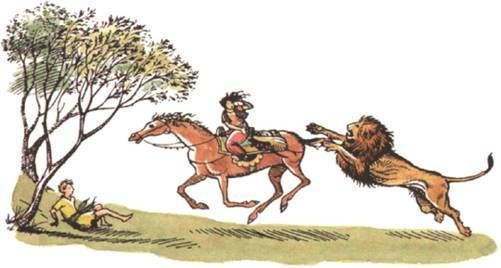
My phrase of choice is currently "I was the lion", which is a rather niche reference to The Horse and his Boy, and puts me in the position of Aslan... It might be fair to say I have a superiority complex ;)
 
Just to add, once I realised how crucial your core is when riding hot horses, it made a huge difference to how I rode them. It suddenly became apparent to me that you can ‘hold’ a hot horse with your core muscles, without having to take any more hold than your normal contact. Millie has a very hot canter and I sometimes have to really engage my abdominal muscles to avoid having to take pull when she starts getting opinionated. I can bring her back to trot this way too.

Look at the saddleseat riders, riding the hot Morgans, saddlebreds, the showing situation is that they should look really hot, but controlled by the lightest of aids. In saddleseat you have no leg contact below the knee, you are using a long shank double bridle that needs the lightest, lightest of contact, weight of the reins really, yet the horses should have the correct way of going, obey the aids immediately and incidently go from gallop, or extended canter at least, to halt, stand still and then walk off quietly. This is achieved by those core muscles and a little thigh muscle and seat.

I was watching a lesson from a saddleseat instructor once and although I can't remember the exact words, she said exactly what Mary Wanless had said about dressage riding and I said to her afterwards that she was the only other person who had said that. About being plugged in with your seatbones and using that core!
 
Bloody brilliant, isn't it. There was only one lion... I was the lion...

I'm slightly relieved someone gets it and I've not been written off as a complete nutter!

I totally get it, I absolutely love all the Narnia books, and the second I read "I was the lion" I remembered it so well! If your a nutter, I am too...
 
I totally get it, I absolutely love all the Narnia books, and the second I read "I was the lion" I remembered it so well! If your a nutter, I am too...

At least we're nutters together :D

c35e1e41072fa1005d82cf3b7de194f5.jpg
 
The grey mare in my sig sounds like she was very like Amber
She was always 'on her game'- never lost fitness, never missed anything, went at life like a whirlwind. She wasn't 'hot' the way some people think (naughty, spooky) but she was incredibly forward, with a very very quick brain. She was always working out what might happen next, and anticipating, and trying to make decisions for both of us. She didn't like not 'getting things right' first time - we couldn't repeat in the school for a new movement as she got frustrated and just bounced or cantered off once she got fed up. We rarely had to though, as she got most things first time. When she first came, she used to lock on to a fence every time she left the outside track (she had been show jumped and basically flatwork was just a warm up for jumping for her, few goes each way and she was jumping no matter what!). My trainer 'got' her, and we had plenty of tricks to stay in front of her and keep her guessing, so that we could get good work and she HAD to listen because she stopped being able to anticipate. Then she seemed to gain a bit more respect for me and realised we could both have a say. I was never able to canter in a dresage warmup though, as once we had canted both ways she felt that dressage was done, thank you very much. Best tests were when we went up to the harder ones and got the canter the final centre line, she loved that (!).

I didn't put her in situations where I knew I would lose her again (never hunted or fast hacked in company) as she would have just gone and I couldn't stop her..

HOWEVER - that smartness, forward thinking, working out what was coming next - made her the best cross country horse I have ever ridden. She read every fence, she knew the flags, she just got it. At the beginning we couldn't go cross country because I couldn't stop (!) but as time went on and the partnership developed that changed.
I kept her out 24/7 (for health reasons to, she choked on hay), didn't really do any specific fitness work apart from hacking which she loved, and didn't feed her too much either, just fibre based stuff. I can't even imagine waht she would have been like if she'd been stabled to be honest, I think she would have wound herself up into a frenzy. It was like the only time the world went quickly enough for Bella was when she left the start box XC.
I think the outdoor lifestyle was the key for her.

My current gelding, lovely as he is, is a bit boring in comparison- but I think every horse will be.
 
May be it is worth repeating what someone once said to me. I ride many many transitions to get RS horses quick off the leg. But every upward transition also involves a downward one. I used to alternate canter 6 strides, then 6 trot. There were parts of the track out hacking where the horses were used to canter long distance - some yards dont seem to envisage short canters - but I insisted my share would canter just six strides. I did it by beginning canter only when we got near the end of the track. I plan to treach this to the current share.
Having watched Amber being taught to go quietly over poles and then take a jump. I think one could do the same - trot the poles with no jump there and transition to canter instead. But canter only a few strides.

However, no one has yet told me how to canter a mare second when the mare wants to lead.
 
Sort of goes back to the "you just need to ride her better". I think you are clearly capable of riding Amber and rather than trying to turn her into a dobbin you need to up your game to get the best results.
You can train a horse to listen better, to be more on the aids all round; you can train a stressed and anxious horse to take direction and relax more. But you can't change their basic nature. Amber likes her job, you like her liking her job - enjoy it more and worry less (easier said than done)
Skib, as you have something so specific you might find you are better starting a thread for that purpose. There is an awful lot of things that might help but I think it deserves a discussion of it's own.
 
SportsmanB that does sound very like Amber!

Skib, I use that exercise from the Tik Maynard clinic quite a lot. I also have an exercise where I set out a course of jumps that are up to height, but jump one is a cross pole on an angle so I can jump it off either rein and either direction. So I can jump it as a figure of 8 - jump, turn left; jump, turn right etc. The aim being to canter the fig 8 very calmly and rhythmically. Once she is calm throughout the figure of 8 I proceed to fence 2 expecting the same rhythm. If she jumps that calmly we move on round the course but anytime she starts accelerating we go back to the figure 8 to re-ballance her and get her back on the aids. And sometimes I just randomly go back to the figure 8 anyway so she does not just get faster and flatter all the way round a course. I am having the novel experience of CALM rounds of jumping but it takes a while to get there and I am not sure that calmness will transfer to a new venue but it's a start. As for cantering 2nd - I can't canter Amber behind either.
 
Sort of goes back to the "you just need to ride her better". I think you are clearly capable of riding Amber and rather than trying to turn her into a dobbin you need to up your game to get the best results.
You can train a horse to listen better, to be more on the aids all round; you can train a stressed and anxious horse to take direction and relax more. But you can't change their basic nature. Amber likes her job, you like her liking her job - enjoy it more and worry less (easier said than done)

Yes my hope was that I could make her easier because she does sometimes scare me but I am not sure that is possible. I think that has been my misunderstanding all these years - getting a horse well schooled and listening does not mean making them easy for anyone to ride. I have always thought of her as fairly easy anyway because she is kind and willing. And rarely bucks or anything like that. But my RI said the other day that she was far from easy and I needed to recognise that. My RI had her on schooling livery for one holiday and knows very well what she is like to ride.
 
Yes my hope was that I could make her easier because she does sometimes scare me but I am not sure that is possible.
...
I have always thought of her as fairly easy anyway because she is kind and willing. And rarely bucks or anything like that. But my RI said the other day that she was far from easy and I needed to recognise that. My RI had her on schooling livery for one holiday and knows very well what she is like to ride.
Maybe you are underestimating yourself as a rider, she doesn't sound "easy", she sounds nice and pleasant to ride (most of the time) but not like she'd be anybody's ride. And yet there you are going out doing ODE with her.
 
Maybe you are underestimating yourself as a rider, she doesn't sound "easy", she sounds nice and pleasant to ride (most of the time) but not like she'd be anybody's ride. And yet there you are going out doing ODE with her.

How I feel I am doing depends what point of view I take: As a rider, I have gone from 70cm unaffiliated on an easy pony to BE90 on a challenging horse and from being towed around to actually influencing my horse to some degree. So I as a rider have improved a lot over the 3 years I've had her. Amber, on the other hand, is still only using a fraction of her ability. So I have done a pretty rubbish job of producing her. I can't help thinking about where she could be with a decent rider who would have gone out BE with her 3 years ago and be goodness knows where with her by now.

But I know I am not the rider to help her reach her potential. I am just trying to get as good as we can be together. I will always be the limiting factor in our partnership and I guess that does not really matter. At least that is what I keep telling myself!
 
many of us are the limiting factors though. People say the average horse can get up to medium level dressage, I'd say that it's the combination of horse and rider, not the horse itself that means so many stop there rather than mastering the changes and more advanced work. I've produced Kira beyond what she would ordinarily achieve, being an obtuse native pony, but I am still the limiting factor that means she doesn't do any better, because I am her trainer and I'm learning at the same time as teaching her. She can do 1 tempis and piaffe, it's my ineptitude that means we can't do 13 good ones in a row or get a GP level piaffe.

The same applies in eventing, for many many horses, until they can't meet the required speeds/heights. I'd say Millie maxed out at Novice because the intermediate XC speed was too fast to go safely on her short legs. We could have carried on but been uncompetitive because of time pens. But I'd already limited us to Novice by being shit scared of the enormous Int showjumps!!
 
Top